
Poultry
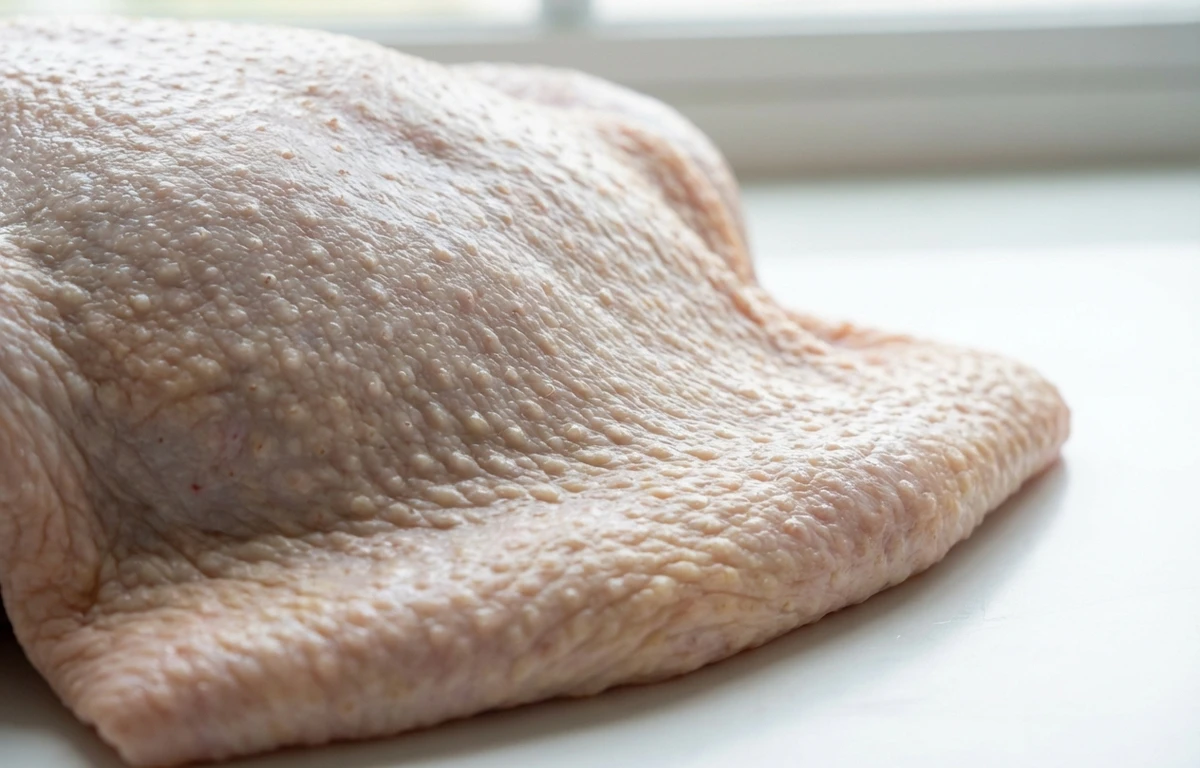
raw turkey skin.
VegetarianVeganGluten-freeDairy-freeNut-freePeanut-freeSoy-freeEgg-freeShellfish-freeHoney-freeAlcohol-free
ALSO KNOWN AS
turkey skin
SERVING
CALORIES
381
PROTEIN
12.3g
CARBS
0.21g
FAT
36.8g
FIBER
0g
NUTRITION PROFILE · per 100 g
Everything in this ingredient.
MACRONUTRIENTS
Calories381kcal—
Protein12.3g25%
Carbohydrates0.21g0%
Fiber0g0%
Sugar0.10g0%
Total fat36.8g47%
Saturated fat10.4g52%
Trans fat0.56g—
Cholesterol94mg31%
Water50g—
MINERALS
Sodium138mg6%
Potassium107mg2%
Calcium13mg1%
Iron0.57mg3%
Magnesium9.0mg2%
Phosphorus99mg8%
Zinc0.82mg7%
Copper0.05mg6%
Manganese0.01mg0%
Selenium10.1µg18%
VITAMINS
Vitamin A85µg9%
Vitamin C0mg0%
Vitamin D1.1µg6%
Vitamin E0.09mg1%
Vitamin K0µg0%
Thiamin (B1)0.02mg2%
Riboflavin (B2)0.10mg8%
Niacin (B3)3.3mg20%
Pantothenic acid (B5)0.50mg10%
Vitamin B60.16mg9%
Folate (B9)4.0µg1%
Vitamin B120.88µg37%
%DV based on a 2,000 cal diet. Source: USDA FoodData Central. A dash in the %DV column means there’s no established Daily Value for that nutrient.
MEASUREMENT CONVERSIONS
How much is what.
1 cup140g
1 oz28.4g
1 lb453.6g
HEALTH BENEFITS
Why eat it.
- ✓Rich source of oleic acid, a monounsaturated fat that may support heart health when consumed in moderation.
- ✓Contains collagen, a protein essential for skin elasticity, joint health, and connective tissue integrity.
- ✓Provides selenium, an antioxidant mineral that supports immune function and thyroid health.
- ✓Concentrated source of calories and flavor, which can enhance the palatability of meals.
COOKING TIPS
In the kitchen.
- 1For crispy 'turkey cracklings', render the fat by cooking the skin slowly in a dry pan over low-to-medium heat until golden brown and crisp.
- 2Leave the skin on turkey pieces when roasting or grilling to baste the meat naturally, keeping it moist and flavorful.
- 3Season the skin generously with salt, pepper, and herbs before cooking to enhance its flavor and help it crisp up.
- 4Reserve the rendered turkey fat (schmaltz) for roasting vegetables, frying potatoes, or adding rich flavor to other dishes.
STORAGE
Keep it fresh.
- Refrigerate raw turkey skin immediately in an airtight container or sealed bag at or below 40°F (4°C) and use within 1-2 days.
- For longer storage, freeze in a freezer-safe bag or container at 0°F (-18°C) for up to 3 months for best quality.
FAQ
Frequently asked questions.
Is turkey skin healthy?
Turkey skin is high in calories and fat, but it contains beneficial oleic acid and collagen. While it provides essential minerals like selenium, it should be consumed in moderation as part of a balanced diet due to its high energy density.
How many calories and fat are in turkey skin?
A 100g serving of turkey skin contains approximately 381 calories and 36.8g of fat. It is a very energy-dense ingredient with minimal carbohydrates (0.21g) and a moderate amount of protein (12.29g).
Is turkey skin keto-friendly?
Yes, turkey skin is excellent for a ketogenic or low-carb diet. With nearly zero carbohydrates and a high fat content, it helps individuals meet their daily fat macros while providing significant flavor.
What are the health benefits of eating turkey skin?
It is a rich source of oleic acid, a monounsaturated fat that supports heart health, and collagen, which is vital for skin elasticity and joint health. It also provides selenium, an antioxidant that supports the immune system.
Can I eat raw turkey skin?
No, you should never eat raw turkey skin. Like all raw poultry products, it carries a high risk of bacterial contamination such as Salmonella and must be cooked to a safe internal temperature of 165°F (74°C).
How do you cook raw turkey skin to make it crispy?
To make 'turkey cracklings,' lay the skin flat on a baking sheet, season with salt, and roast at 375°F (190°C) until golden and crisp. You can also render it slowly in a pan to create flavorful turkey fat for cooking.
Is turkey skin gluten-free?
Naturally, raw turkey skin is 100% gluten-free. However, if you are buying pre-packaged or seasoned skin, always check the label for additives, marinades, or flour-based coatings that might contain gluten.
How should I store raw turkey skin?
Raw turkey skin should be kept in an airtight container or tightly wrapped in the coldest part of your refrigerator. It is highly perishable and should be cooked or frozen within 1 to 2 days of purchase.
Can you freeze raw turkey skin?
Yes, raw turkey skin freezes very well. Wrap it tightly in plastic wrap and place it in a freezer-safe bag to prevent freezer burn; it will maintain its quality for up to 6 to 9 months.
How can I tell if raw turkey skin has gone bad?
Spoiled turkey skin will have a sour or ammonia-like odor, a slimy or tacky texture, and may show gray or greenish discoloration. If any of these signs are present, discard the skin immediately to avoid foodborne illness.



















