
Vegetable
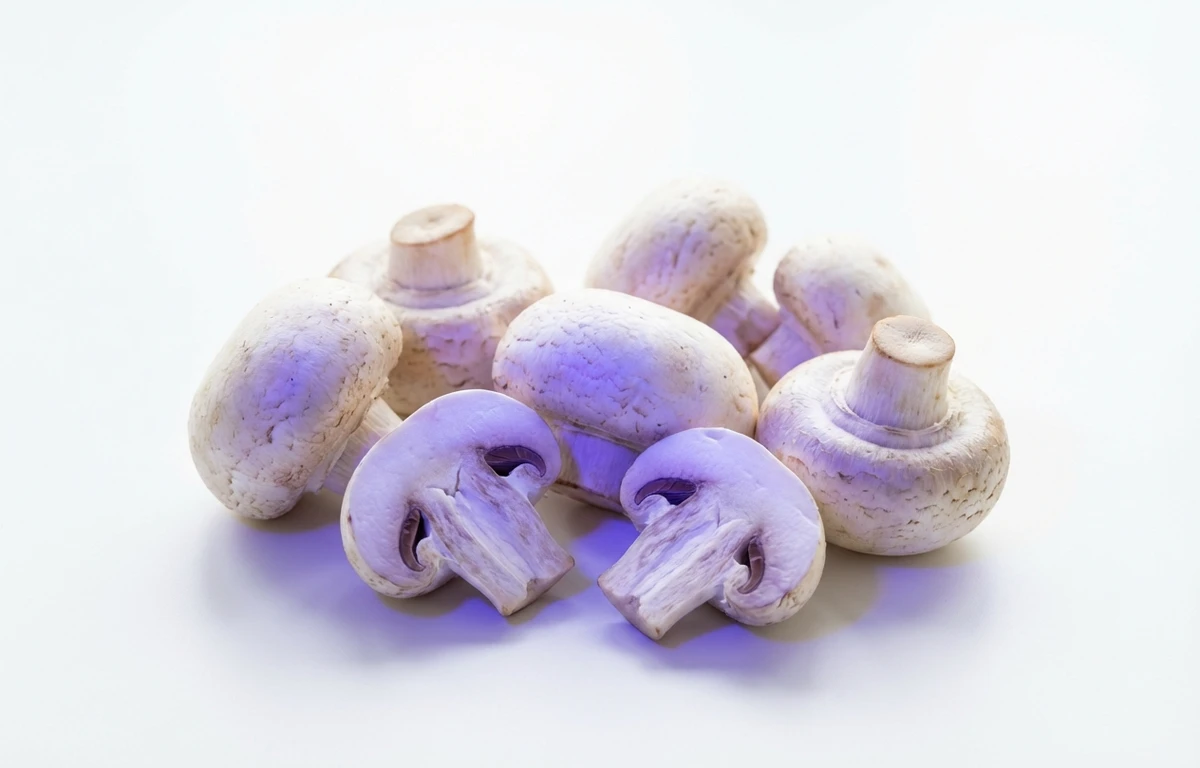
raw ultraviolet exposed white mushroom.
VegetarianVeganGluten-freeDairy-freeNut-freePeanut-freeSoy-freeEgg-freeShellfish-freeHoney-freeAlcohol-free
ALSO KNOWN AS
UV-exposed white button mushroomsVitamin D enriched white mushrooms
SERVING
CALORIES
28
PROTEIN
3.1g
CARBS
3.3g
FAT
0.30g
FIBER
1.0g
NUTRITION PROFILE · per 100 g
Everything in this ingredient.
MACRONUTRIENTS
Calories28.3kcal—
Protein3.1g6%
Carbohydrates3.3g1%
Fiber1.0g4%
Sugar1.5g3%
Total fat0.30g0%
Saturated fat0.05g0%
Trans fat0g—
Cholesterol0mg0%
Water92.4g—
MINERALS
Sodium5.0mg0%
Potassium318mg7%
Calcium3.0mg0%
Iron0.50mg3%
Magnesium9.0mg2%
Phosphorus86mg7%
Zinc0.52mg5%
Copper0.31mg34%
Manganese0.05mg2%
Selenium9.3µg17%
VITAMINS
Vitamin A0µg0%
Vitamin C2.1mg2%
Vitamin D11.3µg57%
Vitamin E0.01mg0%
Vitamin K0µg0%
Thiamin (B1)0.08mg7%
Riboflavin (B2)0.40mg31%
Niacin (B3)3.6mg23%
Pantothenic acid (B5)1.5mg30%
Vitamin B60.10mg6%
Folate (B9)16µg4%
Vitamin B120.04µg2%
%DV based on a 2,000 cal diet. Source: USDA FoodData Central. A dash in the %DV column means there’s no established Daily Value for that nutrient.
MEASUREMENT CONVERSIONS
How much is what.
1 cup70g
1 tablespoon6g
1 teaspoon2g
1 oz28.4g
1 lb453.6g
1 piece18g
HEALTH BENEFITS
Why eat it.
- ✓Excellent plant-based source of Vitamin D2 for bone health
- ✓Contains selenium which supports immune system function
- ✓Low in calories and fat, making it ideal for weight management
- ✓Rich in B vitamins like Riboflavin and Niacin for energy metabolism
- ✓Provides antioxidants that help protect cells from damage
COOKING TIPS
In the kitchen.
- 1Sauté over medium-high heat without overcrowding the pan to ensure browning
- 2Add salt only at the end of cooking to prevent the mushrooms from releasing too much water
- 3Wipe with a damp paper towel instead of soaking in water to clean
STORAGE
Keep it fresh.
- Store in a breathable paper bag in the refrigerator to prevent sliminess
- Keep away from strong-smelling foods as mushrooms absorb odors easily
- Do not wash until immediately before use to maintain texture
FAQ
Frequently asked questions.
What makes these mushrooms different from regular white mushrooms?
These mushrooms have been exposed to ultraviolet (UV) light, which naturally triggers the production of Vitamin D2, making them a significant dietary source of this nutrient.
How long do UV-exposed white mushrooms last?
When stored properly in a paper bag in the fridge, they typically last 4 to 7 days.
Can I freeze raw white mushrooms?
It is better to sauté or blanch them before freezing, as raw mushrooms become mushy and watery once thawed.
How do I know if they are still good to eat?
Fresh mushrooms should be firm and dry. If they feel slimy, have dark soft spots, or a sour smell, they should be discarded.
Does cooking destroy the Vitamin D content?
Most of the Vitamin D is retained during cooking, though quick methods like sautéing or grilling preserve more than long boiling.
What is the best substitute for UV-exposed mushrooms?
Regular white button or cremini mushrooms are the best culinary substitute, though they will lack the high Vitamin D content.
Do I need to peel white mushrooms?
No, peeling is unnecessary. Simply trim the very end of the stem and wipe the cap clean.
Are these mushrooms suitable for a keto diet?
Yes, they are very low in net carbs and are an excellent addition to a ketogenic diet.



















