
Grain
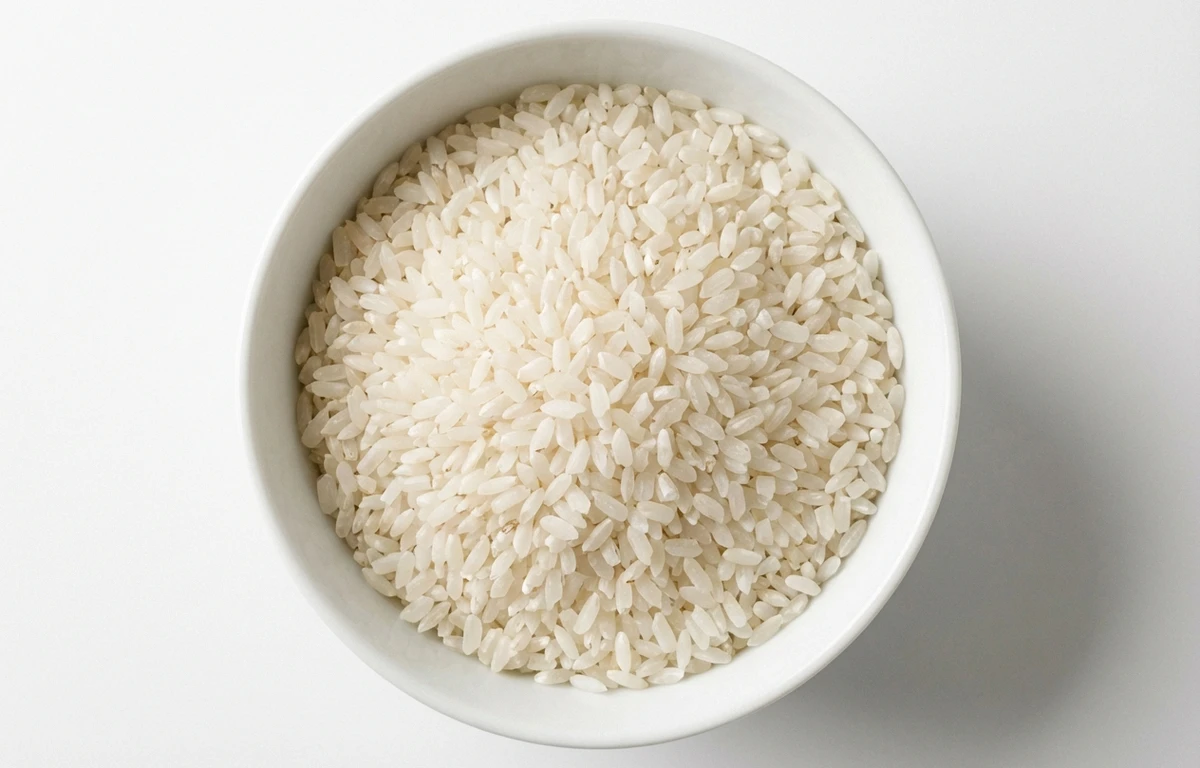
raw unenriched medium-grain white rice.
VegetarianVeganGluten-freeDairy-freeNut-freePeanut-freeSoy-freeEgg-freeShellfish-freeHoney-freeAlcohol-free
SERVING
CALORIES
360
PROTEIN
6.6g
CARBS
79.3g
FAT
0.58g
FIBER
1.3g
NUTRITION PROFILE · per 100 g
Everything in this ingredient.
MACRONUTRIENTS
Calories360kcal—
Protein6.6g13%
Carbohydrates79.3g29%
Fiber1.3g5%
Sugar0.12g0%
Total fat0.58g1%
Saturated fat0.16g1%
Trans fat0g—
Cholesterol0mg0%
Water12.9g—
MINERALS
Sodium1.0mg0%
Potassium76mg2%
Calcium9.0mg1%
Iron0.80mg4%
Magnesium35mg8%
Phosphorus108mg9%
Zinc1.1mg10%
Copper0.11mg12%
Manganese1.1mg47%
Selenium15.1µg27%
VITAMINS
Vitamin A0µg0%
Vitamin C0mg0%
Vitamin D0µg0%
Vitamin E0.11mg1%
Vitamin K0.10µg0%
Thiamin (B1)0.07mg6%
Riboflavin (B2)0.01mg1%
Niacin (B3)1.6mg10%
Pantothenic acid (B5)1.0mg20%
Vitamin B60.16mg9%
Folate (B9)8.0µg2%
Vitamin B120µg0%
%DV based on a 2,000 cal diet. Source: USDA FoodData Central. A dash in the %DV column means there’s no established Daily Value for that nutrient.
MEASUREMENT CONVERSIONS
How much is what.
1 cup195g
1 tablespoon12.2g
1 teaspoon4.1g
1 ml0.8g
1 liter812.5g
HEALTH BENEFITS
Why eat it.
- ✓Provides a quick source of energy due to its high carbohydrate content, which is easily digested.
- ✓Low in fiber, making it gentle on the digestive system and suitable for those with gastrointestinal issues.
- ✓Naturally gluten-free, making it a safe grain option for individuals with celiac disease or gluten sensitivity.
- ✓Low in fat, cholesterol, and sodium, which can be beneficial for cardiovascular health when part of a balanced diet.
COOKING TIPS
In the kitchen.
- 1Rinse the rice under cold running water until the water runs clear to remove excess surface starch, which helps prevent clumping and results in fluffier, more separate grains.
- 2Use a standard water-to-rice ratio of 1.5:1. For stickier rice, ideal for dishes like risotto or sushi, slightly increase the water.
- 3After cooking, let the rice rest, covered and off the heat, for at least 10 minutes. This allows steam to redistribute, ensuring an even texture.
- 4To add flavor, cook the rice in broth (vegetable, chicken) instead of water, or add aromatics like a bay leaf, star anise, or a strip of lemon peel to the cooking liquid.
STORAGE
Keep it fresh.
- Store in a cool, dark, and dry place in an airtight container to prevent moisture absorption and infestation by pests.
- For long-term storage (over a year), keep it in the freezer or a vacuum-sealed bag to maintain freshness and prevent any residual oils from becoming rancid.
FAQ
Frequently asked questions.
Is medium-grain white rice healthy?
Yes, it is a healthy source of quick energy due to its high carbohydrate content and is very easy to digest. It is naturally low in fat, sodium, and cholesterol, making it a heart-healthy staple when consumed as part of a balanced diet.
How many calories and carbs are in 100g of raw medium-grain white rice?
100g of raw medium-grain white rice contains approximately 360 calories and 79.34g of carbohydrates. It also provides about 6.61g of protein and a very low fat content of 0.58g.
Is medium-grain white rice gluten-free?
Yes, all natural rice varieties, including medium-grain white rice, are naturally gluten-free. This makes it a safe and reliable grain option for individuals with celiac disease or gluten sensitivities.
Is this rice suitable for a keto or low-carb diet?
No, white rice is not keto-friendly because it is very high in carbohydrates, with nearly 80g of carbs per 100g. It is generally avoided on low-carb diets in favor of high-fiber or lower-calorie alternatives.
How do you cook medium-grain white rice?
The standard ratio is 1.5 cups of water for every 1 cup of rice. Bring the water to a boil, add the rice, then cover and simmer on low heat for 15 to 20 minutes until the water is fully absorbed.
What does medium-grain white rice taste like?
It has a mild, slightly sweet flavor and a tender, moist texture. Because the grains are shorter and wider than long-grain rice, they tend to stick together slightly, making it excellent for dishes like sushi or rice pudding.
Can I substitute medium-grain rice for long-grain rice?
Yes, but the texture will differ. Medium-grain rice is starchier and stickier than long-grain rice, so while it works in most recipes, it won't have the distinct, fluffy separation characteristic of Basmati or Jasmine rice.
How should I store raw white rice and how long does it last?
Store raw rice in a cool, dry place in an airtight container to keep out moisture and pests. Unlike brown rice, white rice has a very long shelf life and can remain safe to eat for several years if kept dry.
How do I know if raw white rice has gone bad?
Check for signs of moisture, mold, or an unpleasant, musty odor. You should also look for 'rice weevils'—tiny dark bugs; if you see movement or fine webbing in the container, the rice should be discarded.
What is the benefit of 'unenriched' white rice?
Unenriched rice is simply rice that hasn't had synthetic vitamins or minerals added back after the milling process. It is preferred by those who want a minimally processed grain or who prefer to get their micronutrients from other whole food sources.



















