
Grain
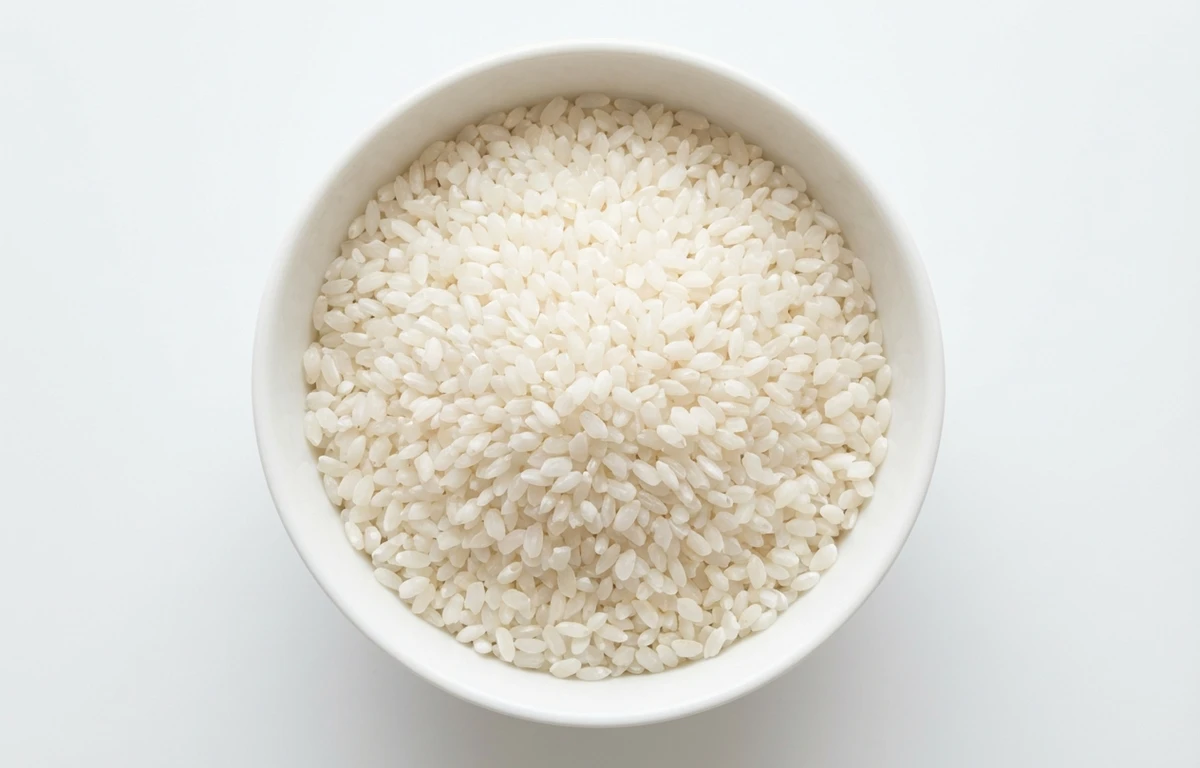
raw unenriched short-grain white rice.
VegetarianVeganGluten-freeDairy-freeNut-freePeanut-freeSoy-freeEgg-freeShellfish-freeHoney-freeAlcohol-free
SERVING
CALORIES
358
PROTEIN
6.5g
CARBS
79.2g
FAT
0.52g
FIBER
1.3g
NUTRITION PROFILE · per 100 g
Everything in this ingredient.
MACRONUTRIENTS
Calories358kcal—
Protein6.5g13%
Carbohydrates79.2g29%
Fiber1.3g5%
Sugar0.12g0%
Total fat0.52g1%
Saturated fat0.14g1%
Trans fat0g—
Cholesterol0mg0%
Water13.3g—
MINERALS
Sodium1.0mg0%
Potassium76mg2%
Calcium3.0mg0%
Iron0.80mg4%
Magnesium23mg5%
Phosphorus95mg8%
Zinc1.1mg10%
Copper0.11mg12%
Manganese1.0mg45%
Selenium15.1µg27%
VITAMINS
Vitamin A0µg0%
Vitamin C0mg0%
Vitamin D0µg0%
Vitamin E0.11mg1%
Vitamin K0µg0%
Thiamin (B1)0.07mg6%
Riboflavin (B2)0.01mg1%
Niacin (B3)1.6mg10%
Pantothenic acid (B5)0.63mg13%
Vitamin B60.16mg9%
Folate (B9)8.0µg2%
Vitamin B120µg0%
%DV based on a 2,000 cal diet. Source: USDA FoodData Central. A dash in the %DV column means there’s no established Daily Value for that nutrient.
MEASUREMENT CONVERSIONS
How much is what.
1 cup200g
1 tablespoon12.5g
1 teaspoon4.2g
1 ml0.8g
1 liter833.3g
HEALTH BENEFITS
Why eat it.
- ✓Provides a quick and easily digestible source of energy from carbohydrates.
- ✓Naturally gluten-free, making it a safe staple for individuals with celiac disease or gluten sensitivity.
- ✓Low in fat and sodium, which can be beneficial for cardiovascular health.
- ✓Its soft texture when cooked is gentle on the digestive system, often recommended during illness or for sensitive stomachs.
COOKING TIPS
In the kitchen.
- 1Rinse the rice thoroughly in cold water until the water runs clear to remove excess surface starch, which results in fluffier, more distinct grains.
- 2Use a typical water-to-rice ratio of 1:1 or 1.25:1 for a sticky, tender texture suitable for dishes like sushi, risotto, or rice pudding.
- 3After cooking, let the rice rest, covered and off the heat, for 10-15 minutes to allow steam to redistribute for an even texture.
- 4To add flavor, toast the dry grains in a little oil or butter before adding liquid, or cook it in broth instead of water.
STORAGE
Keep it fresh.
- Store in a cool, dry, and dark place in an airtight container to protect it from moisture, pests, and dust.
- For long-term storage (over one year), place the airtight container in a freezer to maintain quality and prevent the oils from becoming rancid.
FAQ
Frequently asked questions.
Is short-grain white rice healthy?
Short-grain white rice is a healthy source of quick energy and is very easy to digest. While it lacks the fiber of brown rice, it is naturally low in fat and sodium, making it a heart-healthy carbohydrate choice when consumed as part of a balanced diet.
How many calories and carbs are in short-grain white rice?
A 100g serving of raw short-grain white rice contains approximately 358 calories and 79.2g of carbohydrates. It also provides about 6.5g of protein and a very low fat content of 0.52g.
Is short-grain white rice gluten-free?
Yes, short-grain white rice is naturally gluten-free. It is a safe and common staple for individuals with celiac disease or gluten sensitivities.
Is short-grain white rice keto-friendly?
No, short-grain white rice is not keto-friendly. It is very high in carbohydrates (nearly 80g per 100g), which would exceed the daily carb limit for most people following a ketogenic diet.
How do you cook short-grain white rice?
Rinse the rice until the water runs clear, then use a ratio of about 1.2 to 1.5 cups of water for every 1 cup of rice. Simmer in a covered pot for 15 minutes, then let it sit off the heat for 10 minutes to achieve its signature sticky texture.
What does short-grain white rice taste like?
It has a mild, slightly sweet flavor and a soft, tender texture. Because the grains are shorter and rounder, they release more starch during cooking, resulting in a sticky consistency ideal for sushi or rice pudding.
Can I substitute short-grain rice with long-grain rice?
You can, but the results will vary. Short-grain rice is sticky and moist, while long-grain rice like Basmati is fluffy and dry; use short-grain for dishes like sushi or risotto where a creamy or cohesive texture is required.
How should I store raw short-grain white rice?
Store raw rice in an airtight container in a cool, dry, and dark place. When kept away from moisture and pests, white rice has an almost indefinite shelf life, though it is best used within 1-2 years for optimal flavor.
Is short-grain white rice good for weight loss?
It can be part of a weight loss plan if portion sizes are controlled, as it is low in fat. However, because it is a refined grain with a high glycemic index, it is less satiating than high-fiber alternatives like brown rice.
Is short-grain white rice easy to digest?
Yes, it is exceptionally gentle on the digestive system. Its low fiber content and soft texture when cooked make it a preferred food for those with sensitive stomachs or those recovering from gastrointestinal illness.



















