
Nut Seed
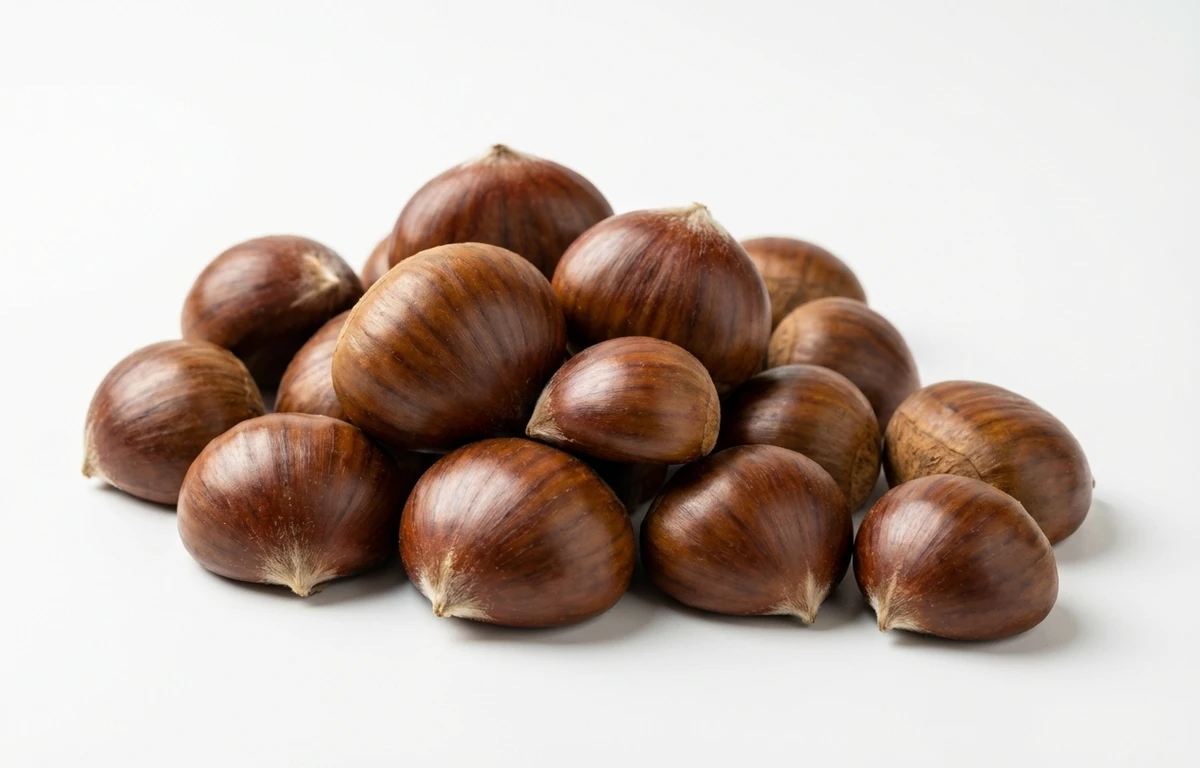
raw unpeeled european chestnut.
VegetarianVeganGluten-freeDairy-freeNut-freePeanut-freeSoy-freeEgg-freeShellfish-freeHoney-freeAlcohol-free
ALSO KNOWN AS
chestnut
SERVING
CALORIES
196
PROTEIN
2.4g
CARBS
44.2g
FAT
1.3g
FIBER
8.1g
NUTRITION PROFILE · per 100 g
Everything in this ingredient.
MACRONUTRIENTS
Calories196kcal—
Protein2.4g5%
Carbohydrates44.2g16%
Fiber8.1g29%
Sugar10.6g21%
Total fat1.3g2%
Saturated fat0.20g1%
Trans fat0g—
Cholesterol0mg0%
Water50.2g—
MINERALS
Sodium2.0mg0%
Potassium484mg10%
Calcium19mg1%
Iron0.90mg5%
Magnesium30mg7%
Phosphorus38mg3%
Zinc0.50mg5%
Copper0.40mg44%
Manganese0.90mg39%
Selenium0.70µg1%
VITAMINS
Vitamin A1.0µg0%
Vitamin C40.2mg45%
Vitamin D0µg0%
Vitamin E0.50mg3%
Vitamin K0µg0%
Thiamin (B1)0.14mg12%
Riboflavin (B2)0.17mg13%
Niacin (B3)1.1mg7%
Pantothenic acid (B5)0.48mg10%
Vitamin B60.35mg21%
Folate (B9)62µg16%
Vitamin B120µg0%
%DV based on a 2,000 cal diet. Source: USDA FoodData Central. A dash in the %DV column means there’s no established Daily Value for that nutrient.
MEASUREMENT CONVERSIONS
How much is what.
1 cup145g
1 tablespoon9.1g
1 teaspoon3g
1 ml0.6g
1 liter604.2g
HEALTH BENEFITS
Why eat it.
- ✓Rich in complex carbohydrates and dietary fiber, providing sustained energy and promoting digestive health.
- ✓Unique among nuts for its high Vitamin C content, which supports immune function and skin health.
- ✓A good source of minerals like manganese, copper, and potassium, essential for bone health, nerve function, and blood pressure regulation.
- ✓Lower in fat and calories compared to other nuts, making them a heart-healthy choice.
COOKING TIPS
In the kitchen.
- 1Always score an 'X' on the flat side of each chestnut shell before cooking to allow steam to escape and prevent them from exploding.
- 2To roast, place scored chestnuts on a baking sheet and cook at 400°F (200°C) for 15-25 minutes until the shells peel back and the nut is tender.
- 3For boiling, cover scored chestnuts with water, bring to a boil, and simmer for 15-20 minutes. This method is ideal for making purees or stuffings.
- 4Peel chestnuts while they are still warm, as the inner skin (pellicle) is much harder to remove once they cool down.
STORAGE
Keep it fresh.
- Due to their high moisture content, store fresh chestnuts in a perforated bag in the refrigerator's crisper drawer for up to 2-3 weeks.
- For long-term storage, freeze raw chestnuts in their shells in an airtight container for up to 6 months.
FAQ
Frequently asked questions.
Are raw European chestnuts healthy?
Yes, European chestnuts are highly nutritious and unique among nuts. They are rich in complex carbohydrates, fiber, and Vitamin C, while being significantly lower in fat and calories than most other nuts, making them a heart-healthy choice.
Can you eat European chestnuts raw?
While technically edible, raw chestnuts are rarely consumed because they contain high levels of tannins, which can cause digestive upset and a bitter taste. Cooking them softens the texture and makes them much sweeter and easier to digest.
How do you prepare and peel raw unpeeled chestnuts?
First, score a shallow 'X' into the flat side of the shell to prevent bursting. Roast or boil them until the shells peel back, then remove both the hard outer shell and the thin, bitter inner skin (pellicle) while the nuts are still warm.
Are chestnuts keto-friendly or low-carb?
No, chestnuts are not ideal for a strict keto diet. Unlike most nuts which are high in fat, chestnuts are high in complex carbohydrates (44.2g per 100g), which can quickly exceed daily carb limits on a ketogenic lifestyle.
What are the primary health benefits of European chestnuts?
They provide sustained energy through complex carbs and support immune function with high Vitamin C levels. Additionally, their potassium and manganese content supports heart health, bone strength, and proper nerve function.
Are European chestnuts gluten-free?
Yes, chestnuts are naturally gluten-free. They are frequently ground into a fine flour that serves as an excellent gluten-free alternative for baking, thickening soups, or making traditional European desserts.
What do European chestnuts taste like?
Once cooked, chestnuts have a sweet, nutty flavor and a starchy, creamy texture similar to a roasted potato or sweet potato. They lack the oily crunch found in walnuts or almonds, offering a more delicate, floury bite.
How should I store raw, unpeeled chestnuts?
Because of their high moisture content, raw chestnuts spoil easily. Store them in a perforated plastic bag in the refrigerator for up to two weeks, or freeze them in an airtight container for up to six months to maintain freshness.
How can I tell if a raw chestnut is fresh or spoiled?
Fresh chestnuts should feel heavy for their size and have a firm, shiny shell. Avoid nuts that feel light or hollow, have visible holes (indicating insects), or show any signs of mold on the exterior.
Are chestnuts suitable for a vegan diet?
Yes, raw European chestnuts are 100% plant-based and are a staple in many vegan and vegetarian cuisines. They are often used as a meat substitute in stuffings or as a creamy base for dairy-free sauces and desserts.



















