
Meat
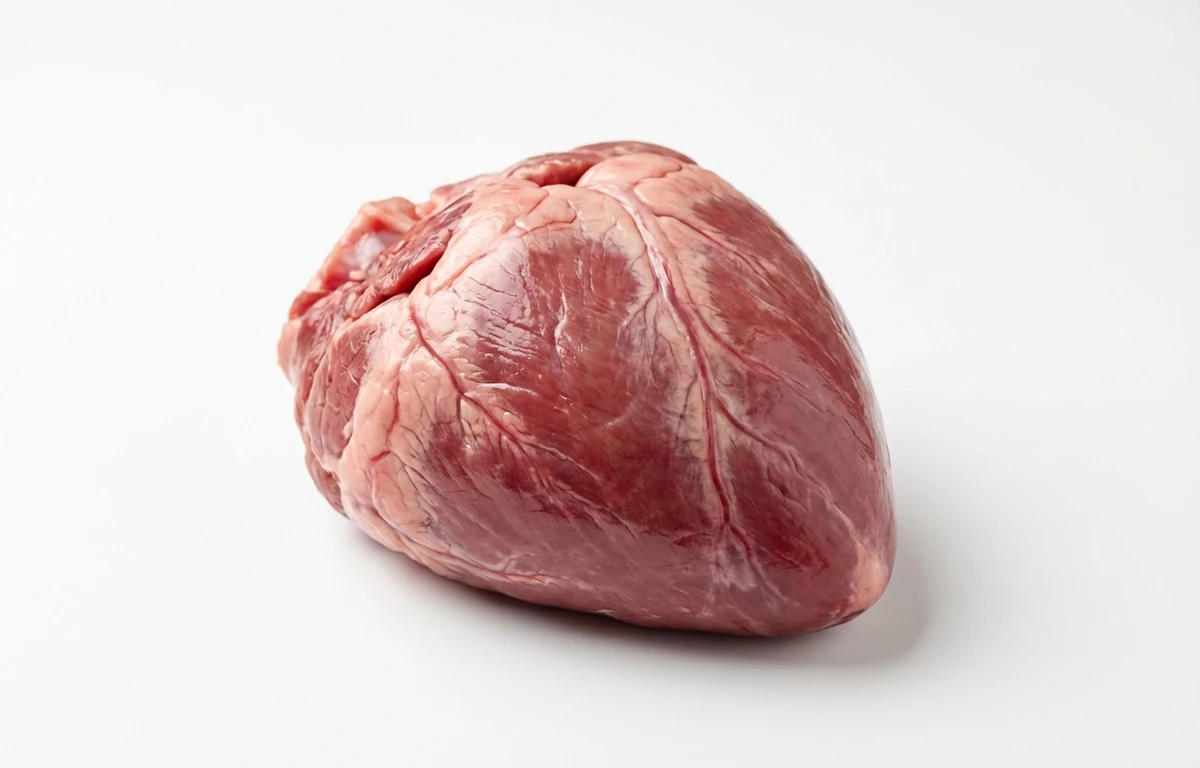
raw veal heart.
VegetarianVeganGluten-freeDairy-freeNut-freePeanut-freeSoy-freeEgg-freeShellfish-freeHoney-freeAlcohol-free
ALSO KNOWN AS
veal heart
SERVING
CALORIES
112
PROTEIN
17.2g
CARBS
0.10g
FAT
4.8g
FIBER
0g
NUTRITION PROFILE · per 100 g
Everything in this ingredient.
MACRONUTRIENTS
Calories112kcal—
Protein17.2g34%
Carbohydrates0.10g0%
Fiber0g0%
Sugar0g0%
Total fat4.8g6%
Saturated fat1.4g7%
Trans fat0g—
Cholesterol140mg47%
Water76.5g—
MINERALS
Sodium65mg3%
Potassium260mg6%
Calcium5.0mg0%
Iron4.3mg24%
Magnesium18mg4%
Phosphorus190mg15%
Zinc2.5mg23%
Copper0.35mg39%
Manganese0.03mg1%
Selenium35µg64%
VITAMINS
Vitamin A0µg0%
Vitamin C2.0mg2%
Vitamin D0.10µg1%
Vitamin E0.20mg1%
Vitamin K0µg0%
Thiamin (B1)0.15mg13%
Riboflavin (B2)0.90mg69%
Niacin (B3)6.5mg41%
Pantothenic acid (B5)2.5mg50%
Vitamin B60.30mg18%
Folate (B9)4.0µg1%
Vitamin B1211.5µg479%
%DV based on a 2,000 cal diet. Source: USDA FoodData Central. A dash in the %DV column means there’s no established Daily Value for that nutrient.
MEASUREMENT CONVERSIONS
How much is what.
1 oz28.4g
1 lb453.6g
1 piece350g
HEALTH BENEFITS
Why eat it.
- ✓Extremely rich in Coenzyme Q10 (CoQ10), which supports cardiovascular health and cellular energy production.
- ✓Excellent source of B vitamins, especially B12, crucial for nerve function and the formation of red blood cells.
- ✓High in essential minerals like iron for oxygen transport, zinc for immune support, and selenium for antioxidant defense.
- ✓Provides a lean source of high-quality, complete protein necessary for muscle building and tissue repair.
COOKING TIPS
In the kitchen.
- 1Before cooking, thoroughly trim away any excess fat, silver skin, and tough arteries. Slice open the chambers and rinse well to remove any residual blood.
- 2Veal heart is a lean muscle and benefits from either very fast, high-heat cooking (like grilling or searing thin slices) or slow, moist-heat cooking (like braising or stewing) to ensure tenderness.
- 3Marinating for at least 2-4 hours in an acidic base (like citrus, vinegar, or wine) helps to tenderize the muscle and infuse it with flavor.
- 4For a tender result when grilling or pan-frying, slice the heart thinly against the grain and cook to medium-rare to avoid it becoming tough and chewy.
STORAGE
Keep it fresh.
- Refrigerate immediately at or below 40°F (4°C) in its original packaging or an airtight container and cook within 1-2 days.
- For longer storage, freeze at 0°F (-18°C) by wrapping it tightly in plastic wrap and foil or a freezer bag. It can be stored for up to 3-4 months.
FAQ
Frequently asked questions.
Is veal heart healthy?
Yes, veal heart is a highly nutritious organ meat that is leaner than many traditional cuts of beef. It is exceptionally rich in Coenzyme Q10 (CoQ10), which supports cardiovascular health, and provides high-quality protein with only 4.8g of fat per 100g.
What are the primary nutritional benefits of veal heart?
Veal heart is an excellent source of Vitamin B12 for nerve function and red blood cell formation. It also contains high levels of essential minerals like iron for oxygen transport, zinc for immune support, and selenium, which acts as a powerful antioxidant.
Is veal heart good for weight loss?
Yes, veal heart is very effective for weight management because it is low in calories (112 per 100g) and high in protein (17.2g). The high protein content promotes satiety, helping you feel full longer while maintaining muscle mass.
Is veal heart keto-friendly?
Absolutely. With only 0.1g of carbohydrates per 100g, veal heart is an ideal protein source for ketogenic and other low-carb diets. It provides essential micronutrients that are often needed when following restrictive dietary patterns.
Is veal heart gluten-free?
Raw veal heart is naturally gluten-free as it is a pure animal protein. If you are buying it pre-marinated or prepared from a deli, ensure you check the label for any wheat-based additives or cross-contamination.
What does veal heart taste like?
Veal heart has a mild, beefy flavor that is much less intense than other organ meats like liver. Because it is a muscle, its texture is firm and dense, similar to a very lean steak or venison.
How do you prepare and cook veal heart?
First, trim away any visible fat, silver skin, and internal connective tissue. It is best cooked either very quickly over high heat to medium-rare (like a steak) or sliced thinly and stir-fried; overcooking will make it tough and rubbery.
Can you eat veal heart raw?
While veal heart is sometimes used in dishes like tartare or carpaccio, there is always a risk of foodborne illness with raw meat. If you choose to eat it raw, ensure it is sourced from a high-quality, reputable butcher and handled with extreme care.
How do you store raw veal heart and how long does it last?
Store raw veal heart in the coldest part of your refrigerator and use it within 1 to 2 days of purchase. For longer storage, it can be frozen for up to 4 months if wrapped tightly in airtight packaging to prevent freezer burn.
How do you know if veal heart has gone bad?
Fresh veal heart should have a deep red color and a clean, metallic scent. If it develops a slimy texture, a greyish or brownish tint, or a sour, off-putting odor, it has spoiled and should be discarded immediately.



















