
Vegetable
raw vinespinach.
VegetarianVeganGluten-freeDairy-freeNut-freePeanut-freeSoy-freeEgg-freeShellfish-freeHoney-freeAlcohol-freeHalalKosher
ALSO KNOWN AS
vinespinach
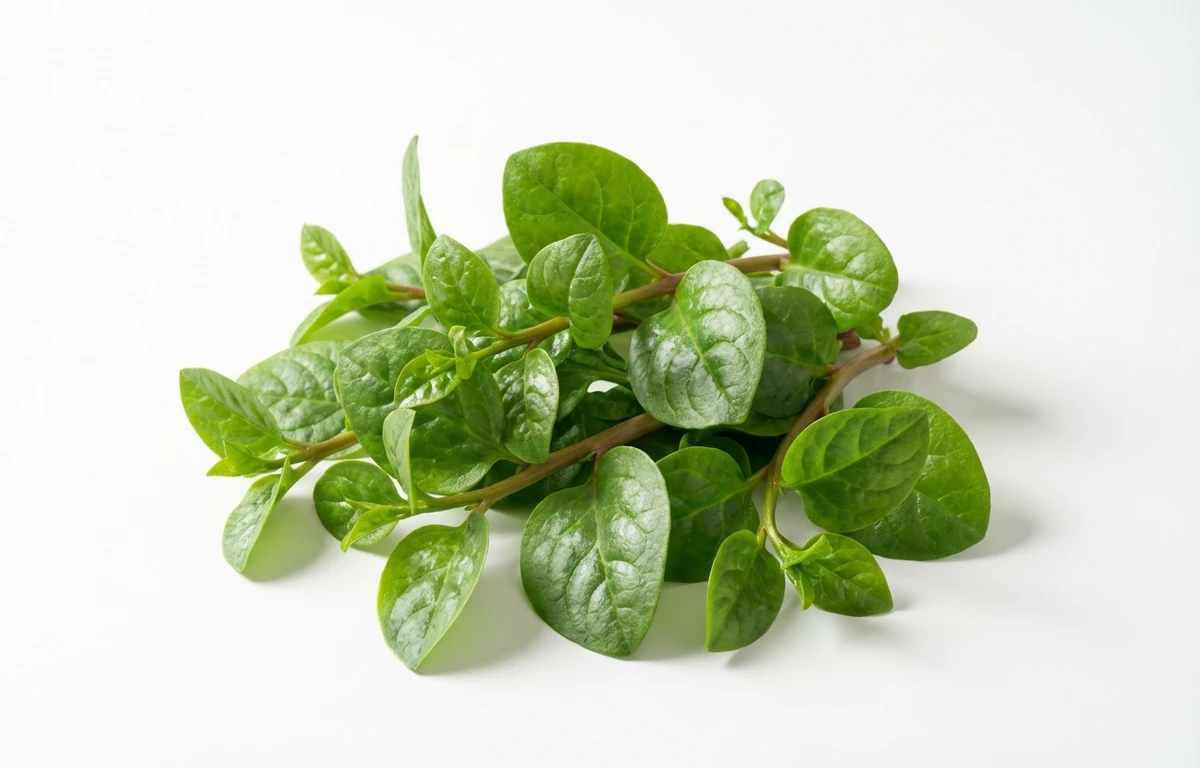
SERVING
CALORIES
19
PROTEIN
1.8g
CARBS
3.4g
FAT
0.30g
FIBER
0.90g
NUTRITION PROFILE · per 100 g
Everything in this ingredient.
MACRONUTRIENTS
Calories19kcal—
Protein1.8g4%
Carbohydrates3.4g1%
Fiber0.90g3%
Sugar0.50g1%
Total fat0.30g0%
Saturated fat0.06g0%
Trans fat0g—
Cholesterol0mg0%
Water93.1g—
MINERALS
Sodium24mg1%
Potassium510mg11%
Calcium109mg8%
Iron1.2mg7%
Magnesium65mg15%
Phosphorus52mg4%
Zinc0.43mg4%
Copper0.06mg7%
Manganese0.73mg32%
Selenium0.80µg1%
VITAMINS
Vitamin A400µg44%
Vitamin C102mg113%
Vitamin D0µg0%
Vitamin E0.75mg5%
Thiamin (B1)0.05mg4%
Riboflavin (B2)0.15mg12%
Niacin (B3)0.50mg3%
Pantothenic acid (B5)0.05mg1%
Vitamin B60.24mg14%
Folate (B9)140µg35%
Vitamin B120µg0%
%DV based on a 2,000 cal diet. Source: USDA FoodData Central. A dash in the %DV column means there’s no established Daily Value for that nutrient.
MEASUREMENT CONVERSIONS
How much is what.
1 cup30g
1 tablespoon1.9g
1 teaspoon0.6g
1 ml0.1g
1 liter125g
HEALTH BENEFITS
Why eat it.
- ✓Rich in Vitamin A and C, which are powerful antioxidants that support immune function and eye health.
- ✓Excellent source of iron, essential for red blood cell production and preventing anemia.
- ✓Provides a good amount of calcium and magnesium, contributing to strong bones and teeth.
- ✓High in dietary fiber, which aids in digestion, promotes gut health, and helps regulate blood sugar levels.
COOKING TIPS
In the kitchen.
- 1Vinespinach develops a mucilaginous (slimy) texture when cooked, similar to okra, making it a great natural thickener for soups and stews.
- 2For a simple side dish, quickly sauté with garlic, ginger, and a splash of soy sauce or fish sauce. Avoid overcooking to minimize sliminess.
- 3The tender leaves and stems can be eaten raw in salads for a succulent, slightly peppery flavor.
- 4It pairs well with bold flavors like chili, coconut milk, and fermented bean paste in various Asian cuisines.
STORAGE
Keep it fresh.
- Store unwashed vinespinach in a perforated plastic bag in the refrigerator's crisper drawer for up to 5 days.
- To prolong freshness, wrap the stems in a damp paper towel before placing in a bag.
FAQ
Frequently asked questions.
Is vine spinach healthy?
Yes, vine spinach is highly nutritious and low in calories, containing only 19 calories per 100g. It is packed with vitamins A and C, iron, and calcium, making it excellent for supporting the immune system, eye health, and bone strength.
What are the primary health benefits of vine spinach?
Vine spinach is rich in antioxidants like vitamins A and C, which protect cells from damage. Its high iron content supports red blood cell production, while its dietary fiber aids in digestion and helps regulate blood sugar levels.
Is vine spinach good for weight loss?
Absolutely. Because it is very low in calories (19 per 100g) and fat (0.3g), it is an ideal food for weight management. The fiber content also helps promote a feeling of fullness, reducing overall calorie intake.
Is vine spinach keto-friendly?
Yes, vine spinach is very keto-friendly. With only 3.4g of carbohydrates per 100g, it can easily fit into a low-carb or ketogenic lifestyle without spiking blood sugar levels.
Is vine spinach vegan and gluten-free?
Yes, vine spinach is a natural plant-based vegetable. It is 100% vegan and naturally gluten-free, making it safe for those with celiac disease or gluten sensitivities.
What does vine spinach taste like?
Vine spinach has a mild, slightly peppery flavor with subtle citrus notes. While it tastes similar to common spinach, its leaves are much thicker and more succulent, providing a different mouthfeel.
Can you eat vine spinach raw?
Yes, the young leaves and stems of vine spinach can be eaten raw in salads or as a garnish. When raw, the leaves are crisp and juicy; they only develop a slippery, mucilaginous texture once they are cooked.
How do you cook vine spinach?
It can be sautéed, stir-fried, or added to soups and stews. Because it acts as a natural thickener due to its mucilage content, it is particularly popular in curries and thickened broths.
How do you store vine spinach and how long does it last?
Store fresh vine spinach in a plastic bag in the refrigerator's crisper drawer. It is best consumed within 2 to 5 days, as its high moisture content makes it prone to wilting or becoming mushy if stored too long.
Why does vine spinach become slimy when cooked?
Vine spinach contains mucilage, a type of soluble fiber also found in okra. This substance is released during cooking and creates a slippery texture, which is beneficial for gut health but can be minimized by quick stir-frying at high heat.



















