
Meat
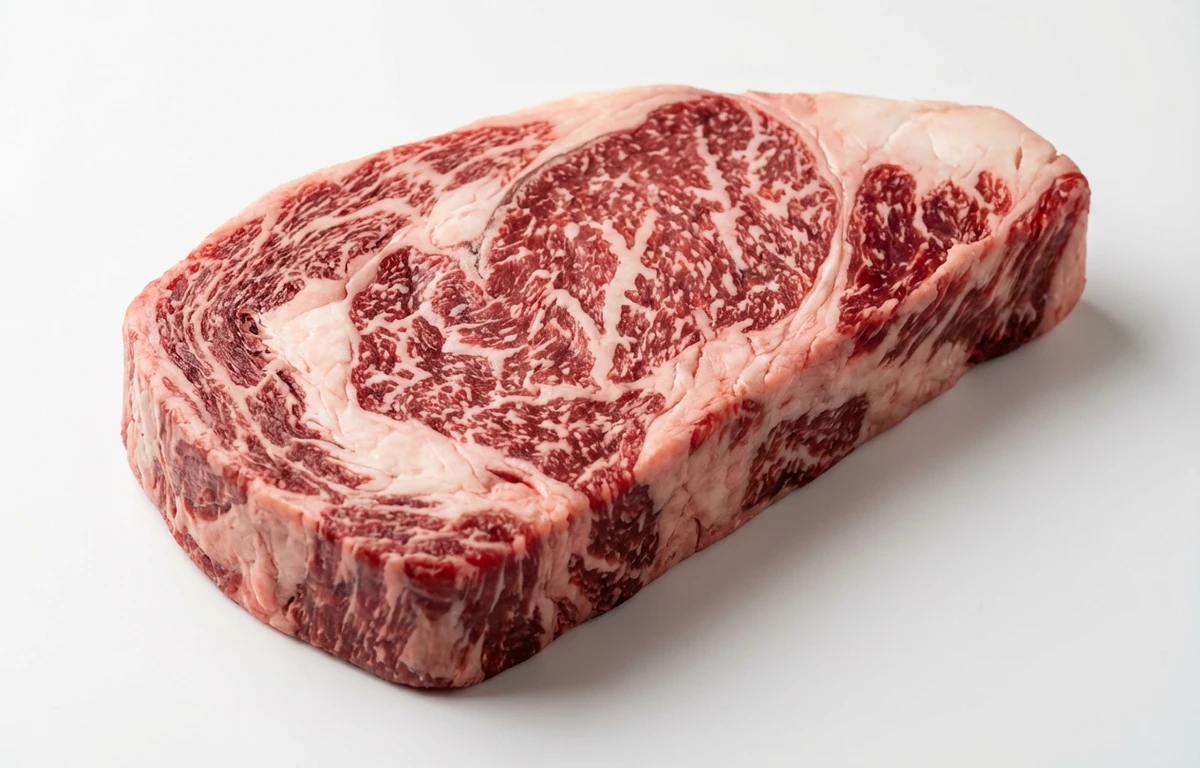
raw wagyu rib steak.
VegetarianVeganGluten-freeDairy-freeNut-freePeanut-freeSoy-freeEgg-freeShellfish-freeHoney-freeAlcohol-free
ALSO KNOWN AS
rib steakwagyu
SERVING
CALORIES
430
PROTEIN
16g
CARBS
0g
FAT
40g
FIBER
0g
NUTRITION PROFILE · per 100 g
Everything in this ingredient.
MACRONUTRIENTS
Calories430kcal—
Protein16g32%
Carbohydrates0g0%
Fiber0g0%
Sugar0g0%
Total fat40g51%
Saturated fat16g80%
Trans fat1.5g—
Cholesterol80mg27%
Water43g—
MINERALS
Sodium50mg2%
Potassium250mg5%
Calcium10mg1%
Iron1.8mg10%
Magnesium15mg4%
Phosphorus160mg13%
Zinc4.5mg41%
Copper0.08mg9%
Manganese0.01mg0%
Selenium22µg40%
VITAMINS
Vitamin A0µg0%
Vitamin C0mg0%
Vitamin D0.10µg1%
Vitamin E0.20mg1%
Vitamin K1.2µg1%
Thiamin (B1)0.06mg5%
Riboflavin (B2)0.15mg12%
Niacin (B3)4.5mg28%
Pantothenic acid (B5)0.40mg8%
Vitamin B60.30mg18%
Folate (B9)6.0µg2%
Vitamin B122.5µg104%
%DV based on a 2,000 cal diet. Source: USDA FoodData Central. A dash in the %DV column means there’s no established Daily Value for that nutrient.
MEASUREMENT CONVERSIONS
How much is what.
1 oz28.4g
1 lb453.6g
1 piece340.2g
HEALTH BENEFITS
Why eat it.
- ✓Rich in Heart-Healthy Monounsaturated Fats: Wagyu's intense marbling is high in oleic acid, the same monounsaturated fat found in olive oil, which can help lower bad cholesterol (LDL) and raise good cholesterol (HDL).
- ✓Excellent Source of Complete Protein: Provides all nine essential amino acids required for muscle growth, tissue repair, and enzyme production.
- ✓High in Essential Nutrients: A significant source of bioavailable iron for preventing anemia, zinc for immune support, and Vitamin B12 for nerve function and red blood cell formation.
- ✓Contains Conjugated Linoleic Acid (CLA): Wagyu beef has a higher concentration of CLA than other beef breeds, which is associated with potential anti-inflammatory and fat-loss benefits.
COOKING TIPS
In the kitchen.
- 1Bring the steak to room temperature for 30-60 minutes before cooking to ensure it cooks evenly.
- 2Due to its high fat content, Wagyu cooks very quickly. Sear on a very hot pan (cast iron is ideal) for 1-3 minutes per side for rare to medium-rare. No additional oil is needed as the fat will render out.
- 3Season simply with high-quality sea salt and freshly cracked black pepper just before cooking to avoid drawing out moisture. The meat's flavor is the star.
- 4Let the steak rest for 5-10 minutes after cooking before slicing. This allows the juices to redistribute, ensuring a tender and flavorful result.
STORAGE
Keep it fresh.
- Refrigerate immediately in its original packaging in the coldest part of your refrigerator (below 40°F / 4°C) for up to 3 days.
- For longer storage, freeze by wrapping the steak tightly in plastic wrap and then a layer of aluminum foil or a freezer-safe bag. It can be stored at 0°F (-18°C) for 6-12 months for optimal quality.
FAQ
Frequently asked questions.
Is Wagyu rib steak healthy despite the high fat content?
Yes, in moderation. While high in calories, Wagyu is rich in monounsaturated fats like oleic acid and contains Conjugated Linoleic Acid (CLA), which may have anti-inflammatory benefits. It also provides essential nutrients like iron, zinc, and Vitamin B12.
What is the nutritional profile of 100g of Wagyu rib steak?
A 100g serving contains approximately 430 calories, 16g of protein, 40g of fat, and 0g of carbohydrates. It is a dense source of energy and high-quality complete protein containing all nine essential amino acids.
Is Wagyu rib steak suitable for a ketogenic diet?
Yes, Wagyu rib steak is excellent for keto and low-carb diets. With 40g of fat and 0g of carbohydrates per 100g, it provides the high fat-to-carb ratio required to maintain ketosis while providing high-quality protein.
What is the best way to cook a Wagyu rib steak?
Cook it quickly over high heat, such as searing in a cast-iron skillet, to a medium-rare finish. Because of its high fat content, it cooks faster than standard beef; avoid overcooking to preserve the buttery texture of the marbling.
What does Wagyu rib steak taste like compared to regular beef?
Wagyu has a distinctively rich, buttery flavor and a 'melt-in-your-mouth' texture due to its intense intramuscular marbling. It is much more tender and savory (umami) than standard grain-fed or grass-fed beef.
How should I store raw Wagyu rib steak?
Keep it in its original vacuum-sealed packaging in the coldest part of the refrigerator. If it is not vacuum-sealed, wrap it tightly in plastic wrap or butcher paper and use it within 2-3 days for optimal freshness.
Can you freeze Wagyu rib steak?
Yes, you can freeze it, preferably in vacuum-sealed packaging to prevent freezer burn. Thaw it slowly in the refrigerator for 24 hours before cooking to maintain the integrity of the delicate fat marbling.
Is Wagyu rib steak good for weight loss?
Due to its high calorie density of 430 calories per 100g, it should be eaten in smaller portions if weight loss is the goal. However, its high protein and CLA content can support satiety and muscle maintenance during a calorie-controlled diet.
Is Wagyu rib steak gluten-free and dairy-free?
Yes, raw Wagyu rib steak is naturally gluten-free and dairy-free. It is a pure animal protein, making it suitable for those with Celiac disease or lactose intolerance, provided no marinades containing gluten or butter are added.
Why is the fat in Wagyu beef considered 'better' than other beef?
Wagyu fat has a higher concentration of monounsaturated fatty acids, specifically oleic acid, which is also found in olive oil. This type of fat has a lower melting point and is associated with improving heart health by helping to lower LDL cholesterol.



















