
Meat
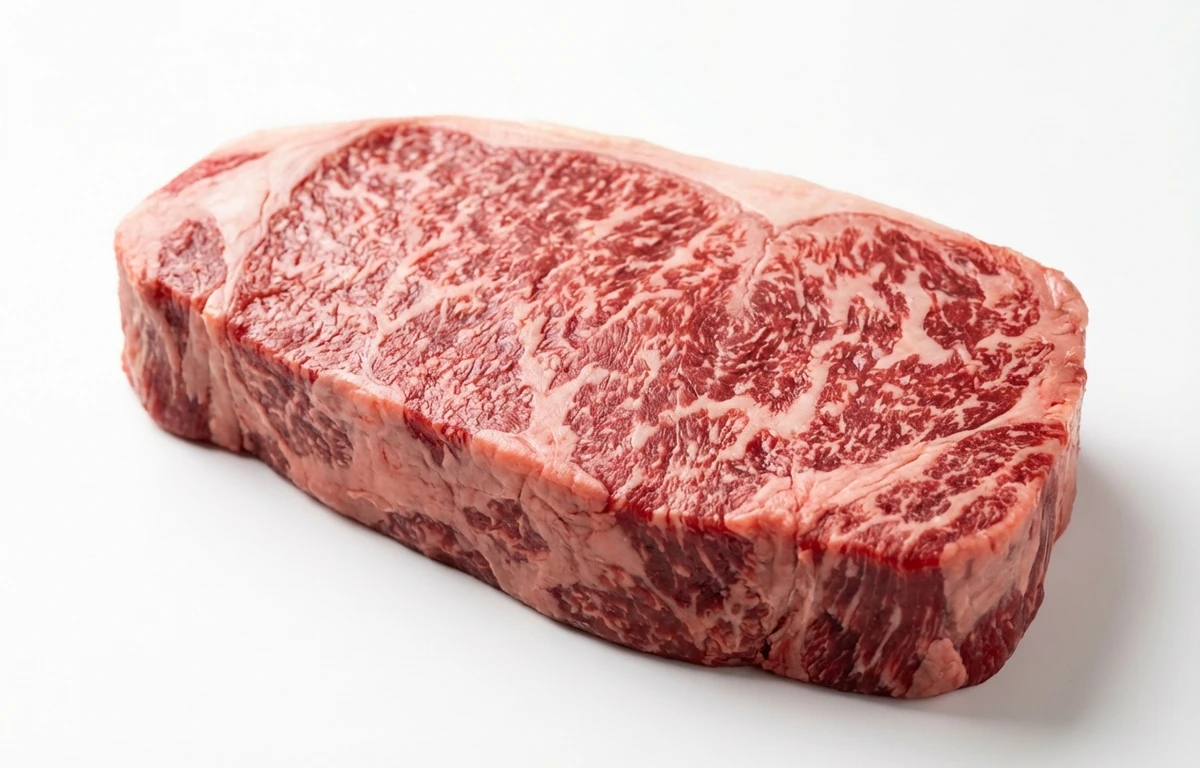
raw wagyu top loin steak.
VegetarianVeganGluten-freeDairy-freeNut-freePeanut-freeSoy-freeEgg-freeShellfish-freeHoney-freeAlcohol-free
SERVING
CALORIES
430
PROTEIN
16g
CARBS
0g
FAT
40g
FIBER
0g
NUTRITION PROFILE · per 100 g
Everything in this ingredient.
MACRONUTRIENTS
Calories430kcal—
Protein16g32%
Carbohydrates0g0%
Fiber0g0%
Sugar0g0%
Total fat40g51%
Saturated fat16g80%
Trans fat1.5g—
Cholesterol80mg27%
Water43g—
MINERALS
Sodium50mg2%
Potassium250mg5%
Calcium10mg1%
Iron2.1mg12%
Magnesium18mg4%
Phosphorus160mg13%
Zinc4.5mg41%
Copper0.08mg9%
Manganese0.01mg0%
Selenium22µg40%
VITAMINS
Vitamin A0µg0%
Vitamin C0mg0%
Vitamin D0.10µg1%
Vitamin E0.20mg1%
Vitamin K1.2µg1%
Thiamin (B1)0.06mg5%
Riboflavin (B2)0.15mg12%
Niacin (B3)4.5mg28%
Pantothenic acid (B5)0.40mg8%
Vitamin B60.35mg21%
Folate (B9)6.0µg2%
Vitamin B122.4µg100%
%DV based on a 2,000 cal diet. Source: USDA FoodData Central. A dash in the %DV column means there’s no established Daily Value for that nutrient.
MEASUREMENT CONVERSIONS
How much is what.
1 cup150g
1 oz28.4g
1 lb453.6g
1 piece250g
HEALTH BENEFITS
Why eat it.
- ✓Excellent source of high-quality complete protein, essential for muscle building, repair, and overall body function.
- ✓Uniquely high in monounsaturated fats, particularly oleic acid, which is associated with improved cardiovascular health.
- ✓Rich in heme iron, a highly bioavailable form of iron that helps prevent anemia and supports oxygen transport in the blood.
- ✓Provides significant amounts of essential nutrients like Zinc for immune support, and Vitamin B12 for nerve function and energy production.
COOKING TIPS
In the kitchen.
- 1Allow the steak to come to room temperature for 30-60 minutes before cooking to ensure it cooks evenly.
- 2Pat the surface completely dry with paper towels and season generously with coarse salt and pepper just before searing to create a perfect crust.
- 3Cook on a very hot surface (cast-iron skillet or grill) for a short time. The high intramuscular fat (marbling) will render quickly, so be careful not to overcook.
- 4Let the steak rest for 5-10 minutes after cooking before slicing. This allows the juices to redistribute, resulting in a more tender and flavorful steak.
STORAGE
Keep it fresh.
- Refrigerate immediately at or below 40°F (4°C) in its original packaging or an airtight container for up to 3 days.
- For longer storage, vacuum seal or wrap tightly in plastic wrap and freezer paper. Freeze at 0°F (-18°C) for up to 12 months for best quality.
- Thaw frozen steak slowly in the refrigerator for 24-48 hours before cooking to maintain its texture and flavor.
FAQ
Frequently asked questions.
Is Wagyu top loin steak healthy?
Wagyu top loin is a nutrient-dense protein source rich in heme iron, Zinc, and Vitamin B12. While high in calories, it contains a unique profile of monounsaturated fats, specifically oleic acid, which is associated with heart health benefits compared to standard saturated fats.
How much protein and fat are in Wagyu top loin?
A 100g serving provides approximately 16g of high-quality complete protein and 40g of fat. This high fat content is due to the intense intramuscular marbling characteristic of Wagyu cattle.
Is Wagyu top loin steak keto-friendly?
Yes, it is excellent for a ketogenic diet. With 0g of carbohydrates and a high fat-to-protein ratio, it provides the necessary healthy fats and protein required for those maintaining nutritional ketosis.
How do you best cook a Wagyu top loin steak?
Wagyu should be seared quickly over high heat to medium-rare to preserve the delicate fat marbling. Because the fat has a lower melting point than regular beef, overcooking will cause the flavorful oils to leak out, resulting in a drier steak.
What does Wagyu top loin taste like?
It has an exceptionally rich, buttery flavor and a 'melt-in-your-mouth' texture. The high concentration of oleic acid gives it a distinct umami profile that is much more intense than standard USDA Prime beef.
Is Wagyu top loin gluten-free?
In its raw, natural state, Wagyu top loin is 100% gluten-free. However, if you purchase pre-marinated steaks, always check the label for soy sauce or other additives that may contain wheat.
How should I store raw Wagyu top loin?
Store it in the coldest part of your refrigerator, ideally in vacuum-sealed packaging, for up to 3-5 days. For longer storage, it can be frozen for up to 6 months, though slow thawing in the fridge is essential to maintain the meat's integrity.
Is Wagyu top loin good for weight loss?
Because it contains 430 calories per 100g, it is very calorie-dense and should be eaten in smaller portions if you are tracking calories. However, its high fat and protein content can increase satiety, potentially helping you feel full for longer periods.
How do I know if my Wagyu steak has spoiled?
Spoiled Wagyu will develop a sour or 'off' odor, a slimy or tacky surface texture, and the fat may turn from bright white to a dull yellowish-grey. Fresh Wagyu should have a clean, metallic scent and vibrant white marbling.
Can I eat Wagyu top loin raw?
High-quality Wagyu is often served raw as carpaccio or tartare due to its tenderness and fat quality. However, to do this safely, you must ensure the meat is 'sushi-grade' or handled under strict hygienic conditions to avoid bacterial contamination.



















