
Vegetable1 recipes
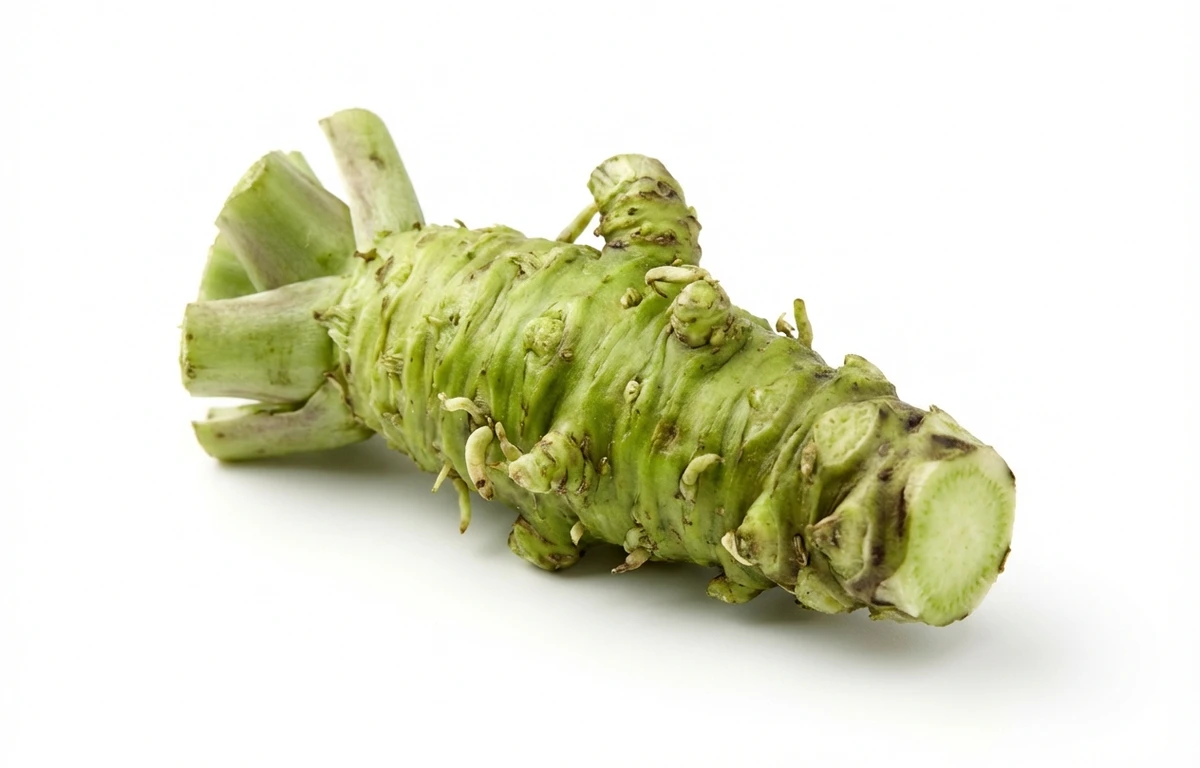
raw wasabi root.
VegetarianVeganGluten-freeDairy-freeNut-freePeanut-freeSoy-freeEgg-freeShellfish-freeHoney-freeAlcohol-freeHalalKosher
ALSO KNOWN AS
wasabi rootwasabia japonicajapanese horseradishnamawasabiwasabi rhizome
SERVING
CALORIES
109
PROTEIN
4.8g
CARBS
23.5g
FAT
0.60g
FIBER
7.8g
This ingredient is flagged as naturally gluten-free. Per 100 g, it provides 0 µg of vitamin K.
NUTRITION PROFILE · per 100 g
Everything in this ingredient.
MACRONUTRIENTS
Calories109kcal—
Protein4.8g10%
Carbohydrates23.5g9%
Fiber7.8g28%
Sugar13.2g26%
Total fat0.60g1%
Saturated fat0.09g0%
Trans fat0g—
Cholesterol0mg0%
Water69.1g—
MINERALS
Sodium17mg1%
Potassium568mg12%
Calcium128mg10%
Iron1.0mg6%
Magnesium69mg16%
Phosphorus80mg6%
Zinc1.6mg15%
Copper0.15mg17%
Manganese0.39mg17%
Selenium0.70µg1%
VITAMINS
Vitamin A0µg0%
Vitamin C41.9mg47%
Vitamin D0µg0%
Vitamin E0mg0%
Vitamin K0µg0%
Thiamin (B1)0.13mg11%
Riboflavin (B2)0.11mg8%
Niacin (B3)0.70mg4%
Pantothenic acid (B5)0.20mg4%
Vitamin B60.12mg7%
Folate (B9)18µg5%
Vitamin B120µg0%
%DV based on a 2,000 cal diet. Source: USDA FoodData Central. A dash in the %DV column means there’s no established Daily Value for that nutrient.
MEASUREMENT CONVERSIONS
How much is what.
1 cup252g
1 tablespoon15.8g
1 teaspoon5.2g
1 oz28.4g
1 lb453.6g
1 ml1.1g
1 liter1050g
1 piece150g
HEALTH BENEFITS
Why eat it.
- ✓Supports digestive health through fiber and enzyme stimulation
- ✓May aid in respiratory health by clearing sinuses
COOKING TIPS
In the kitchen.
- 1Grate using a traditional sharkskin grater (oroshigane) or a fine ceramic grater for the best texture
- 2Grate in a circular motion to break down cells and release the pungent allyl isothiocyanate
- 3Use immediately after grating; the flavor and heat peak at 5 minutes and dissipate after 20 minutes
STORAGE
Keep it fresh.
- Wrap the root in a damp paper towel and store in an unsealed plastic bag in the refrigerator
- Change the damp paper towel every 2-3 days to maintain freshness
- Keep the root submerged in a glass of water in the fridge, changing water daily, for up to 2 weeks
FAQ
Frequently asked questions.
How long does fresh wasabi root last?
Fresh wasabi root typically lasts about 2 weeks in the refrigerator if kept damp and stored properly.
Can you freeze fresh wasabi root?
Freezing is not recommended as it destroys the delicate cellular structure and significantly alters the flavor and texture.
How do I pick a high-quality wasabi root?
Look for a root that is firm, heavy for its size, and has a bright green color without soft spots or mold.
What is the best substitute for real wasabi?
The best substitute is a mix of horseradish, mustard flour, and green food coloring, though it lacks the complex sweetness of the real root.
Do I need to peel wasabi root before grating?
It is not necessary to peel the entire root; simply scrub it clean and trim any dark or rough bumps before grating.
Is the wasabi in most restaurants real?
No, most restaurants serve a paste made of horseradish, mustard, and dye. Real wasabi is usually grated fresh at high-end sushi restaurants.
How do you reduce the heat of wasabi?
The heat is volatile; letting it sit for 20-30 minutes will naturally reduce the pungency as the chemical compounds evaporate.
What part of the wasabi plant is eaten?
While the rhizome (root) is most famous, the leaves and stems are also edible and have a milder wasabi flavor.
RECIPES
Cook with raw wasabi root.
1 recipes · sorted by what’s quick



















