
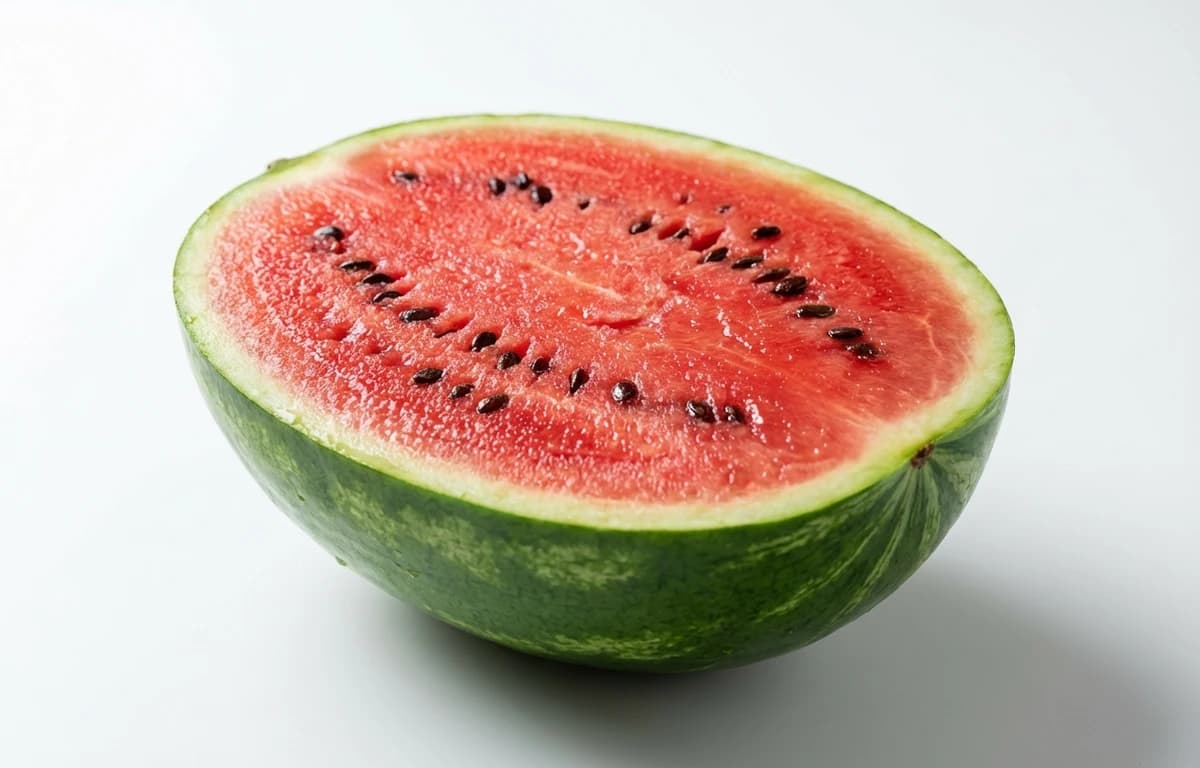
raw watermelon
Also known as:
Loading...
Also known as:
Per 100g
Nutrition data source: USDA FoodData Central
Common measurement equivalents in grams
Yes, watermelon is highly nutritious and low in calories, providing only 30 calories per 100g. It is a rich source of lycopene, an antioxidant linked to heart health, and Vitamin C, which supports the immune system and skin health.
Watermelon is an excellent food for weight loss because it is over 90% water and very low in calorie density. Its high water content helps you feel full longer, making it a satisfying low-calorie snack for weight management.
Watermelon is relatively high in natural sugars compared to other fruits, containing about 7.55g of carbs per 100g. While it can be eaten in small portions, it is generally not considered keto-friendly for those following a strict low-carb diet.
Diabetics can enjoy watermelon in moderation. Although it has a high Glycemic Index (GI), its Glycemic Load (GL) is low because of the high water content, meaning it has a relatively small impact on blood sugar levels when consumed in reasonable portions.
Look for a watermelon that feels heavy for its size and has a creamy yellow 'field spot' on the bottom, which indicates it ripened on the vine. A dull skin and a hollow sound when tapped are also good indicators of ripeness.
Yes, both the seeds and the rind are edible and nutritious. The rind is particularly high in citrulline, an amino acid that improves blood flow, while the seeds are a good source of protein and healthy fats when dried or roasted.
Whole watermelons can be kept at room temperature for about 7-10 days. Once cut, the fruit should be stored in an airtight container in the refrigerator and consumed within 3 to 5 days to maintain its texture and flavor.
raw watermelon is a versatile ingredient found in cuisines around the world. With 30 calories per 100g and 0.61 grams of protein, it's a nutritious addition to many dishes.
Explore more ingredients in the fruit category with complete nutrition information.
View all fruit →Discover 0 recipes featuring raw watermelon with step-by-step instructions.
Browse recipes →Watermelon is one of the best foods for hydration as it consists of over 90% water. It also contains essential electrolytes like potassium, making it an ideal snack for staying hydrated during hot weather or after physical activity.
Watermelon contains citrulline, an amino acid that has been shown to improve exercise performance and reduce muscle soreness. Consuming watermelon or its juice before or after a workout may help speed up recovery times.
Yes, you can freeze watermelon, though the texture will become softer and grainier once thawed. Frozen watermelon chunks are best used in smoothies, sorbets, or as ice cube replacements in cold drinks.