
Loading...
Per 100g
Nutrition data source: USDA FoodData Central
Common measurement equivalents in grams
Yes, raw almonds are highly nutritious, providing heart-healthy monounsaturated fats, fiber, and protein. They are an excellent source of Vitamin E and magnesium, which support heart health, blood sugar control, and bone strength.
A 100g serving of raw almonds contains approximately 579 calories and 21.2g of protein. While calorie-dense, they are a significant plant-based protein source that helps with muscle maintenance and satiety.
Yes, when eaten in moderation. Their high fiber and protein content promotes a feeling of fullness, which can reduce overall calorie intake. However, because they are high in fat, a standard serving size is typically about one ounce or 23 almonds.
Yes, raw almonds are keto-friendly as they are high in healthy fats and relatively low in net carbs. With about 21.7g of total carbs per 100g, much of which is fiber, they fit well into a low-carb or ketogenic lifestyle.
Yes, raw whole almonds are naturally gluten-free and 100% vegan. They are a staple in plant-based diets and are safe for individuals with celiac disease, provided they aren't processed on equipment shared with wheat.
Raw almonds can be eaten as a snack, chopped into salads, or blended into smoothies. You can also roast them at home, grind them into almond flour, or soak and blend them with water to make homemade almond milk.
Soaking is not required, but some prefer it to soften the texture and potentially make them easier to digest. Soaking may also help reduce phytic acid, which can improve the absorption of minerals like calcium and magnesium.
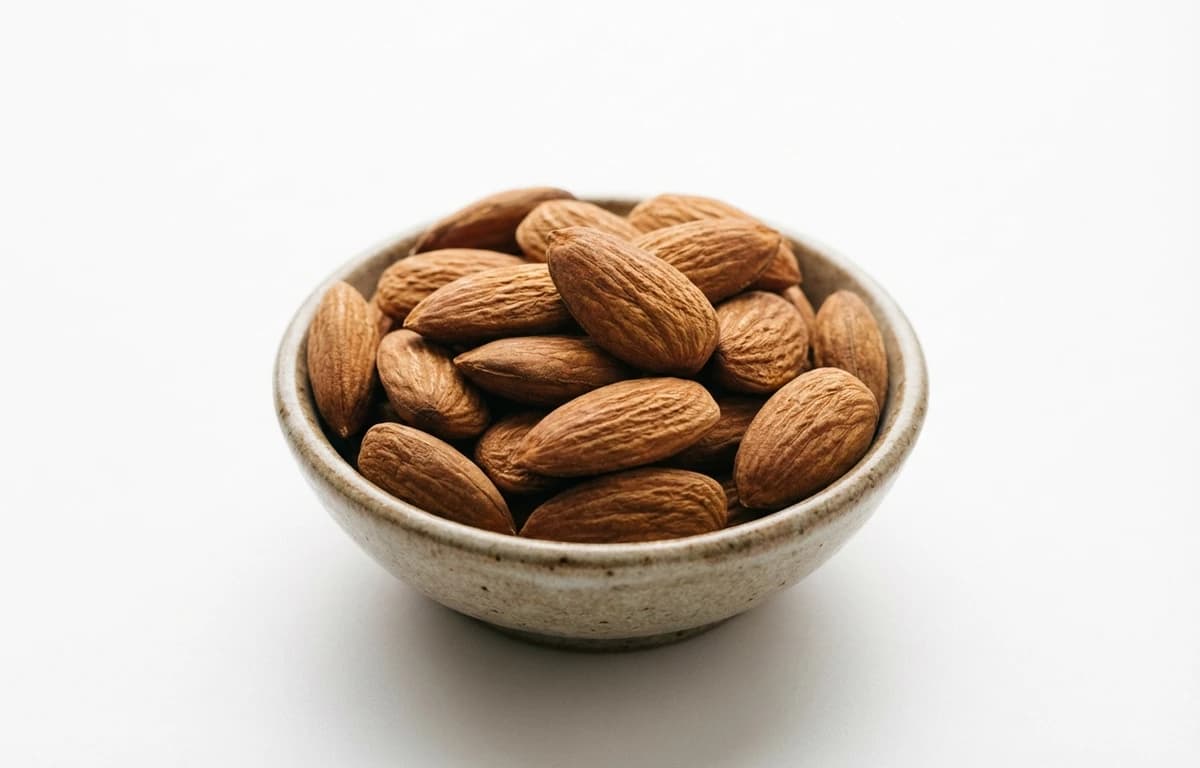
raw whole almonds is a versatile ingredient found in cuisines around the world. With 579 calories per 100g and 21.2 grams of protein, it's a nutritious addition to many dishes.
Explore more ingredients in the nut seed category with complete nutrition information.
View all nut seed →Discover 0 recipes featuring raw whole almonds with step-by-step instructions.
Browse recipes →Store raw almonds in an airtight container in a cool, dry place for up to 6 months. For longer shelf life, keep them in the refrigerator for up to a year or the freezer for up to two years to prevent the oils from going rancid.
You can tell almonds are spoiled if they have a bitter or chemical smell, which indicates the fats have gone rancid. They may also develop mold, a shriveled appearance, or a dark, oily texture if they are no longer fresh.
Yes, walnuts, pecans, or hazelnuts are good substitutes depending on the recipe. For a nut-free alternative with a similar crunch, you can use sunflower seeds or pumpkin seeds.