
Seafood
raw wild atlantic salmon.
VegetarianVeganGluten-freeDairy-freeNut-freePeanut-freeSoy-freeEgg-freeShellfish-freeHoney-freeAlcohol-free
ALSO KNOWN AS
atlantic salmon
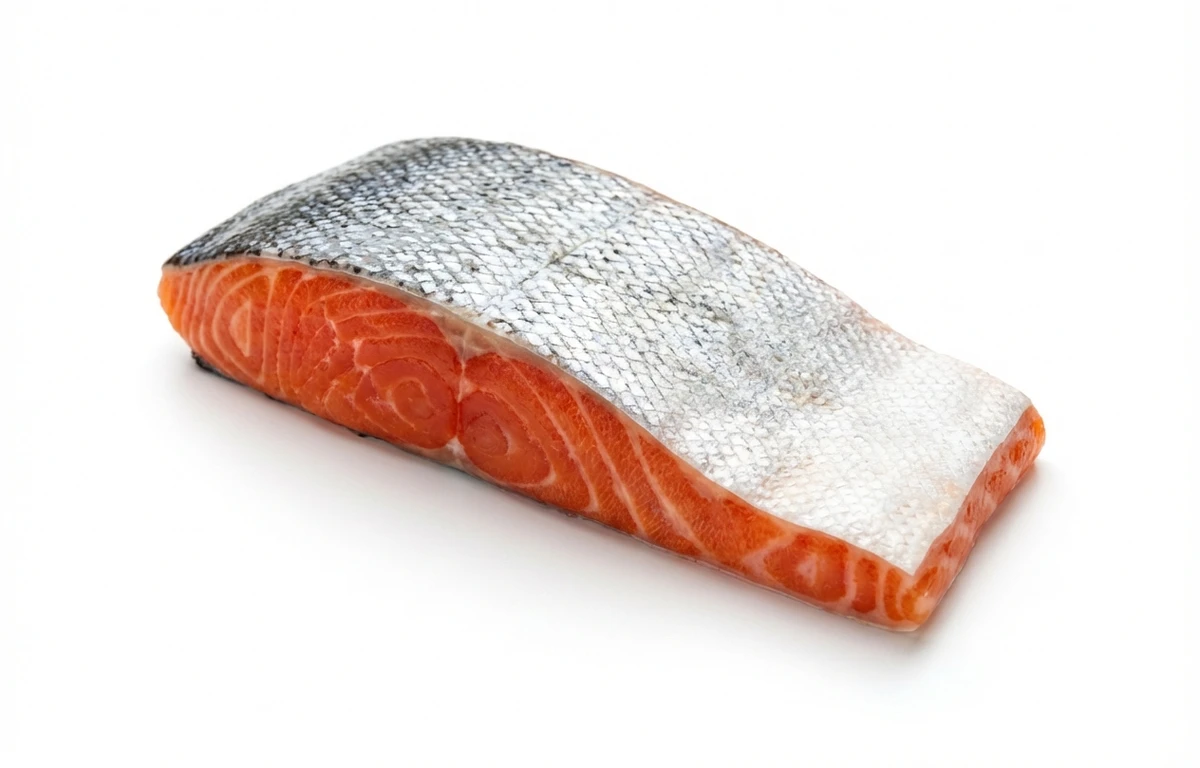
SERVING
CALORIES
142
PROTEIN
19.8g
CARBS
0g
FAT
6.3g
FIBER
0g
NUTRITION PROFILE · per 100 g
Everything in this ingredient.
MACRONUTRIENTS
Calories142kcal—
Protein19.8g40%
Carbohydrates0g0%
Fiber0g0%
Sugar0g0%
Total fat6.3g8%
Saturated fat0.98g5%
Trans fat0g—
Cholesterol55mg18%
Water72.5g—
MINERALS
Sodium44mg2%
Potassium490mg10%
Calcium12mg1%
Iron0.80mg4%
Magnesium28mg7%
Phosphorus200mg16%
Zinc0.39mg4%
Copper0.23mg26%
Manganese0.01mg0%
Selenium36.5µg66%
VITAMINS
Vitamin A12µg1%
Vitamin C0mg0%
Vitamin D13.1µg66%
Vitamin E1.1mg7%
Vitamin K0.10µg0%
Thiamin (B1)0.23mg19%
Riboflavin (B2)0.38mg29%
Niacin (B3)7.9mg49%
Pantothenic acid (B5)1.6mg32%
Vitamin B60.82mg48%
Folate (B9)25µg6%
Vitamin B123.2µg135%
%DV based on a 2,000 cal diet. Source: USDA FoodData Central. A dash in the %DV column means there’s no established Daily Value for that nutrient.
MEASUREMENT CONVERSIONS
How much is what.
1 oz28.4g
1 lb453.6g
1 piece141.8g
HEALTH BENEFITS
Why eat it.
- ✓Extremely rich in Omega-3 fatty acids (EPA and DHA), which support heart health, reduce inflammation, and improve brain function.
- ✓An excellent source of high-quality, complete protein, essential for muscle repair, bone health, and metabolic function.
- ✓High in Vitamin D, a nutrient crucial for calcium absorption, immune system regulation, and bone health.
- ✓Contains the antioxidant astaxanthin, which gives salmon its pink color and helps protect against oxidative stress and cellular damage.
COOKING TIPS
In the kitchen.
- 1Pat the salmon fillet dry with a paper towel before seasoning and cooking. This helps to achieve a crispy skin and a better sear.
- 2Wild salmon is leaner and cooks faster than farmed salmon. Be careful not to overcook it. Cook until the internal temperature reaches 125-130°F (52-54°C) for medium-rare, or until it flakes easily with a fork.
- 3Season simply with salt, pepper, lemon, and fresh herbs like dill or parsley to complement its rich, natural flavor.
- 4Ideal cooking methods include pan-searing (skin-side down first), grilling, baking, or poaching.
STORAGE
Keep it fresh.
- Refrigerate immediately at or below 40°F (4°C) in its original packaging or an airtight container. Use within 1-2 days of purchase.
- For longer storage, freeze at 0°F (-18°C) or below. Wrap individual portions tightly in plastic wrap and then place in a freezer-safe bag, removing as much air as possible. It can be frozen for up to 3 months for best quality.
- Thaw frozen salmon overnight in the refrigerator, never at room temperature, to maintain its texture and prevent bacterial growth.
FAQ
Frequently asked questions.
Is wild Atlantic salmon healthy?
Yes, wild Atlantic salmon is exceptionally healthy. It is a powerhouse of Omega-3 fatty acids for heart and brain health, high-quality protein for muscle repair, and Vitamin D for immunity. It also contains astaxanthin, a potent antioxidant that protects cells from damage.
How much protein and calories are in wild Atlantic salmon?
A 100g serving of raw wild Atlantic salmon contains approximately 142 calories and 19.84g of high-quality protein. It contains zero carbohydrates and about 6.34g of healthy fats, primarily Omega-3s.
Is wild Atlantic salmon keto-friendly?
Yes, wild Atlantic salmon is highly keto-friendly and ideal for low-carb diets. With zero carbohydrates and a significant amount of healthy fats and protein, it helps maintain ketosis while providing essential micronutrients like Vitamin D.
Is raw wild Atlantic salmon gluten-free?
Naturally, raw wild Atlantic salmon is 100% gluten-free. However, if you are purchasing pre-marinated or breaded salmon, check the label for gluten-containing ingredients like soy sauce or wheat flour.
Can I eat wild Atlantic salmon raw?
You can eat it raw if it is specifically labeled as 'sushi-grade' or 'sashimi-grade.' This usually means the fish was flash-frozen at very low temperatures to kill potential parasites, making it safe for raw consumption.
What is the best way to cook wild Atlantic salmon?
Wild salmon is leaner than farmed salmon, so it cooks faster. Popular methods include pan-searing for 3-4 minutes per side, grilling, or baking at 400°F (200°C) until the internal temperature reaches 145°F (63°C).
How long does raw salmon last in the refrigerator?
Raw wild Atlantic salmon should be stored in the coldest part of the fridge and consumed within 1 to 2 days of purchase. For longer storage, wrap it tightly in plastic or vacuum-seal it and freeze for up to 3 months.
How can I tell if raw salmon has gone bad?
Fresh salmon should have a mild, ocean-like scent; a strong 'fishy' or ammonia smell indicates spoilage. The flesh should be firm and spring back when pressed, and it should not have a slimy texture or dull, greyish discoloration.
What is the difference between wild and farmed Atlantic salmon?
Wild Atlantic salmon is generally leaner, has a deeper pink/orange color from its natural diet, and contains higher levels of minerals. Farmed salmon is often higher in total fat and calories but may have slightly different Omega-3 profiles depending on the feed used.
Does wild Atlantic salmon contain high levels of mercury?
Salmon is considered a 'best choice' seafood by the FDA because it is relatively low in mercury compared to larger fish like tuna or swordfish. It is generally safe for most adults to consume 2-3 servings per week.



















