
Poultry
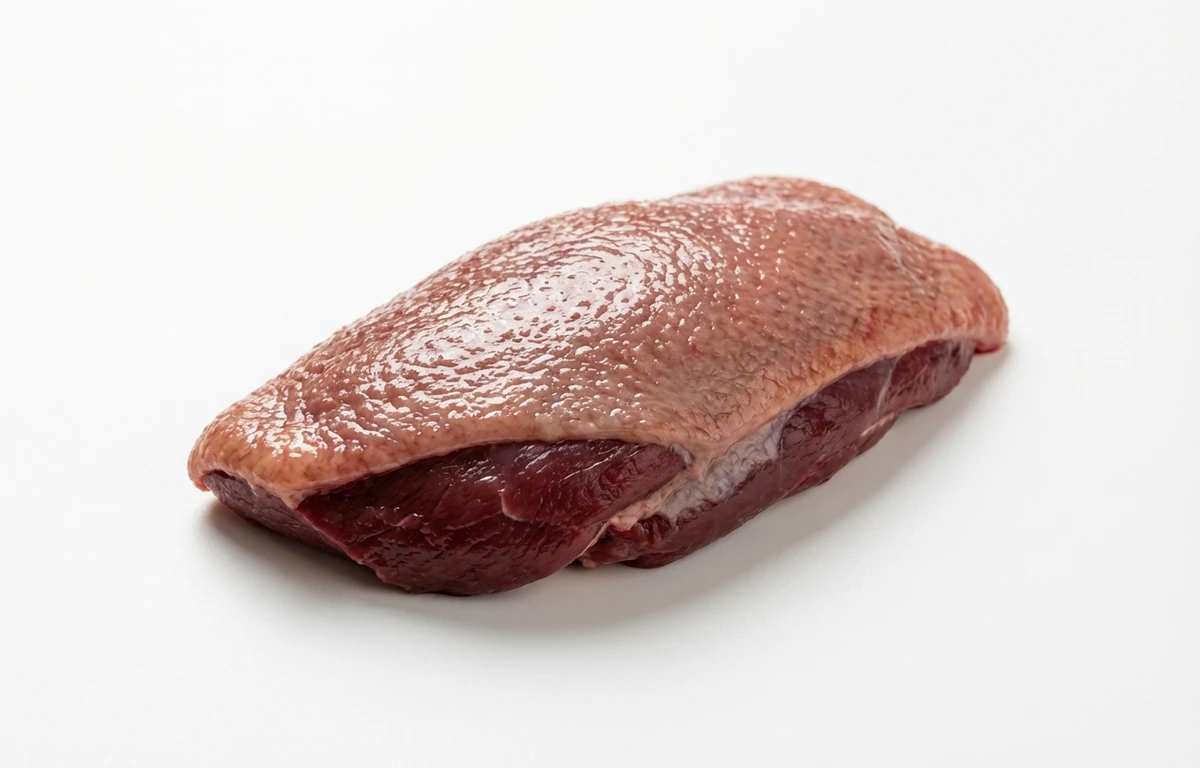
raw wild duck breast.
VegetarianVeganGluten-freeDairy-freeNut-freePeanut-freeSoy-freeEgg-freeShellfish-freeHoney-freeAlcohol-free
ALSO KNOWN AS
wild duck breast
SERVING
CALORIES
123
PROTEIN
22.7g
CARBS
0g
FAT
4.3g
FIBER
0g
NUTRITION PROFILE · per 100 g
Everything in this ingredient.
MACRONUTRIENTS
Calories123kcal—
Protein22.7g45%
Carbohydrates0g0%
Fiber0g0%
Sugar0g0%
Total fat4.3g6%
Saturated fat1.4g7%
Trans fat0g—
Cholesterol77mg26%
Water72.5g—
MINERALS
Sodium55mg2%
Potassium310mg7%
Calcium12mg1%
Iron4.5mg25%
Magnesium21mg5%
Phosphorus203mg16%
Zinc2.1mg19%
Copper0.30mg33%
Manganese0.02mg1%
Selenium15µg27%
VITAMINS
Vitamin A20µg2%
Vitamin C0mg0%
Vitamin D0.10µg1%
Vitamin E0.70mg5%
Vitamin K1.1µg1%
Thiamin (B1)0.17mg14%
Riboflavin (B2)0.45mg35%
Niacin (B3)5.1mg32%
Pantothenic acid (B5)1.5mg30%
Vitamin B60.60mg35%
Folate (B9)6.0µg2%
Vitamin B120.40µg17%
%DV based on a 2,000 cal diet. Source: USDA FoodData Central. A dash in the %DV column means there’s no established Daily Value for that nutrient.
MEASUREMENT CONVERSIONS
How much is what.
1 oz28.4g
1 lb453.6g
1 piece120g
HEALTH BENEFITS
Why eat it.
- ✓Excellent source of high-quality complete protein, essential for muscle building and repair.
- ✓Rich in heme iron, a highly bioavailable form that helps prevent anemia and supports oxygen transport in the blood.
- ✓Provides significant amounts of B vitamins, particularly niacin (B3) and vitamin B12, which are crucial for energy metabolism and nervous system health.
- ✓Good source of selenium, an antioxidant mineral that supports immune function and thyroid health.
COOKING TIPS
In the kitchen.
- 1Score the skin in a diamond pattern, being careful not to cut into the meat. This helps the fat render out, resulting in very crispy skin.
- 2Start the breast skin-side down in a cold, dry skillet over low to medium heat. This slow rendering process is key to crispy skin and prevents the meat from overcooking.
- 3Cook to an internal temperature of 135°F (57°C) for medium-rare. Let the breast rest for 5-10 minutes before slicing to allow juices to redistribute.
- 4Wild duck has a richer, more 'gamey' flavor than farmed duck. Pair it with robust, acidic, or sweet flavors like cherry, orange, blackberry, or balsamic vinegar to complement its taste.
STORAGE
Keep it fresh.
- Refrigerate immediately at 40°F (4°C) or below in its original packaging or a sealed container. Use within 1-2 days.
- For long-term storage, wrap tightly in plastic wrap and foil or a vacuum-sealed bag and freeze at 0°F (-18°C). It can be stored for up to 6 months.
- Thaw frozen duck breast slowly in the refrigerator for 24 hours before cooking to ensure even texture and food safety.
FAQ
Frequently asked questions.
Is wild duck breast healthy?
Yes, wild duck breast is a nutrient-dense protein source. It is relatively low in calories (123 per 100g) and rich in heme iron, B vitamins, and selenium, which support energy levels, blood health, and immune function.
How much protein is in wild duck breast?
Wild duck breast is an excellent source of high-quality complete protein, providing approximately 22.7g per 100g serving. This makes it highly effective for muscle building, repair, and maintaining satiety.
Is wild duck breast good for weight loss?
Yes, it is very effective for weight management due to its high protein-to-calorie ratio. With only 123 calories and 4.3g of fat per 100g, it provides a lean, filling meal option that fits well into calorie-controlled diets.
Is wild duck breast keto-friendly?
Absolutely. Wild duck breast contains 0g of carbohydrates, making it an ideal choice for ketogenic and other low-carb diets. Its moderate fat and high protein content align perfectly with keto nutritional goals.
Is wild duck breast gluten-free?
Raw wild duck breast is naturally gluten-free. However, if you are purchasing pre-marinated duck or ordering it at a restaurant, ensure that the sauces or seasonings used do not contain wheat-based thickeners or soy sauce.
What does wild duck breast taste like?
Wild duck has a much more intense, 'gamey' flavor compared to farm-raised duck. It is significantly leaner and has a darker, richer meat profile that is often compared to a high-quality steak rather than traditional poultry.
How do you cook wild duck breast?
It is best cooked to medium-rare (internal temperature of 135°F/57°C) to prevent the lean meat from becoming tough and dry. Sear the skin side first in a hot pan to render the fat, then flip and finish briefly on the other side.
Can I eat wild duck breast medium-rare?
While culinary experts recommend serving wild duck medium-rare to preserve its texture and flavor, the USDA officially recommends an internal temperature of 165°F (74°C) to ensure all bacteria are destroyed. Use a meat thermometer to check for safety.
How long does raw wild duck breast last in the fridge?
Raw wild duck breast should be stored in the coldest part of your refrigerator and used within 1 to 2 days. If you do not plan to cook it within that timeframe, it should be wrapped tightly and frozen.
Is wild duck leaner than farm-raised duck?
Yes, wild ducks are significantly leaner because they are more active and have a natural diet. While farm-raised duck is known for a thick layer of subcutaneous fat, wild duck breast contains only about 4.3g of fat per 100g.



















