
Vegetable10 recipes
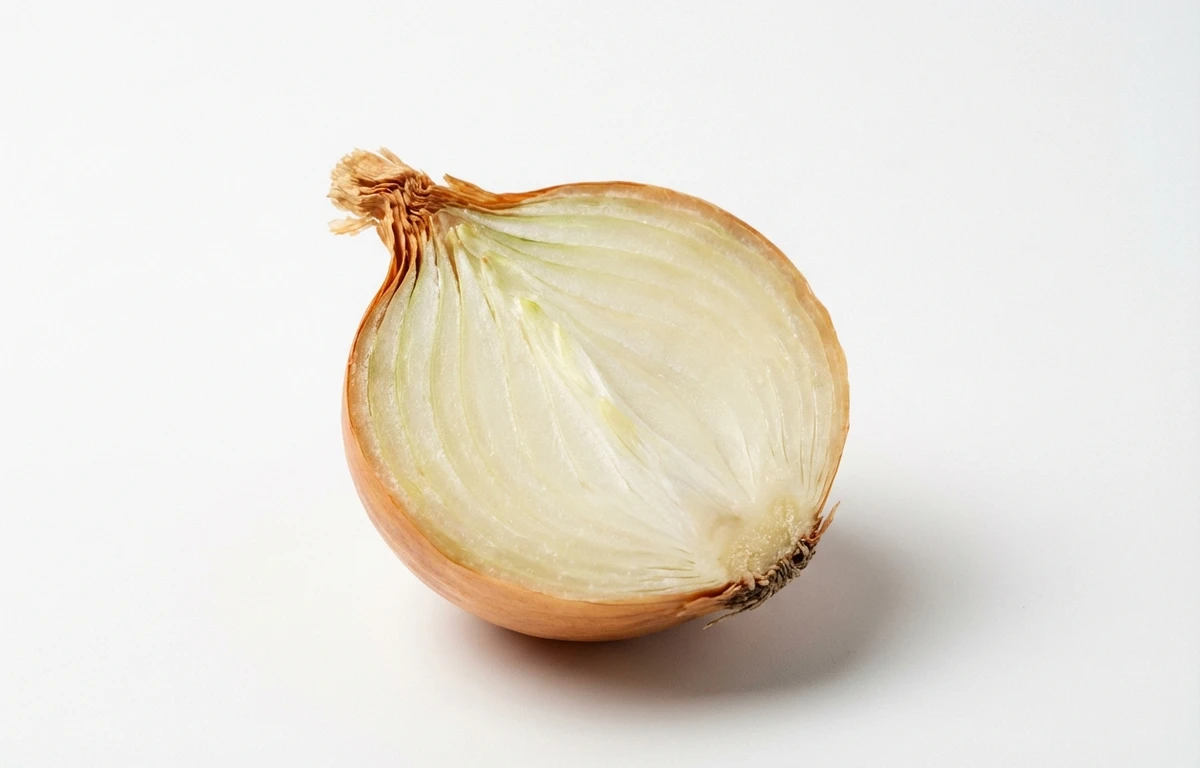
raw yellow onion.
VegetarianVeganGluten-freeDairy-freeNut-freePeanut-freeSoy-freeEgg-freeShellfish-freeHoney-freeAlcohol-free
ALSO KNOWN AS
Pyaazbrown onionyellow onionspanish onionvengayamulligaddakandasavalayellow onionsLarge Yellow Onionsmedium yellow onionchota peela pyazsmall brown onionyellow bulb onionsmall cooking onionSmall Yellow Onionraw brown onionraw pyaazraw kandaraw savala
SERVING
CALORIES
40
PROTEIN
1.1g
CARBS
9.3g
FAT
0.10g
FIBER
1.7g
This ingredient is flagged as naturally gluten-free. Per 100 g, it provides 0.40 µg of vitamin K.
NUTRITION PROFILE · per 100 g
Everything in this ingredient.
MACRONUTRIENTS
Calories40kcal—
Protein1.1g2%
Carbohydrates9.3g3%
Fiber1.7g6%
Sugar4.2g8%
Total fat0.10g0%
Saturated fat0.04g0%
Trans fat0g—
Cholesterol0mg0%
Water89.1g—
MINERALS
Sodium4.0mg0%
Potassium146mg3%
Calcium23mg2%
Iron0.21mg1%
Magnesium10mg2%
Phosphorus29mg2%
Zinc0.17mg2%
Copper0.04mg4%
Manganese0.13mg6%
Selenium0.50µg1%
VITAMINS
Vitamin A0µg0%
Vitamin C7.4mg8%
Vitamin D0µg0%
Vitamin E0.02mg0%
Vitamin K0.40µg0%
Thiamin (B1)0.05mg4%
Riboflavin (B2)0.03mg2%
Niacin (B3)0.12mg1%
Pantothenic acid (B5)0.12mg2%
Vitamin B60.12mg7%
Folate (B9)19µg5%
Vitamin B120µg0%
%DV based on a 2,000 cal diet. Source: USDA FoodData Central. A dash in the %DV column means there’s no established Daily Value for that nutrient.
MEASUREMENT CONVERSIONS
How much is what.
1 cup160g
1 tablespoon10g
1 oz28.4g
1 lb453.6g
1 piece110g
HEALTH BENEFITS
Why eat it.
- ✓Contains prebiotic fiber that promotes gut health
COOKING TIPS
In the kitchen.
- 1Soak raw slices in ice water for 15 minutes to reduce the sharp 'bite' for salads
- 2Sauté slowly on low heat to caramelize and bring out natural sweetness
- 3Use the root end as a handle while dicing to keep the onion layers together
STORAGE
Keep it fresh.
- Store in a cool, dry, dark, and well-ventilated place
- Keep away from potatoes as they release moisture and ethylene gas that causes onions to spoil
- Once cut, store in an airtight container in the refrigerator for up to 7 days
FAQ
Frequently asked questions.
How long do raw yellow onions last?
Whole raw yellow onions can last 2 to 3 months when stored in a cool, dry, and dark place with plenty of airflow.
Can you freeze raw onions?
Yes, you can freeze chopped raw onions in airtight bags for up to 8 months, though they will lose their crisp texture and are best used in cooked dishes.
How do I pick a good yellow onion?
Look for onions that feel heavy for their size, are firm to the touch, and have dry, papery skins with no visible sprouts or soft spots.
What is the best substitute for yellow onions?
White onions are the closest substitute. Shallots or leeks can also be used, though they offer a milder flavor profile.
Why do onions make you cry?
When cut, onions release a gas called syn-propanethial-S-oxide, which reacts with the moisture in your eyes to form a mild sulfuric acid.
Are yellow onions better raw or cooked?
They are versatile; raw they provide a sharp, pungent crunch, while cooking transforms them into a sweet, savory base for most savory dishes.
Should onions be stored in the refrigerator?
Whole onions should not be refrigerated as the cold, humid environment turns their starch to sugar and makes them soft and soggy.
What is the difference between yellow and white onions?
Yellow onions have a higher sugar content and a more complex flavor, making them better for caramelizing, while white onions are sharper and crunchier.
RECIPES
Cook with raw yellow onion.
10 recipes · sorted by what’s quick



















