
Grain
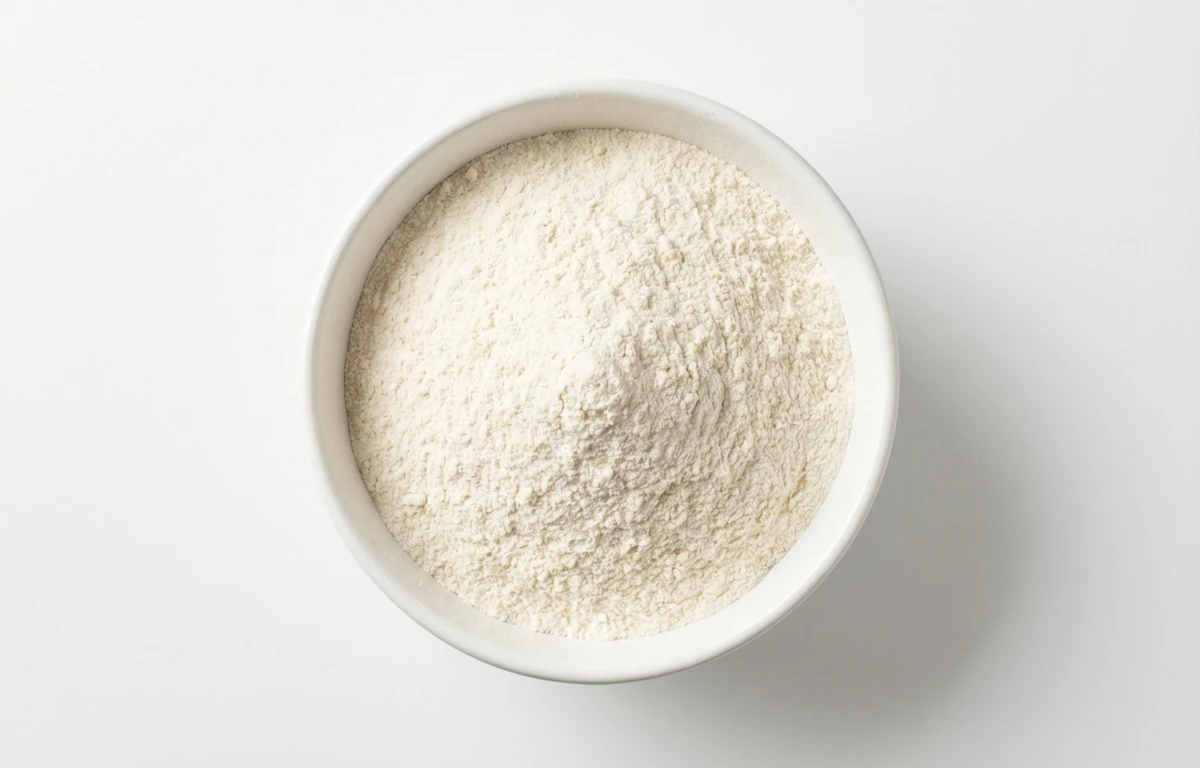
refined wheat flour.
VegetarianVeganGluten-freeDairy-freeNut-freePeanut-freeSoy-freeEgg-freeShellfish-freeHoney-freeAlcohol-free
SERVING
CALORIES
352
PROTEIN
10.4g
CARBS
74.3g
FAT
0.76g
FIBER
2.8g
NUTRITION PROFILE · per 100 g
Everything in this ingredient.
MACRONUTRIENTS
Calories352kcal—
Protein10.4g21%
Carbohydrates74.3g27%
Fiber2.8g10%
Sugar1.8g4%
Total fat0.76g1%
Saturated fat0.10g1%
Trans fat0g—
Cholesterol0mg0%
Water11.3g—
MINERALS
Sodium1.5mg0%
Potassium148mg3%
Calcium20.4mg2%
Iron1.8mg10%
Magnesium30.7mg7%
Phosphorus110mg9%
Zinc0.88mg8%
Copper0.17mg19%
Manganese0.63mg27%
Selenium0µg0%
VITAMINS
Vitamin A2.0µg0%
Vitamin C0mg0%
Vitamin D6.7µg34%
Vitamin E0.05mg0%
Vitamin K1.0µg1%
Thiamin (B1)0.15mg13%
Riboflavin (B2)0.06mg5%
Niacin (B3)0.77mg5%
Pantothenic acid (B5)0.72mg14%
Vitamin B60.08mg5%
Biotin (B7)0.58µg2%
Folate (B9)16.3µg4%
%DV based on a 2,000 cal diet. Source: USDA FoodData Central. A dash in the %DV column means there’s no established Daily Value for that nutrient.
MEASUREMENT CONVERSIONS
How much is what.
1 cup125g
1 tablespoon7.8g
1 teaspoon2.6g
1 oz28.4g
1 lb453.6g
1 ml0.5g
1 liter528g
HEALTH BENEFITS
Why eat it.
- ✓Provides a quick source of energy due to its high concentration of simple carbohydrates.
- ✓Often fortified with essential nutrients like iron and B vitamins (folic acid, niacin, riboflavin, thiamin) to combat deficiencies.
- ✓Low in fiber, which can be beneficial for individuals on low-residue diets or with certain digestive conditions.
COOKING TIPS
In the kitchen.
- 1Sift flour before mixing into batters to aerate it and remove lumps, resulting in a lighter texture in baked goods.
- 2When making dough, avoid over-mixing after adding flour to prevent developing too much gluten, which can make the final product tough.
- 3To thicken sauces or gravies without lumps, create a slurry by mixing flour with a small amount of cold liquid before adding it to the hot mixture.
- 4For precise baking, measure flour by weight using a kitchen scale rather than by volume (cups), as packing can significantly alter the amount.
STORAGE
Keep it fresh.
- Store in a cool, dry, dark place in an airtight container to prevent moisture absorption and pest infestation for up to one year.
- For long-term storage (over a year), place the airtight container in the freezer to maintain freshness and prevent spoilage.
FAQ
Frequently asked questions.
Is refined wheat flour healthy?
Refined wheat flour provides a quick source of energy and is often fortified with essential B vitamins and iron. However, because the bran and germ are removed during processing, it is low in fiber and can cause faster blood sugar spikes compared to whole grains, so it should be consumed in moderation.
How many calories and carbohydrates are in refined wheat flour?
Refined wheat flour is calorie-dense, containing approximately 351.82 calories and 74.27g of carbohydrates per 100g. It is a high-carb ingredient with a very low fat content of about 0.76g.
Is refined wheat flour gluten-free?
No, refined wheat flour is not gluten-free. It is derived from wheat, which naturally contains gluten proteins that provide the necessary structure and elasticity for bread and pastries.
Is refined wheat flour vegan?
Yes, refined wheat flour is vegan. It is a plant-based product made entirely from wheat grains and does not contain any animal-derived ingredients.
Is refined wheat flour keto-friendly?
No, refined wheat flour is not keto-friendly. With over 74g of carbohydrates per 100g, it is too high in carbs for a ketogenic diet, which typically limits daily carb intake to under 50g.
What are the primary health benefits of refined wheat flour?
Its main benefits include providing immediate energy and delivering fortified nutrients like folic acid and iron. Additionally, its low fiber content makes it easier to digest for individuals on low-residue diets or those with specific digestive sensitivities.
What is refined wheat flour used for in cooking?
It is a highly versatile 'all-purpose' flour used for baking cakes, cookies, and white breads. It also functions as an effective thickening agent for gravies and sauces or as a crispy coating for fried foods.
Can I substitute refined wheat flour with whole wheat flour?
Yes, but the results will differ. Whole wheat flour is denser and more absorbent; when substituting, you may need to add extra liquid or use a 1:1 ratio for heartier bakes, though delicate pastries may become heavy.
How should I store refined wheat flour and how long does it last?
Store it in an airtight container in a cool, dry place to prevent moisture and pests. It typically lasts 6 to 12 months at room temperature, but its shelf life can be extended by storing it in the refrigerator or freezer.
Why is refined wheat flour often fortified?
The refining process removes the nutrient-dense bran and germ of the wheat kernel. Fortification adds back essential vitamins and minerals like niacin, riboflavin, and thiamin to help prevent nutritional deficiencies in the general population.



















