
grains_cereals10 recipes
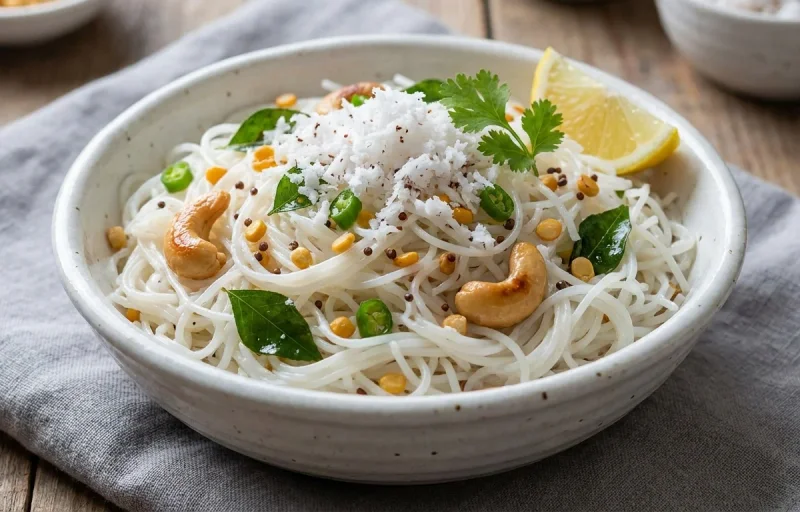
Rice Sevai.
VegetarianVeganGluten-freeDairy-freeNut-freePeanut-freeSoy-freeEgg-freeShellfish-freeHoney-freeAlcohol-free
ALSO KNOWN AS
rice vermicelliidiyappamrice noodlesshavigeakki shavigesemiya
SERVING
CALORIES
364
PROTEIN
6.0g
CARBS
80g
FAT
0.60g
FIBER
1.6g
NUTRITION PROFILE · per 100 g
Everything in this ingredient.
MACRONUTRIENTS
Calories364kcal—
Protein6.0g12%
Carbohydrates80g29%
Fiber1.6g6%
Sugar0.10g0%
Total fat0.60g1%
Saturated fat0.20g1%
Trans fat0g—
Cholesterol0mg0%
Water11g—
MINERALS
Sodium10mg0%
Potassium30mg1%
Calcium10mg1%
Iron0.70mg4%
%DV based on a 2,000 cal diet. Source: USDA FoodData Central. A dash in the %DV column means there’s no established Daily Value for that nutrient.
MEASUREMENT CONVERSIONS
How much is what.
1 cup85g
1 tablespoon5g
1 teaspoon2g
1 ml0.5g
HEALTH BENEFITS
Why eat it.
- ✓Naturally gluten-free
- ✓Easy to digest
- ✓Low in fat
- ✓Provides quick energy
COOKING TIPS
In the kitchen.
- 1For instant sevai, soak in hot water for 5-7 minutes rather than boiling
- 2Drain thoroughly and rinse with cold water to prevent sticking
STORAGE
Keep it fresh.
- Store in an airtight container in a cool, dry place
- Keep away from moisture to prevent spoilage
FAQ
Frequently asked questions.
Is rice sevai gluten-free?
Yes, traditional rice sevai is made from rice flour and is naturally gluten-free.
How long does dry rice sevai last?
When stored in an airtight container, it can last for up to 12 months.
Can I freeze cooked rice sevai?
Yes, it can be frozen for up to 1 month, though the texture may become slightly softer upon reheating.
What is the difference between sevai and vermicelli?
Sevai specifically refers to rice-based noodles, while vermicelli can be made from wheat (maida) or rice.
Is it healthy for weight loss?
It is low in fat but high in refined carbohydrates; portion control is recommended for weight management.
How do I prevent it from becoming mushy?
Avoid overcooking; follow the package instructions for soaking rather than active boiling.
What are common dishes made with it?
Common dishes include Lemon Sevai, Coconut Sevai, and sweet Kheer or Payasam.
Does it contain any allergens?
Plain rice sevai is generally allergen-free, but check labels for cross-contamination if you have severe allergies.
Can I use it as a substitute for pasta?
It can be used in stir-fries or soups, but it is much thinner and more delicate than standard wheat pasta.
Is it suitable for babies?
Yes, its soft texture and easy digestibility make it a common early solid food for toddlers.
RECIPES
Cook with rice sevai.
10 recipes · sorted by what’s quick
SAME CATEGORY



















