
Fruit
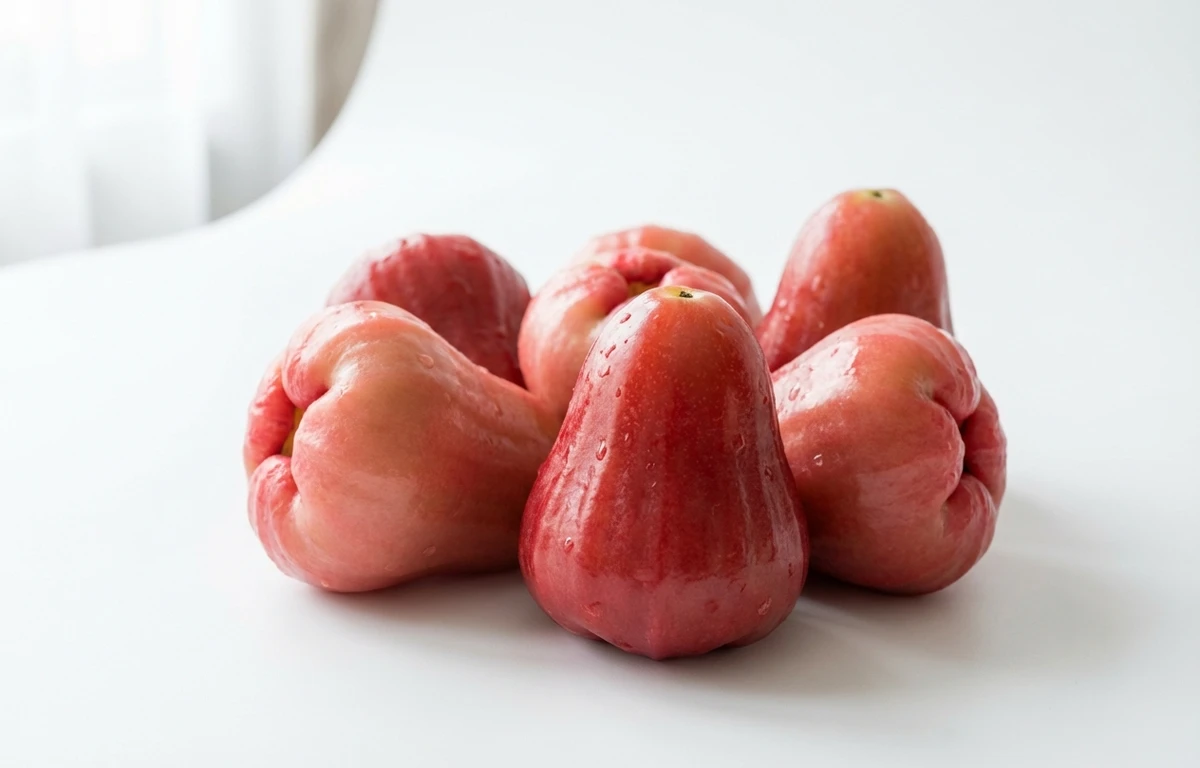
ripe jambu fruit.
VegetarianVeganGluten-freeDairy-freeNut-freePeanut-freeSoy-freeEgg-freeShellfish-freeHoney-freeAlcohol-free
SERVING
CALORIES
56
PROTEIN
0.82g
CARBS
12.3g
FAT
0.17g
FIBER
3.1g
NUTRITION PROFILE · per 100 g
Everything in this ingredient.
MACRONUTRIENTS
Calories56.2kcal—
Protein0.82g2%
Carbohydrates12.3g4%
Fiber3.1g11%
Sugar6.8g14%
Total fat0.17g0%
Saturated fat0.07g0%
Trans fat0g—
Cholesterol0mg0%
Water83.3g—
MINERALS
Sodium2.6mg0%
Potassium103mg2%
Calcium25.4mg2%
Iron0.33mg2%
Magnesium28mg7%
Phosphorus9.6mg1%
Zinc0.06mg1%
Copper0.02mg2%
Manganese0.04mg2%
Selenium0µg0%
VITAMINS
Vitamin A1.6µg0%
Vitamin C16.5mg18%
Vitamin D0.82µg4%
Vitamin E0.04mg0%
Vitamin K7.9µg7%
Thiamin (B1)0.02mg2%
Riboflavin (B2)0.02mg2%
Niacin (B3)0.14mg1%
Pantothenic acid (B5)0.31mg6%
Vitamin B60.03mg2%
Biotin (B7)2.6µg9%
Folate (B9)7.6µg2%
%DV based on a 2,000 cal diet. Source: USDA FoodData Central. A dash in the %DV column means there’s no established Daily Value for that nutrient.
MEASUREMENT CONVERSIONS
How much is what.
1 cup187.2g
1 tablespoon11.7g
1 teaspoon3.9g
1 oz28.4g
1 lb453.6g
1 ml0.8g
1 liter780g
1 piece80g
HEALTH BENEFITS
Why eat it.
- ✓High water content (over 90%) makes it extremely hydrating and refreshing.
- ✓Rich in Vitamin C and other antioxidants, which help boost the immune system and protect cells from damage.
- ✓Good source of dietary fiber, aiding in digestion, promoting regular bowel movements, and supporting gut health.
- ✓Low in calories and fat, making it a suitable snack for weight management.
COOKING TIPS
In the kitchen.
- 1Enjoy fresh and raw, either whole or sliced. Chilling the fruit before eating enhances its crispness and refreshing quality.
- 2Slice and add to salads (both fruit and savory) for a juicy, crunchy texture similar to a pear or apple.
- 3Can be lightly stewed or made into preserves, jellies, and sauces. It pairs well with spices like cinnamon and star anise.
- 4In Southeast Asian cuisine, it's often served with a spicy salt or shrimp paste dip.
STORAGE
Keep it fresh.
- Store ripe jambu fruit in the refrigerator's crisper drawer, preferably in a perforated plastic bag, for up to 5-7 days.
- Handle gently as they have thin skin and bruise easily. Avoid stacking them or placing heavy items on top.
- For best flavor and crispness, consume within a few days of purchase or harvest.
FAQ
Frequently asked questions.
Is jambu fruit healthy?
Yes, jambu fruit is highly nutritious and beneficial for overall health. It is exceptionally hydrating with over 90% water content and provides a significant amount of Vitamin C and antioxidants to support the immune system.
How many calories and carbs are in jambu fruit?
A 100g serving of ripe jambu fruit contains approximately 56.17 calories and 12.3g of carbohydrates. It is very low in fat (0.17g) and protein (0.82g), making it a light and refreshing snack.
Is jambu fruit good for weight loss?
Jambu fruit is an excellent snack for weight management because it is low in calories and fat. Its high fiber content promotes satiety, while the high water content helps keep you full and hydrated.
Is jambu fruit keto-friendly?
With 12.3g of carbs per 100g, jambu fruit is moderately high in natural sugars for a strict ketogenic diet. It can be enjoyed in small, measured portions, but may not be ideal for those in deep ketosis.
Can diabetics eat jambu fruit?
Yes, diabetics can eat jambu fruit in moderation. The dietary fiber helps slow down the absorption of sugar, but because it contains natural carbohydrates, it is important to monitor portion sizes as part of a balanced meal plan.
What does ripe jambu fruit taste like?
Ripe jambu fruit has a mild, sweet, and slightly floral flavor, often compared to the scent of a rose. Its texture is uniquely crisp and crunchy, similar to a very juicy apple or a firm watermelon.
How do you prepare and eat jambu fruit?
Jambu fruit is most commonly eaten raw. Simply wash the fruit thoroughly and eat it whole like an apple, or slice it for salads and fruit platters; the thin skin is edible, but the seeds and the spongy core are usually discarded.
How do you store jambu fruit and how long does it last?
Store jambu fruit in the refrigerator in a breathable bag to maintain its crisp texture. It is best consumed within 3 to 5 days, as its high moisture content makes it sensitive to bruising and quick spoilage.
How do you know if a jambu fruit is ripe and fresh?
A ripe jambu fruit should have a bright, vibrant color (usually red, pink, or green depending on the variety) and a shiny, waxy skin. It should feel firm to the touch; if it feels soft or has dark mushy spots, it is likely overripe or spoiled.
Can you eat the skin of the jambu fruit?
Yes, the skin is perfectly edible and very thin. In fact, eating the skin provides additional dietary fiber and antioxidants, though you should always wash the fruit well to remove any dirt or wax.



















