
Fruit
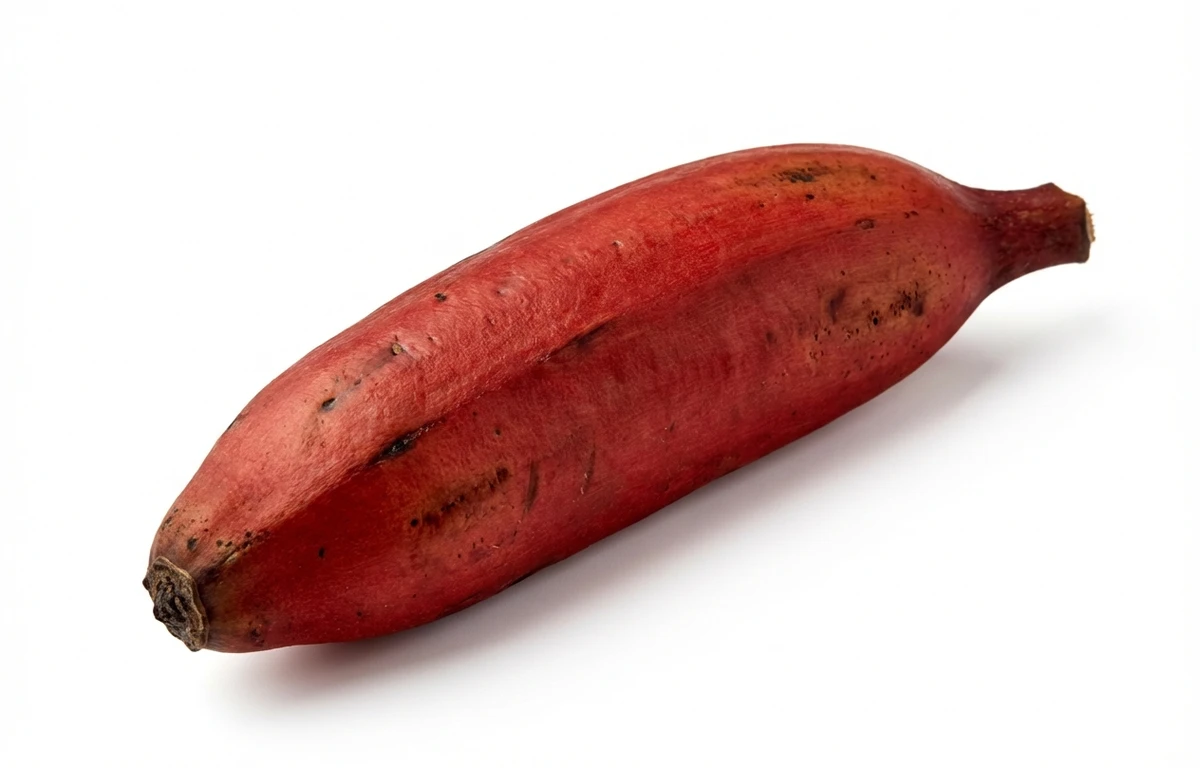
ripe red banana.
VegetarianVeganGluten-freeDairy-freeNut-freePeanut-freeSoy-freeEgg-freeShellfish-freeHoney-freeAlcohol-free
SERVING
CALORIES
112
PROTEIN
1.3g
CARBS
25.2g
FAT
0.29g
FIBER
2.0g
NUTRITION PROFILE · per 100 g
Everything in this ingredient.
MACRONUTRIENTS
Calories112kcal—
Protein1.3g3%
Carbohydrates25.2g9%
Fiber2.0g7%
Sugar14.6g29%
Total fat0.29g0%
Saturated fat0.11g1%
Trans fat0g—
Cholesterol0mg0%
Water70.3g—
MINERALS
Sodium1.1mg0%
Potassium313mg7%
Calcium9.6mg1%
Iron0.24mg1%
Magnesium31.4mg7%
Phosphorus23.3mg2%
Zinc0.09mg1%
Copper0.06mg7%
Manganese0.19mg8%
Selenium0µg0%
VITAMINS
Vitamin A53.6µg6%
Vitamin C6.7mg7%
Vitamin D0.21µg1%
Vitamin E0.09mg1%
Vitamin K1.9µg2%
Thiamin (B1)0.01mg1%
Riboflavin (B2)0.02mg2%
Niacin (B3)0.46mg3%
Pantothenic acid (B5)0.41mg8%
Vitamin B60.45mg26%
Biotin (B7)1.4µg5%
Folate (B9)18.9µg5%
%DV based on a 2,000 cal diet. Source: USDA FoodData Central. A dash in the %DV column means there’s no established Daily Value for that nutrient.
MEASUREMENT CONVERSIONS
How much is what.
1 cup225g
1 tablespoon14.1g
1 teaspoon4.7g
1 oz28.4g
1 lb453.6g
1 ml1g
1 liter951g
1 piece125g
HEALTH BENEFITS
Why eat it.
- ✓Rich in potassium, which supports heart health and helps regulate blood pressure.
- ✓Higher in certain antioxidants, like beta-carotene and lutein, than yellow bananas, supporting vision and immune health.
- ✓A good source of dietary fiber, which aids digestion and promotes satiety.
- ✓Contains Vitamin B6, essential for brain development and function.
COOKING TIPS
In the kitchen.
- 1Enjoy raw to appreciate their unique sweet flavor, which has hints of raspberry.
- 2Their creamy texture and higher sugar content make them excellent for baking into banana bread, muffins, or pancakes.
- 3Slice and pan-fry with a little butter or coconut oil and a sprinkle of cinnamon for a simple, caramelized dessert.
- 4Blend into smoothies for a creamier consistency and sweeter taste than traditional bananas.
STORAGE
Keep it fresh.
- Store at room temperature until the peel turns a deep purplish-red and the fruit yields to gentle pressure.
- To slow ripening, place in the refrigerator; the peel will darken, but the flesh will remain good for several days.
- For long-term storage, peel, slice, and freeze in an airtight container for smoothies or baking.
FAQ
Frequently asked questions.
Are red bananas healthier than yellow bananas?
Red bananas are slightly more nutrient-dense than yellow ones, containing higher levels of Vitamin C and beta-carotene. They also tend to have a lower glycemic index, meaning they cause a slower rise in blood sugar levels.
What are the main health benefits of red bananas?
They are rich in potassium, which supports heart health and blood pressure regulation. Additionally, their high antioxidant content (like lutein) supports eye health, while Vitamin B6 aids brain development and immune function.
How many calories and carbs are in a red banana?
A 100g serving of red banana contains approximately 111.62 calories and 25.21g of carbohydrates. While slightly higher in calories than some other fruits, they provide significant dietary fiber to aid digestion.
Are red bananas keto-friendly?
No, red bananas are not considered keto-friendly. With over 25g of carbohydrates per 100g, a single serving would likely exceed the daily carb limit for a strict ketogenic diet.
Can diabetics eat red bananas?
Yes, diabetics can eat red bananas in moderation. Their high fiber content helps slow the absorption of sugar, but because they are still high in carbs, it is important to monitor portion sizes and total daily sugar intake.
What do red bananas taste like?
Ripe red bananas have a sweet, creamy flavor often described as having a hint of raspberry or strawberry. Their texture is softer and denser than the common yellow Cavendish banana.
How do you know when a red banana is ripe?
A red banana is ripe when its skin turns a deep maroon or purplish-brown color and yields slightly to gentle pressure. If the skin is bright red and very firm, the fruit is likely still starchy and underripe.
How should red bananas be stored?
Store red bananas at room temperature on a counter or a banana hanger. Once they are fully ripe, you can move them to the refrigerator for 2-3 days to slow down the ripening process, though the skin may turn dark brown.
Can you use red bananas for baking?
Yes, red bananas are excellent for baking because of their intense sweetness and creamy texture. They work perfectly in banana bread, muffins, and pancakes, often providing a richer flavor than yellow bananas.
Can you eat red bananas raw?
Absolutely. Red bananas are most commonly eaten raw as a snack or sliced into fruit salads and smoothie bowls. They are at their best when the flesh is soft and the skin is dark maroon.



















