
Meat
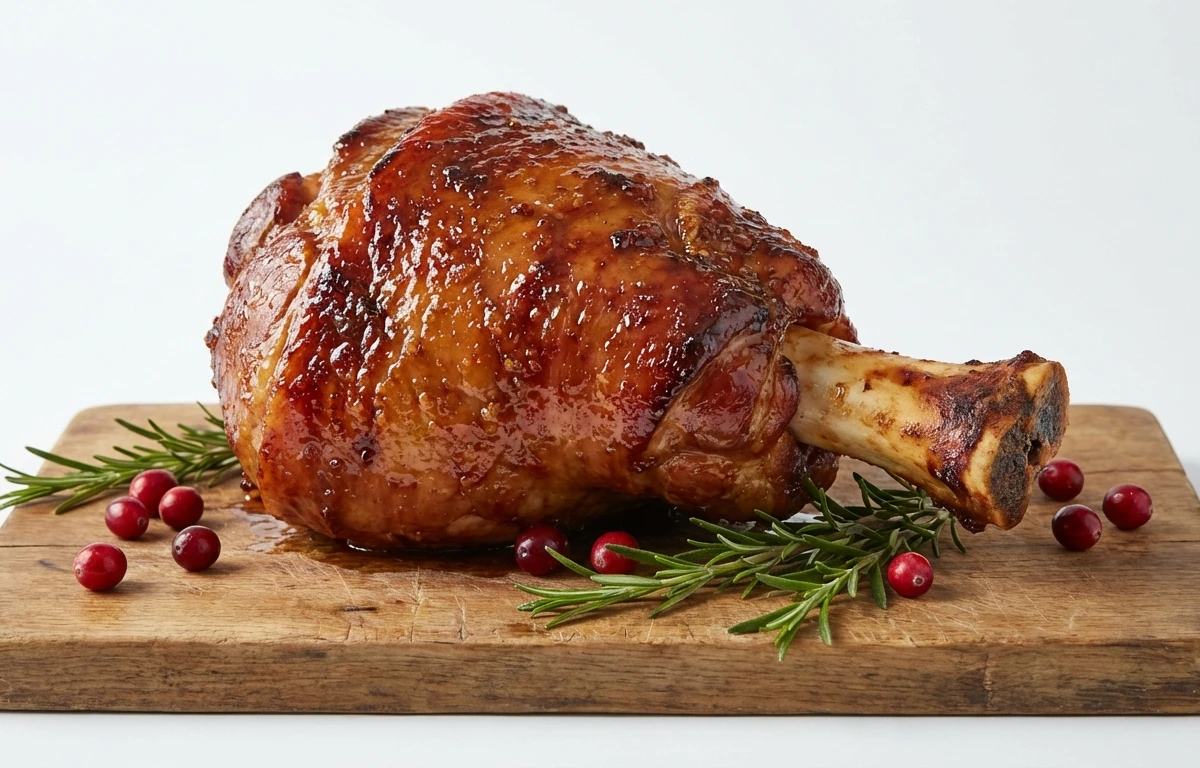
roasted bone-in ham shank.
VegetarianVeganGluten-freeDairy-freeNut-freePeanut-freeSoy-freeEgg-freeShellfish-freeHoney-freeAlcohol-freeHalalKosher
SERVING
CALORIES
210
PROTEIN
24g
CARBS
0g
FAT
12g
FIBER
0g
This ingredient is flagged as naturally gluten-free. Per 100 g, it provides 0 µg of vitamin K.
NUTRITION PROFILE · per 100 g
Everything in this ingredient.
MACRONUTRIENTS
Calories210kcal—
Protein24g48%
Carbohydrates0g0%
Fiber0g0%
Sugar0g0%
Total fat12g15%
Saturated fat4.2g21%
Trans fat0g—
Cholesterol70mg23%
Water58g—
MINERALS
Sodium1150mg50%
Potassium320mg7%
Calcium8.0mg1%
Iron1.2mg7%
Magnesium20mg5%
Phosphorus210mg17%
Zinc2.8mg25%
Copper0.10mg11%
Manganese0.02mg1%
Selenium35µg64%
VITAMINS
Vitamin A0µg0%
Vitamin C0mg0%
Vitamin D0.80µg4%
Vitamin E0.20mg1%
Vitamin K0µg0%
Thiamin (B1)0.60mg50%
Riboflavin (B2)0.20mg15%
Niacin (B3)4.5mg28%
Pantothenic acid (B5)0.70mg14%
Vitamin B60.40mg24%
Folate (B9)4.0µg1%
Vitamin B120.70µg29%
%DV based on a 2,000 cal diet. Source: USDA FoodData Central. A dash in the %DV column means there’s no established Daily Value for that nutrient.
MEASUREMENT CONVERSIONS
How much is what.
1 oz28.4g
1 lb453.6g
1 piece500g
HEALTH BENEFITS
Why eat it.
- ✓High quality complete protein source
- ✓Rich in B-vitamins for energy metabolism
- ✓Excellent source of selenium for thyroid health
- ✓Provides essential minerals like zinc and phosphorus
- ✓Contains thiamin (B1) which supports nerve function
COOKING TIPS
In the kitchen.
- 1Roast at a low temperature (325°F/165°C) to maintain moisture.
- 2Save the bone after roasting to flavor soups, stews, or beans.
- 3If reheating, add a splash of water or broth and cover with foil to prevent drying.
STORAGE
Keep it fresh.
- Store in an airtight container in the refrigerator for 3-4 days.
- Can be frozen for up to 2 months if tightly wrapped in foil and plastic.
- Keep separate from raw foods to prevent cross-contamination.
FAQ
Frequently asked questions.
How long does roasted ham shank last in the fridge?
When properly stored in an airtight container, it will last for 3 to 4 days.
Can you freeze roasted ham shank?
Yes, it freezes well. Wrap it tightly in freezer-safe wrap or bags; it will maintain quality for about 2 months.
What is the difference between a ham shank and a ham hock?
The shank comes from the leg and is meatier, while the hock is the joint below the shank and contains more bone, skin, and connective tissue.
How do I know if the ham shank has gone bad?
Signs of spoilage include a slimy texture, a sour or off smell, and any visible mold or discoloration.
What are the best uses for the leftover bone?
The bone is excellent for flavoring split pea soup, lentil stew, or slow-cooked collard greens.
Is ham shank gluten-free?
The meat itself is gluten-free, but always check the labels if it was prepared with a glaze or marinade that might contain wheat-based thickeners.
How do I reheat roasted ham shank without it getting tough?
Reheat it slowly in the oven at a low temperature, covered with foil, and with a small amount of liquid like water or apple juice.



















