
Nut Seed
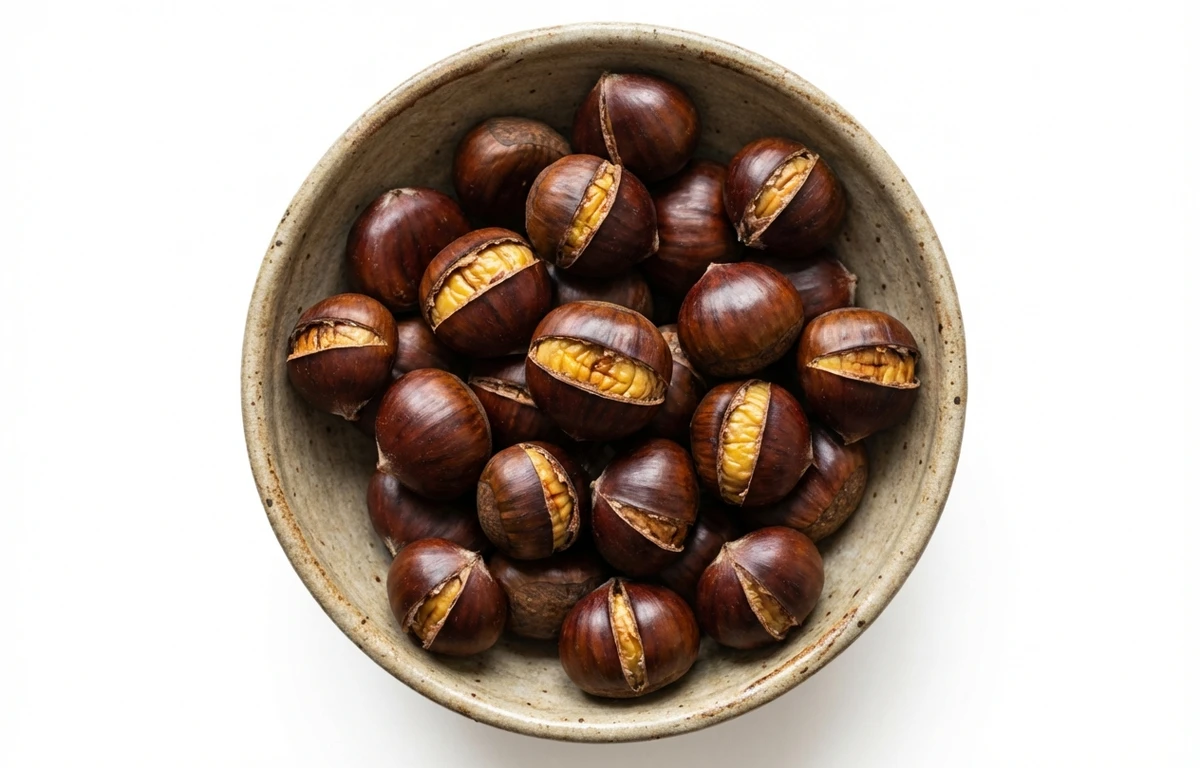
roasted european chestnuts.
VegetarianVeganGluten-freeDairy-freeNut-freePeanut-freeSoy-freeEgg-freeShellfish-freeHoney-freeAlcohol-free
ALSO KNOWN AS
european chestnuts
SERVING
CALORIES
245
PROTEIN
3.2g
CARBS
53g
FAT
2.2g
FIBER
5.1g
NUTRITION PROFILE · per 100 g
Everything in this ingredient.
MACRONUTRIENTS
Calories245kcal—
Protein3.2g6%
Carbohydrates53g19%
Fiber5.1g18%
Sugar10.6g21%
Total fat2.2g3%
Saturated fat0.41g2%
Cholesterol0mg0%
Water40.5g—
MINERALS
Sodium2.0mg0%
Potassium592mg13%
Calcium29mg2%
Iron0.91mg5%
Magnesium33mg8%
Phosphorus107mg9%
Zinc0.57mg5%
Copper0.51mg57%
Manganese1.2mg51%
Selenium1.2µg2%
VITAMINS
Vitamin A1.0µg0%
Vitamin C26mg29%
Vitamin D0µg0%
Vitamin E0.50mg3%
Vitamin K7.8µg7%
Thiamin (B1)0.24mg20%
Riboflavin (B2)0.18mg14%
Niacin (B3)1.3mg8%
Pantothenic acid (B5)0.55mg11%
Vitamin B60.50mg29%
Folate (B9)70µg18%
Vitamin B120µg0%
%DV based on a 2,000 cal diet. Source: USDA FoodData Central. A dash in the %DV column means there’s no established Daily Value for that nutrient.
MEASUREMENT CONVERSIONS
How much is what.
1 cup143g
1 tablespoon8.9g
1 teaspoon3g
1 ml0.6g
1 liter595.8g
HEALTH BENEFITS
Why eat it.
- ✓High in complex carbohydrates and dietary fiber, which aids in digestion and promotes stable blood sugar levels.
- ✓A good source of essential minerals like manganese, copper, and potassium, supporting bone health, energy metabolism, and blood pressure regulation.
- ✓Unusually rich in Vitamin C for a nut, providing antioxidant properties that support the immune system.
- ✓Lower in fat and calories compared to other tree nuts like almonds or walnuts, making them a lighter option.
COOKING TIPS
In the kitchen.
- 1To reheat, place roasted chestnuts on a baking sheet in a preheated oven at 300°F (150°C) for 5-10 minutes until warmed through.
- 2Chop and add to stuffings, pilafs, or stews for a sweet, nutty flavor and a soft, potato-like texture.
- 3Puree with vegetable broth or cream to create a rich, velvety base for soups and sauces, particularly for poultry or game meats.
- 4Incorporate into desserts by candying them (marrons glacés) or folding them into cake batters, brownie mixes, or pastry fillings.
STORAGE
Keep it fresh.
- Store shelled, roasted chestnuts in an airtight container in the refrigerator for up to 4 days to maintain freshness.
- For long-term storage, freeze shelled roasted chestnuts in a freezer-safe bag or container for up to 6 months.
FAQ
Frequently asked questions.
Are roasted European chestnuts healthy?
Yes, roasted European chestnuts are very healthy. They are rich in complex carbohydrates, dietary fiber, and essential minerals like potassium and manganese. Unlike most other nuts, they are also a good source of Vitamin C, which supports the immune system.
How many calories and carbs are in roasted chestnuts?
A 100g serving of roasted European chestnuts contains approximately 245 calories and 52.96g of carbohydrates. Their nutritional profile is more similar to a starchy vegetable than a typical high-fat nut.
Are roasted chestnuts good for weight loss?
They can be a helpful part of a weight loss diet because they are very low in fat (2.2g per 100g) and high in fiber. The fiber content promotes satiety, helping you feel full longer, though you should still monitor portions due to their carbohydrate content.
Are roasted European chestnuts gluten-free?
Yes, chestnuts are naturally gluten-free. They are a safe and nutritious snack for individuals with celiac disease or gluten intolerance, and chestnut flour is often used as a gluten-free baking substitute.
Are roasted chestnuts keto-friendly?
No, roasted chestnuts are generally not keto-friendly. With nearly 53g of carbohydrates per 100g, they are much higher in starch and sugar than other nuts like walnuts or macadamias, making it difficult to stay within daily carb limits.
What do roasted European chestnuts taste like?
Roasted chestnuts have a unique, mildly sweet, and nutty flavor. Their texture is soft and starchy, similar to a roasted potato or a firm sweet potato, rather than the crunchy texture associated with most other nuts.
How do you use roasted chestnuts in cooking?
They are incredibly versatile and can be eaten as a snack, added to holiday stuffings, pureed into creamy soups, or chopped into salads. They also pair excellently with desserts, particularly those involving chocolate, cream, or vanilla.
How should I store roasted chestnuts?
Once roasted and peeled, chestnuts should be stored in an airtight container in the refrigerator for up to 3-5 days. For longer storage, they can be frozen in a freezer-safe bag for up to six months without losing much flavor.
How do I know if roasted chestnuts have gone bad?
Spoiled chestnuts may develop a visible mold, a slimy texture, or a sour, fermented smell. If the nut feels excessively hard or has a bitter, off-putting taste, it should be discarded.
Are roasted chestnuts vegan and vegetarian?
Yes, roasted European chestnuts are 100% plant-based, making them suitable for both vegan and vegetarian diets. They provide a unique source of plant-based minerals and complex energy.



















