
Other
roasted full-fat soy flour.
VegetarianVeganGluten-freeDairy-freeNut-freePeanut-freeSoy-freeEgg-freeShellfish-freeHoney-freeAlcohol-free
ALSO KNOWN AS
soy flour
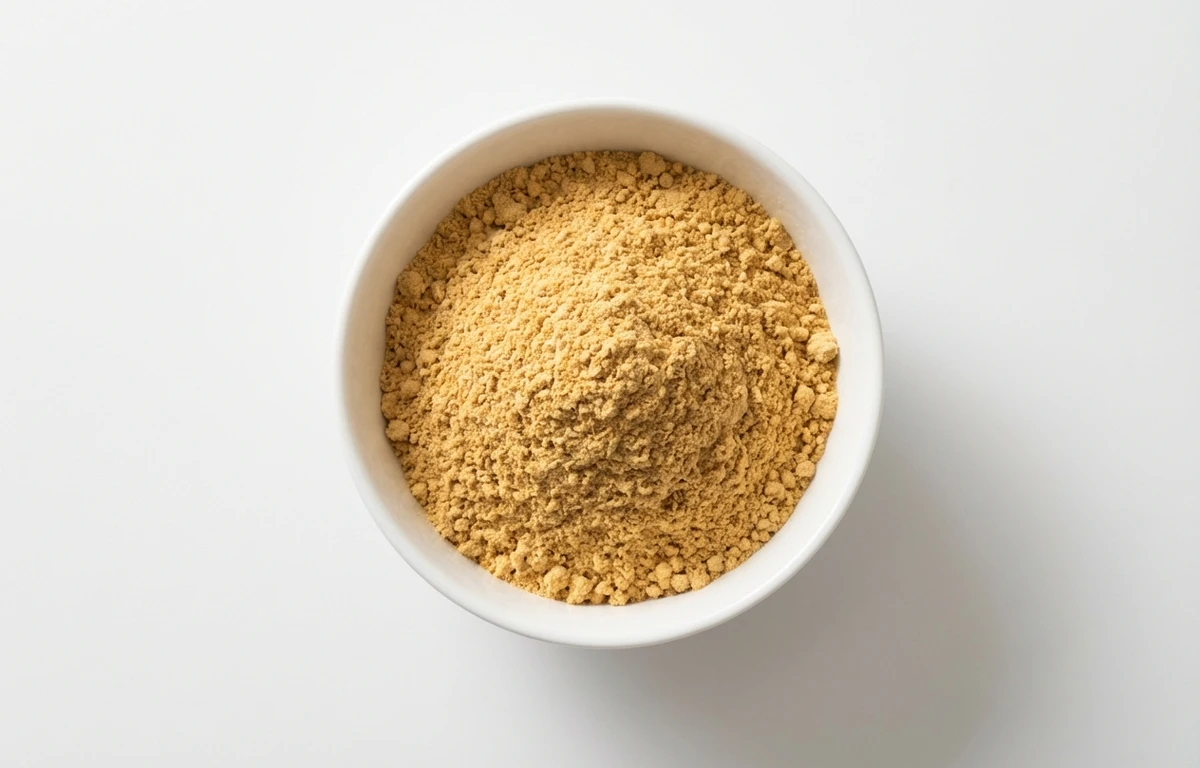
SERVING
CALORIES
439
PROTEIN
38.1g
CARBS
30.4g
FAT
21.9g
FIBER
9.7g
This ingredient is flagged as naturally gluten-free. Per 100 g, it provides 71 µg of vitamin K.
NUTRITION PROFILE · per 100 g
Everything in this ingredient.
MACRONUTRIENTS
Calories439kcal—
Protein38.1g76%
Carbohydrates30.4g11%
Fiber9.7g35%
Sugar7.6g15%
Total fat21.9g28%
Saturated fat3.2g16%
Trans fat0g—
Cholesterol0mg0%
Water3.8g—
MINERALS
Sodium12mg1%
Potassium2041mg43%
Calcium188mg14%
Iron5.8mg32%
Magnesium369mg88%
Phosphorus476mg38%
Zinc3.6mg33%
Copper2.2mg247%
Manganese2.1mg90%
Selenium7.5µg14%
VITAMINS
Vitamin A6.0µg1%
Vitamin C0mg0%
Vitamin D0µg0%
Vitamin E2.0mg13%
Vitamin K71µg59%
Thiamin (B1)0.41mg34%
Riboflavin (B2)0.94mg72%
Niacin (B3)3.3mg21%
Pantothenic acid (B5)1.2mg24%
Vitamin B60.35mg21%
Folate (B9)227µg57%
Vitamin B120µg0%
%DV based on a 2,000 cal diet. Source: USDA FoodData Central. A dash in the %DV column means there’s no established Daily Value for that nutrient.
MEASUREMENT CONVERSIONS
How much is what.
1 cup85g
1 tablespoon5.3g
1 teaspoon1.8g
1 ml0.4g
1 liter354.2g
HEALTH BENEFITS
Why eat it.
- ✓Excellent source of complete plant-based protein, containing all nine essential amino acids for muscle repair and growth.
- ✓Contains healthy unsaturated fats, including omega-3 and omega-6 fatty acids, which are beneficial for heart health.
COOKING TIPS
In the kitchen.
- 1The nutty flavor from roasting enhances baked goods; substitute up to 25% of the regular flour in recipes for cookies, muffins, or bread to add protein and moisture.
- 2Use as a natural thickener for soups, gravies, and stews, adding a creamy texture and nutritional boost.
- 3Blend into smoothies or stir into hot cereals like oatmeal for an easy increase in protein, fiber, and healthy fats.
- 4Due to its lack of gluten, it works well as a binder in vegetarian patties or meatballs.
STORAGE
Keep it fresh.
- Store in an airtight container in a cool, dark, and dry place to protect the fats from oxidation and rancidity.
- For longer-term storage (beyond 3-4 months), refrigerate or freeze to extend its shelf life, as the high fat content makes it more perishable than defatted flour.
FAQ
Frequently asked questions.
How much protein is in roasted full-fat soy flour?
It is an excellent protein source, containing approximately 38.09g of protein per 100g. This high concentration makes it a popular choice for vegetarians and vegans looking to support muscle repair and growth.
Is roasted full-fat soy flour keto-friendly?
It can be used in moderation on a keto diet, but it is higher in carbohydrates (30.38g per 100g) than almond or coconut flour. While it provides healthy fats and high protein, you must track the net carbs to stay within your daily limits.
What does roasted full-fat soy flour taste like?
The roasting process gives this flour a pleasant, nutty, and toasted flavor that is much milder than raw soy flour. This makes it a versatile ingredient that enhances the taste of baked goods and savory dishes.
How do you use roasted full-fat soy flour in cooking?
It is often used to boost the protein content of breads, muffins, and pancakes by replacing a portion of the regular flour. Because it is pre-roasted, it can also be added directly to smoothies, porridges, or used as a thickener for sauces.
Can I substitute wheat flour with roasted full-fat soy flour?
You can typically substitute up to 25% of the wheat flour in a recipe with soy flour. Since it lacks gluten, using it as a 100% replacement in yeast-leavened breads will result in a dense product that does not rise.
How should I store roasted full-fat soy flour?
Due to its high fat content (21.86g per 100g), it can go rancid if exposed to heat and air. Store it in an airtight container in a cool, dark place, or keep it in the refrigerator or freezer to maximize its shelf life.



















