
Nut Seed
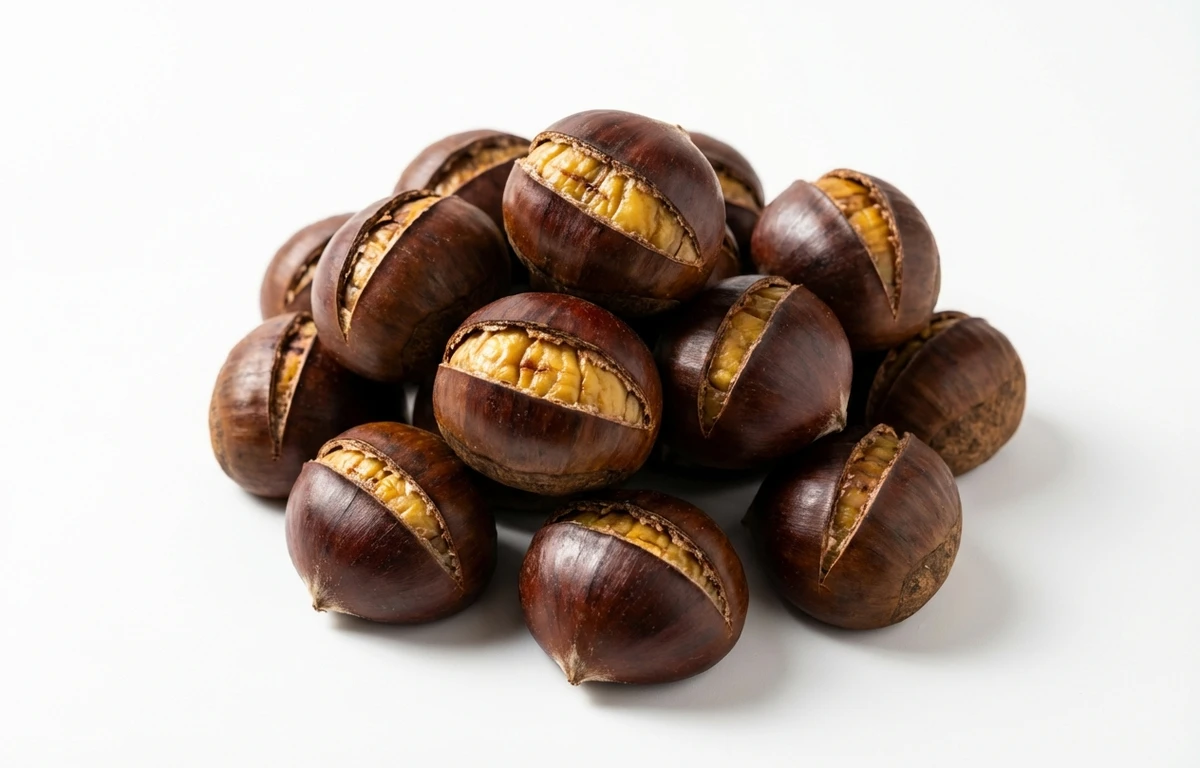
roasted japanese chestnuts.
VegetarianVeganGluten-freeDairy-freeNut-freePeanut-freeSoy-freeEgg-freeShellfish-freeHoney-freeAlcohol-free
ALSO KNOWN AS
roasted kuriroasted nihon kuriroasted castanea crenataroasted sweet chestnutsroasted yaki-kuri
SERVING
CALORIES
245
PROTEIN
3.2g
CARBS
53g
FAT
2.3g
FIBER
5.1g
NUTRITION PROFILE · per 100 g
Everything in this ingredient.
MACRONUTRIENTS
Calories245kcal—
Protein3.2g6%
Carbohydrates53g19%
Fiber5.1g18%
Sugar10.6g21%
Total fat2.3g3%
Saturated fat0.40g2%
Trans fat0g—
Cholesterol0mg0%
Water40.5g—
MINERALS
Sodium2.0mg0%
Potassium592mg13%
Calcium29mg2%
Iron0.90mg5%
Magnesium33mg8%
Phosphorus107mg9%
Zinc0.60mg5%
Copper0.50mg56%
Manganese1.2mg52%
Selenium1.2µg2%
VITAMINS
Vitamin A1.0µg0%
Vitamin C26mg29%
Vitamin D0µg0%
Vitamin E0.50mg3%
Vitamin K0µg0%
Thiamin (B1)0.24mg20%
Riboflavin (B2)0.17mg13%
Niacin (B3)1.3mg8%
Pantothenic acid (B5)0.55mg11%
Vitamin B60.50mg29%
Folate (B9)70µg18%
Vitamin B120µg0%
%DV based on a 2,000 cal diet. Source: USDA FoodData Central. A dash in the %DV column means there’s no established Daily Value for that nutrient.
MEASUREMENT CONVERSIONS
How much is what.
1 cup150g
1 oz28.4g
1 lb453.6g
1 piece9g
HEALTH BENEFITS
Why eat it.
- ✓High in dietary fiber for digestive health
- ✓Excellent source of Vitamin C compared to other nuts
- ✓Low in fat and cholesterol-free
- ✓Rich in potassium which supports heart health
- ✓Provides complex carbohydrates for sustained energy
COOKING TIPS
In the kitchen.
- 1Always score the shell with an 'X' before roasting to prevent exploding
- 2Peel while still warm as the inner skin (pellicle) sticks when cold
- 3Soak in water for 30 minutes before roasting for a fluffier texture
STORAGE
Keep it fresh.
- Store in an airtight container in the refrigerator for up to 5 days
- Can be frozen in a sealed bag for up to 3 months
- Keep away from moisture to prevent mold growth
FAQ
Frequently asked questions.
How long do roasted Japanese chestnuts last?
At room temperature, they last 1-2 days. In the refrigerator, they stay fresh for about 5 days in an airtight container.
Can you freeze roasted chestnuts?
Yes, you can freeze them. It is best to peel them first and store them in a freezer-safe bag for up to 3 months.
How do I pick the best chestnuts for roasting?
Look for chestnuts that are heavy for their size, have a shiny brown shell, and feel firm. Avoid any with visible holes or a hollow sound when shaken.
What is the best substitute for Japanese chestnuts?
European chestnuts (Castanea sativa) are the closest substitute. In some recipes, roasted sweet potatoes can mimic the texture.
Are roasted chestnuts gluten-free?
Yes, chestnuts are naturally gluten-free and are often ground into flour for gluten-free baking.
Why are my roasted chestnuts hard to peel?
They likely cooled down too much. The inner skin is easiest to remove while the chestnut is still quite warm.
Are chestnuts lower in fat than other nuts?
Yes, chestnuts are unique among nuts because they are low in fat and high in starch/carbohydrates, similar to a grain.
What are common dishes using roasted Japanese chestnuts?
They are commonly eaten as a snack (Yaki-kuri), mixed into rice (Kurigohan), or used in desserts like Mont Blanc.
Do I need to wash them before roasting?
Yes, rinse them in cold water and dry them before scoring the shells to ensure they are clean.



















