
Nuts Seeds
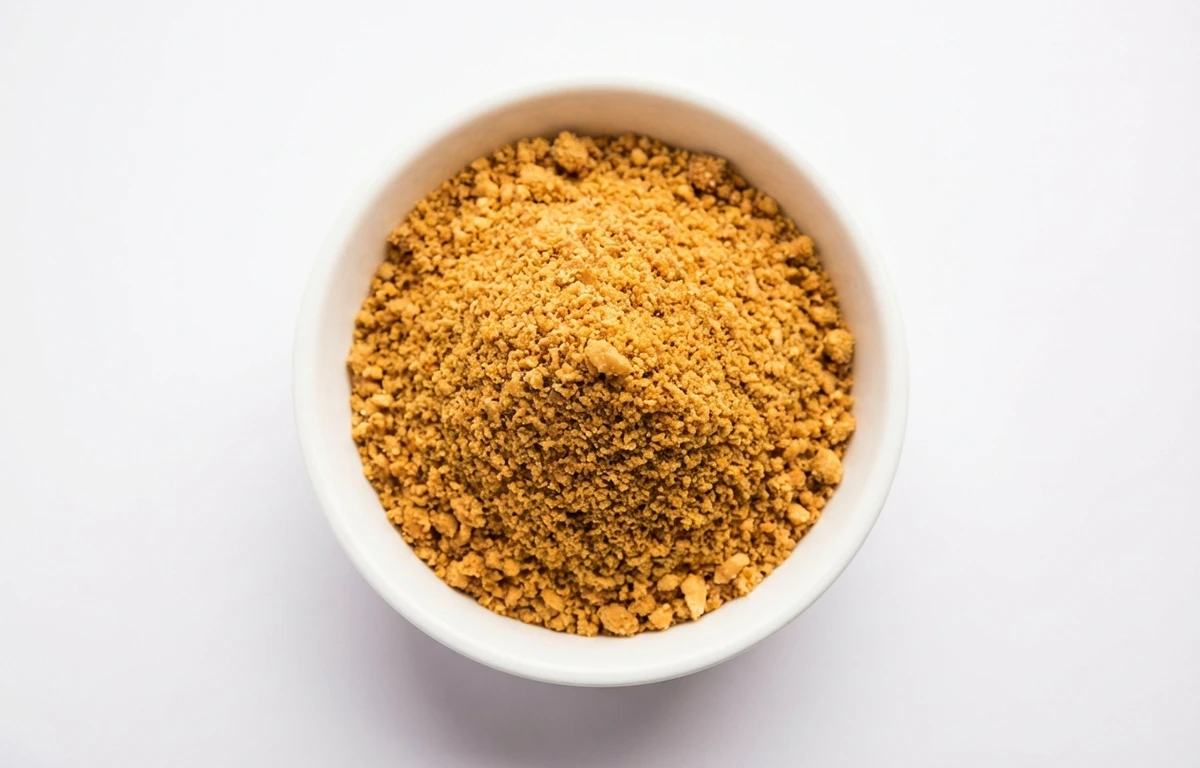
roasted peanut powder.
VegetarianVeganGluten-freeDairy-freeNut-freePeanut-freeSoy-freeEgg-freeShellfish-freeHoney-freeAlcohol-free
ALSO KNOWN AS
bhuna mungfali powderpeanut powder roasted
SERVING
CALORIES
587
PROTEIN
25.8g
CARBS
16.1g
FAT
49.2g
FIBER
8.5g
NUTRITION PROFILE · per 100 g
Everything in this ingredient.
MACRONUTRIENTS
Calories587kcal—
Protein25.8g52%
Carbohydrates16.1g6%
Fiber8.5g30%
Sugar4.7g9%
Total fat49.2g63%
Saturated fat6.3g31%
Trans fat0g—
Cholesterol0mg0%
Water2.0g—
MINERALS
Sodium18mg1%
Potassium658mg14%
Calcium92mg7%
Iron4.6mg25%
Magnesium190mg45%
Phosphorus420mg34%
Zinc3.8mg35%
Copper0.65mg72%
Manganese1.6mg70%
Selenium11µg20%
VITAMINS
Vitamin A0µg0%
Vitamin C0mg0%
Vitamin D0µg0%
Vitamin E0.70mg5%
Vitamin K0µg0%
Thiamin (B1)0.35mg29%
Riboflavin (B2)0.12mg9%
Niacin (B3)16mg100%
Pantothenic acid (B5)1.7mg34%
Vitamin B60.45mg26%
Folate (B9)160µg40%
Vitamin B120µg0%
%DV based on a 2,000 cal diet. Source: USDA FoodData Central. A dash in the %DV column means there’s no established Daily Value for that nutrient.
MEASUREMENT CONVERSIONS
How much is what.
1 cup132g
1 tablespoon8.3g
1 teaspoon2.8g
1 ml0.6g
1 liter550g
HEALTH BENEFITS
Why eat it.
- ✓Concentrated source of plant-based protein, beneficial for muscle building and repair.
- ✓Rich in heart-healthy monounsaturated fats which can help lower bad cholesterol levels.
- ✓Good source of niacin (Vitamin B3), which is crucial for energy metabolism and nervous system function.
- ✓Contains antioxidants like resveratrol and p-coumaric acid, which help combat oxidative stress in the body.
COOKING TIPS
In the kitchen.
- 1Use as a thickener for sauces, soups, and stews, such as in West African groundnut soup or a base for satay sauce.
- 2Incorporate into smoothies or oatmeal for a boost of protein and nutty flavor with less fat than traditional peanut butter.
- 3Substitute a portion of flour in baking recipes like cookies, pancakes, or muffins to increase protein content and add flavor.
- 4Use as a coating for chicken, tofu, or fish before baking or air-frying to create a crispy, flavorful crust.
STORAGE
Keep it fresh.
- Store in an airtight container in a cool, dark, and dry place like a pantry to prevent it from absorbing moisture and becoming clumpy.
- For long-term storage, especially for low-fat versions, refrigeration can help maintain freshness and prevent the natural oils from going rancid.
FAQ
Frequently asked questions.
Is roasted peanut powder healthy?
Yes, roasted peanut powder is a nutrient-dense ingredient rich in plant-based protein and heart-healthy monounsaturated fats. It provides essential antioxidants like resveratrol and p-coumaric acid, which help combat oxidative stress, and niacin for energy metabolism.
How much protein is in roasted peanut powder?
Roasted peanut powder is a concentrated protein source, containing approximately 25.8g of protein per 100g. This makes it an excellent supplement for muscle building, repair, and meeting daily protein requirements for vegetarians and vegans.
Is roasted peanut powder good for weight loss?
While it is high in protein which can increase satiety and reduce hunger, it is also calorie-dense with 587 calories per 100g. It can support weight loss goals when used in moderation as a high-nutrient replacement for less healthy snacks.
Is roasted peanut powder vegan and gluten-free?
Pure roasted peanut powder is naturally both vegan and gluten-free. It is an ideal ingredient for plant-based diets and serves as a flavorful, protein-rich alternative to wheat-based flours in certain recipes.
Is roasted peanut powder keto-friendly?
Yes, it is generally keto-friendly due to its high fat content (49.2g per 100g) and moderate carbohydrate levels (16.1g per 100g). However, because it does contain some carbs, it should be consumed in measured portions to stay within daily macro limits.
How do you use roasted peanut powder in cooking?
It is highly versatile and can be whisked into smoothies, stirred into oatmeal, or used to thicken savory sauces like satay. It also works well as a dry rub for meats or as a partial flour substitute in cookies and muffins.
What does roasted peanut powder taste like?
It has a deep, intensely nutty, and savory flavor with toasted undertones. Because the peanuts are roasted before being powdered, the flavor is much more robust and aromatic than raw peanut flour.
Can I substitute roasted peanut powder for peanut butter?
Yes, you can create a spreadable paste by mixing the powder with a small amount of water or oil. Unlike defatted peanut powders, this full-fat version will have a richness and mouthfeel very similar to traditional natural peanut butter.
How should I store roasted peanut powder?
Because of its high oil content, roasted peanut powder can go rancid if exposed to heat and light. Store it in an airtight container in a cool, dark pantry for short-term use, or in the refrigerator or freezer to extend its shelf life for up to a year.
Is roasted peanut powder the same as defatted peanut flour?
No, they are different. Standard roasted peanut powder contains the full fat of the nut (about 49%), whereas defatted peanut flour has had most of the oils removed to lower the calorie count, resulting in a drier powder with a different nutritional profile.



















