
Meat
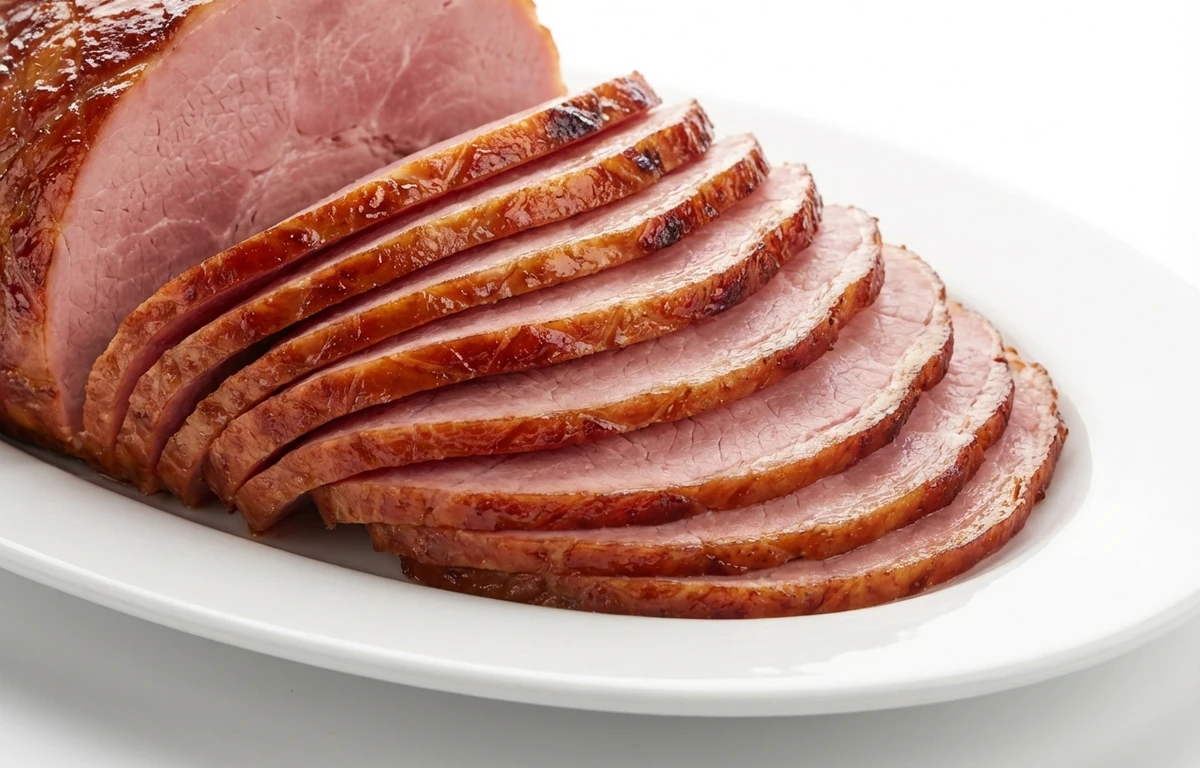
roasted regular boneless ham.
VegetarianVeganGluten-freeDairy-freeNut-freePeanut-freeSoy-freeEgg-freeShellfish-freeHoney-freeAlcohol-freeHalalKosher
ALSO KNOWN AS
baked boneless hamoven-roasted boneless ham
SERVING
CALORIES
145
PROTEIN
20.9g
CARBS
1.5g
FAT
6.1g
FIBER
0g
This ingredient is flagged as naturally gluten-free. Per 100 g, it provides 0 µg of vitamin K.
NUTRITION PROFILE · per 100 g
Everything in this ingredient.
MACRONUTRIENTS
Calories145kcal—
Protein20.9g42%
Carbohydrates1.5g1%
Fiber0g0%
Sugar1.2g2%
Total fat6.1g8%
Saturated fat2.1g11%
Trans fat0g—
Cholesterol53mg18%
Water68.5g—
MINERALS
Sodium1150mg50%
Potassium287mg6%
Calcium7.0mg1%
Iron0.80mg4%
Magnesium18mg4%
Phosphorus210mg17%
Zinc2.1mg19%
Copper0.06mg7%
Manganese0.01mg0%
Selenium27.5µg50%
VITAMINS
Vitamin A0µg0%
Vitamin C0mg0%
Vitamin D0.50µg3%
Vitamin E0.15mg1%
Vitamin K0µg0%
Thiamin (B1)0.65mg54%
Riboflavin (B2)0.21mg16%
Niacin (B3)4.5mg28%
Pantothenic acid (B5)0.55mg11%
Vitamin B60.38mg22%
Folate (B9)4.0µg1%
Vitamin B120.65µg27%
%DV based on a 2,000 cal diet. Source: USDA FoodData Central. A dash in the %DV column means there’s no established Daily Value for that nutrient.
MEASUREMENT CONVERSIONS
How much is what.
1 cup140g
1 oz28.4g
1 lb453.6g
HEALTH BENEFITS
Why eat it.
- ✓High-quality complete protein source for muscle maintenance
- ✓Rich in Thiamin (B1) which supports energy metabolism
- ✓Provides Vitamin B12 essential for nerve function
COOKING TIPS
In the kitchen.
- 1Reheat gently at low temperatures (325°F) to prevent the meat from becoming tough
- 2Add a small amount of water or broth to the pan when reheating to maintain moisture
- 3Slice against the grain for the most tender texture
STORAGE
Keep it fresh.
- Store in the refrigerator at or below 40°F (4°C) for 3 to 5 days
- Keep tightly wrapped in foil or plastic wrap to prevent drying out
- Can be frozen for 1 to 2 months for best quality, though texture may change slightly
FAQ
Frequently asked questions.
How long does roasted boneless ham last in the fridge?
Once roasted and opened, it typically lasts 3 to 5 days when stored in an airtight container or tightly wrapped.
Can you freeze roasted boneless ham?
Yes, it can be frozen for 1 to 2 months. For best results, wrap it tightly in freezer-safe wrap or use a vacuum sealer.
How do you reheat ham without drying it out?
Place it in a baking dish with a little water or broth, cover tightly with foil, and heat at 325°F until the internal temperature reaches 140°F.
What is a good substitute for roasted boneless ham?
Roasted turkey breast or Canadian bacon are the best substitutes depending on the recipe's flavor profile.
Is roasted boneless ham gluten-free?
Generally yes, but always check the label for glazes or fillers that may contain wheat-based thickeners.
How can I tell if the ham has gone bad?
Signs of spoilage include a sour smell, a slimy texture on the surface, or visible mold/discoloration.
What are common pairings for roasted ham?
It pairs well with mustard, honey glazes, pineapple, scalloped potatoes, and green beans.
What is the difference between bone-in and boneless ham?
Boneless ham has the bone removed and is often pressed into a specific shape, making it easier to slice but sometimes less flavorful than bone-in varieties.



















