
Nut Seed
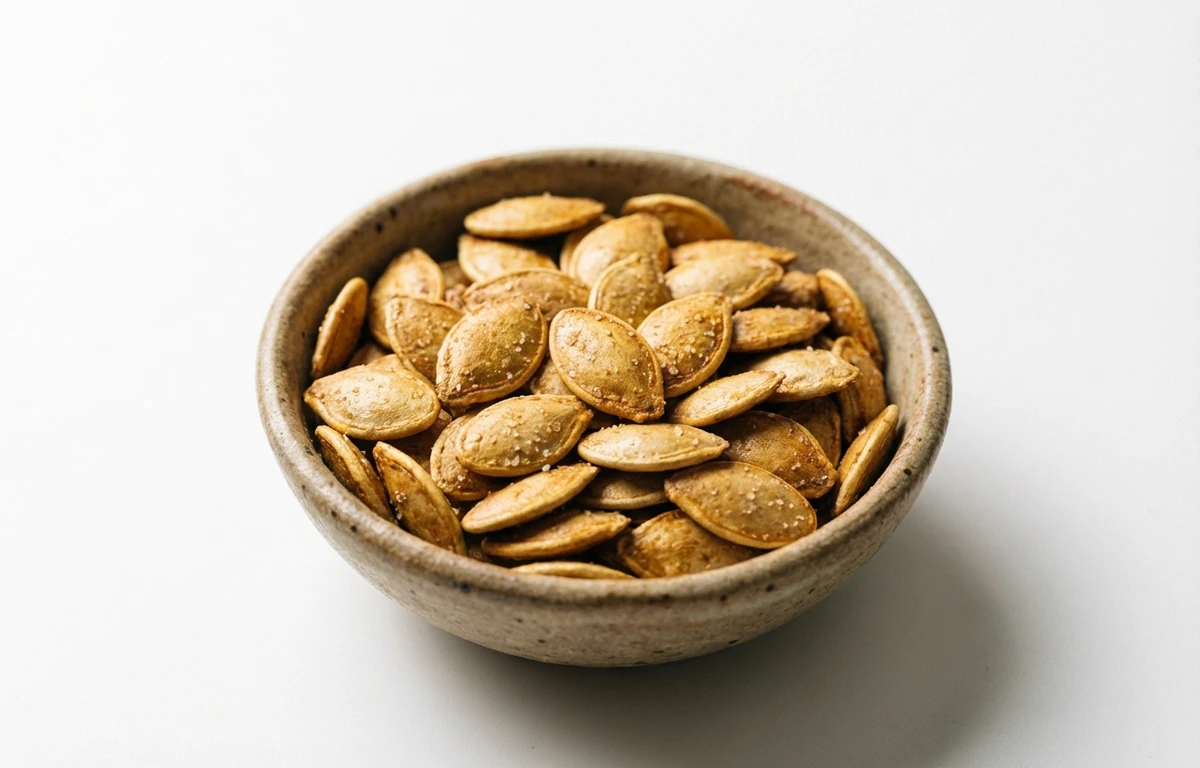
roasted salted pumpkin and squash seed kernels.
VegetarianVeganGluten-freeDairy-freeNut-freePeanut-freeSoy-freeEgg-freeShellfish-freeHoney-freeAlcohol-free
ALSO KNOWN AS
roasted salted pumpkin and squash seedssalted roasted pumpkin and squash kernelsroasted salted pepitas and squash kernelsbhuna namkeen kaddu aur squash ke beej
SERVING
CALORIES
574
PROTEIN
29.8g
CARBS
14.7g
FAT
49.1g
FIBER
6.5g
NUTRITION PROFILE · per 100 g
Everything in this ingredient.
MACRONUTRIENTS
Calories574kcal—
Protein29.8g60%
Carbohydrates14.7g5%
Fiber6.5g23%
Sugar1.3g3%
Total fat49.1g63%
Saturated fat8.7g43%
Trans fat0g—
Cholesterol0mg0%
Water2.0g—
MINERALS
Sodium500mg22%
Potassium809mg17%
Calcium52mg4%
Iron8.1mg45%
Magnesium550mg131%
Phosphorus1174mg94%
Zinc7.6mg69%
Copper1.3mg144%
Manganese4.5mg196%
Selenium9.4µg17%
VITAMINS
Vitamin A1.0µg0%
Vitamin C0.30mg0%
Vitamin D0µg0%
Vitamin E2.2mg15%
Vitamin K5.1µg4%
Thiamin (B1)0.07mg6%
Riboflavin (B2)0.15mg12%
Niacin (B3)4.4mg28%
Pantothenic acid (B5)0.60mg12%
Vitamin B60.10mg6%
Folate (B9)57µg14%
Vitamin B120µg0%
%DV based on a 2,000 cal diet. Source: USDA FoodData Central. A dash in the %DV column means there’s no established Daily Value for that nutrient.
MEASUREMENT CONVERSIONS
How much is what.
1 cup130g
1 tablespoon8.1g
1 teaspoon2.7g
1 oz28.4g
1 lb453.6g
1 ml0.6g
1 liter550g
HEALTH BENEFITS
Why eat it.
- ✓Excellent source of magnesium for bone health and blood pressure regulation
- ✓High in zinc which supports immune function and skin health
- ✓Rich in antioxidants like Vitamin E and carotenoids to reduce inflammation
- ✓Good source of plant-based protein and heart-healthy monounsaturated fats
- ✓Contains tryptophan which may help improve sleep quality
COOKING TIPS
In the kitchen.
- 1Sprinkle over salads, soups, or oatmeal for added crunch and nutrition
- 2Mix into homemade granola, trail mixes, or energy bars
- 3Use as a flavorful garnish for roasted vegetables or grain bowls
STORAGE
Keep it fresh.
- Store in an airtight container to prevent the healthy oils from going rancid
- Keep in a cool, dark, and dry pantry for up to 6 months
- Refrigerate or freeze in a sealed bag to extend freshness for up to 1 year
FAQ
Frequently asked questions.
How long do roasted salted pumpkin and squash seeds last?
They typically last about 6 months in a cool, dry pantry if kept in an airtight container.
Can I freeze these seed kernels?
Yes, freezing is an excellent way to preserve the oils and prevent rancidity for up to 12 months.
How can I tell if the seeds have gone bad?
Rancid seeds will have a sharp, sour, or paint-like smell and may taste bitter.
What is a good substitute for these seeds?
Sunflower seeds or watermelon seeds are the best alternatives in terms of texture and nutrition.
Do I need to wash these before eating?
No, since they are already roasted and salted, they are ready to eat straight from the package.
Are these seeds high in protein?
Yes, they are very protein-dense, providing nearly 30g of protein per 100g serving.
Can these be used in baking?
Absolutely, they are great in bread, muffins, or as a topping for savory tarts and crackers.
Are these suitable for a keto diet?
Yes, they are high in healthy fats and relatively low in net carbohydrates, making them keto-friendly.
Are pumpkin seeds considered tree nuts?
No, they are seeds. However, individuals with severe nut allergies should check for cross-contamination warnings.
Why is the sodium content high?
The sodium is higher because these are the salted variety; for a low-sodium diet, look for 'unsalted' versions.



















