
Legume
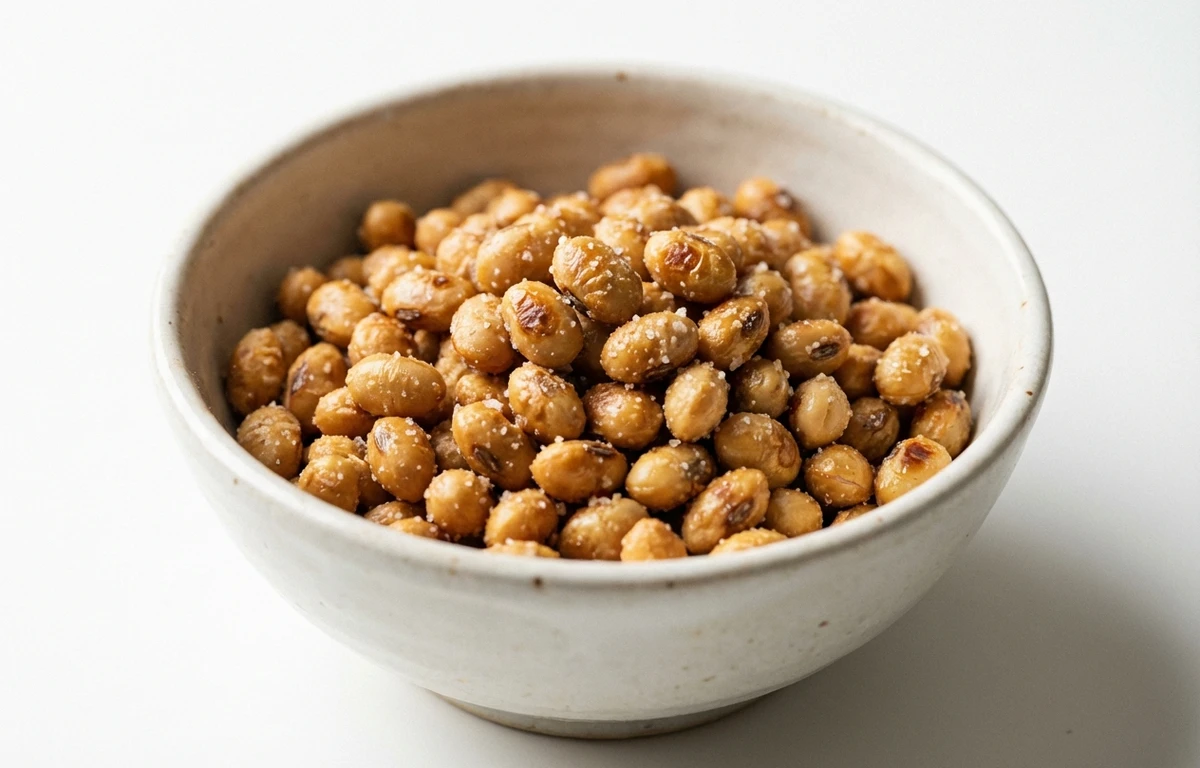
roasted salted soybean.
VegetarianVeganGluten-freeDairy-freeNut-freePeanut-freeSoy-freeEgg-freeShellfish-freeHoney-freeAlcohol-free
SERVING
CALORIES
469
PROTEIN
38.5g
CARBS
30.2g
FAT
25.4g
FIBER
17.7g
NUTRITION PROFILE · per 100 g
Everything in this ingredient.
MACRONUTRIENTS
Calories469kcal—
Protein38.5g77%
Carbohydrates30.2g11%
Fiber17.7g63%
Sugar4.2g8%
Total fat25.4g33%
Saturated fat3.7g18%
Trans fat0g—
Cholesterol0mg0%
Water1.9g—
MINERALS
Sodium163mg7%
Potassium1470mg31%
Calcium138mg11%
Iron3.9mg22%
Magnesium145mg35%
Phosphorus363mg29%
Zinc3.1mg29%
Copper0.83mg92%
Manganese2.2mg94%
Selenium19.1µg35%
VITAMINS
Vitamin A10µg1%
Vitamin C2.2mg2%
Vitamin D0µg0%
Vitamin E0.91mg6%
Vitamin K50.4µg42%
Thiamin (B1)0.10mg8%
Riboflavin (B2)0.15mg12%
Niacin (B3)1.4mg9%
Pantothenic acid (B5)0.45mg9%
Vitamin B60.21mg12%
Folate (B9)211µg53%
Vitamin B120µg0%
%DV based on a 2,000 cal diet. Source: USDA FoodData Central. A dash in the %DV column means there’s no established Daily Value for that nutrient.
MEASUREMENT CONVERSIONS
How much is what.
1 cup172g
1 tablespoon10.8g
1 teaspoon3.6g
1 ml0.7g
1 liter716.7g
HEALTH BENEFITS
Why eat it.
- ✓Excellent source of plant-based complete protein, containing all nine essential amino acids necessary for muscle repair and growth.
- ✓Rich in dietary fiber, which supports digestive health, promotes satiety, and helps regulate blood sugar levels.
- ✓Contains isoflavones, which are plant compounds linked to improved heart health, bone density, and reduced risk of certain cancers.
- ✓Provides important minerals such as iron, magnesium, manganese, and phosphorus, which are vital for energy production and bone health.
COOKING TIPS
In the kitchen.
- 1Use as a crunchy, protein-rich topping for salads, soups, grain bowls, and yogurt parfaits.
- 2Incorporate into homemade trail mixes with dried fruits, seeds, and other nuts for a balanced and savory snack.
- 3Crush them to create a gluten-free 'breading' for baked chicken, fish, or tofu to add flavor and texture.
- 4Add them to stir-fries or noodle dishes at the very end of cooking to provide a salty crunch without them becoming soft.
STORAGE
Keep it fresh.
- Store in an airtight container in a cool, dark, and dry place, such as a pantry, to prevent the oils from becoming rancid and to maintain crunchiness.
- For optimal freshness, consume within 2-3 months of opening. Avoid refrigeration, as condensation can make them lose their crisp texture.
FAQ
Frequently asked questions.
Are roasted salted soybeans healthy?
Yes, they are a nutrient-dense snack providing high levels of plant-based protein, fiber, and essential minerals like iron and magnesium. They also contain isoflavones which support heart and bone health. However, because they are roasted and salted, they are calorie-dense and contain sodium, so they should be consumed in moderation.
How much protein is in roasted salted soybeans?
Roasted salted soybeans are an exceptional protein source, containing approximately 38.55g of protein per 100g. This makes them one of the highest plant-based protein snacks available, surpassing most nuts and seeds.
Are roasted salted soybeans good for weight loss?
They can be beneficial for weight loss because their high protein and fiber content promote satiety and help you feel full longer. However, with 469 calories per 100g, it is important to stick to a single serving size (about 30g) to avoid excessive calorie intake.
Are roasted salted soybeans vegan and gluten-free?
Naturally, roasted soybeans are both vegan and gluten-free. However, always check the ingredient label for any added flavorings or cross-contamination warnings if you have a severe gluten allergy or follow a strict vegan diet.
Are roasted salted soybeans keto-friendly?
They can be included in a keto diet in small portions, but caution is needed. While they are high in protein and healthy fats, they contain about 30.22g of carbohydrates per 100g, which is higher than many other keto-approved nuts.
What do roasted salted soybeans taste like?
They have a very crunchy, firm texture similar to a roasted peanut but slightly harder. The flavor is savory and nutty with a mild earthy undertone, which is complemented by the salt coating.
How can I use roasted salted soybeans in my diet?
Beyond eating them as a standalone snack (often called 'soynuts'), they make an excellent crunchy topping for salads, soups, and stir-fries. They can also be added to homemade trail mixes for a boost of savory protein.
How should I store roasted salted soybeans?
Store them in an airtight container in a cool, dry place like a pantry. Keeping them away from moisture and heat will maintain their crunch and prevent the natural oils from becoming rancid; they typically last for 3 to 6 months.
Are roasted salted soybeans a complete protein?
Yes, soybeans are a complete plant-based protein, meaning they contain all nine essential amino acids that the body cannot produce on its own. This makes them an ideal snack for vegetarians and vegans looking to meet their protein needs.
Can people with high blood pressure eat roasted salted soybeans?
While the soybeans themselves provide heart-healthy minerals, the added salt increases sodium intake, which can affect blood pressure. Individuals on a low-sodium diet should opt for the 'unsalted' roasted variety instead.



















