
Nut Seed
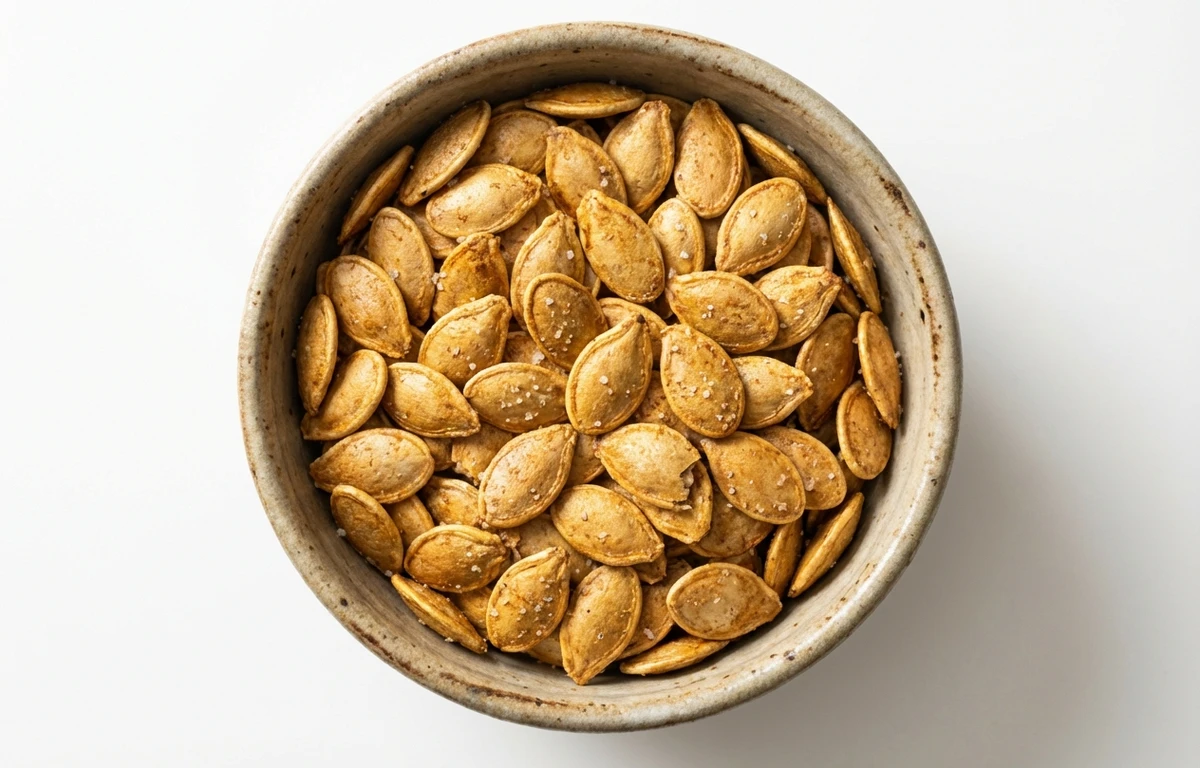
roasted salted whole pumpkin and squash seeds.
VegetarianVeganGluten-freeDairy-freeNut-freePeanut-freeSoy-freeEgg-freeShellfish-freeHoney-freeAlcohol-free
ALSO KNOWN AS
salted whole pumpkin seedssalted whole squash seeds
SERVING
CALORIES
446
PROTEIN
18.5g
CARBS
53.7g
FAT
19.4g
FIBER
18.4g
NUTRITION PROFILE · per 100 g
Everything in this ingredient.
MACRONUTRIENTS
Calories446kcal—
Protein18.5g37%
Carbohydrates53.7g20%
Fiber18.4g66%
Sugar1.3g3%
Total fat19.4g25%
Saturated fat3.7g19%
Trans fat0g—
Cholesterol0mg0%
Water2.0g—
MINERALS
Sodium256mg11%
Potassium919mg20%
Calcium55mg4%
Iron3.3mg18%
Magnesium262mg62%
Phosphorus92mg7%
Zinc10.3mg94%
Copper1.4mg156%
Manganese0.50mg22%
Selenium5.6µg10%
VITAMINS
Vitamin A1.0µg0%
Vitamin C0.30mg0%
Vitamin D0µg0%
Vitamin E0.60mg4%
Vitamin K51.4µg43%
Thiamin (B1)0.03mg3%
Riboflavin (B2)0.05mg4%
Niacin (B3)0.30mg2%
Pantothenic acid (B5)0.10mg2%
Vitamin B60.04mg2%
Folate (B9)9.0µg2%
Vitamin B120µg0%
%DV based on a 2,000 cal diet. Source: USDA FoodData Central. A dash in the %DV column means there’s no established Daily Value for that nutrient.
MEASUREMENT CONVERSIONS
How much is what.
1 cup64g
1 tablespoon4g
1 teaspoon1.3g
1 ml0.3g
1 liter266.7g
HEALTH BENEFITS
Why eat it.
- ✓Rich in magnesium, which is vital for heart health, blood pressure regulation, and bone formation.
- ✓Excellent source of zinc, supporting immune function, cell growth, and prostate health.
- ✓High in antioxidants like carotenoids and vitamin E, which help reduce inflammation and protect cells from harmful free radicals.
- ✓Contains healthy fats, fiber, and protein, which can help improve heart health and manage blood sugar levels.
COOKING TIPS
In the kitchen.
- 1Sprinkle over salads, soups (especially creamy squash or pumpkin soup), and roasted vegetables for a crunchy texture.
- 2Incorporate into homemade granola, trail mixes, or energy bars for added nutrition and texture.
- 3Use as a topping for yogurt, oatmeal, or avocado toast.
- 4Grind into a coarse meal to use as a coating for chicken or fish, or blend into a seed butter.
STORAGE
Keep it fresh.
- Store in an airtight container in a cool, dark, and dry place, such as a pantry, for up to 3 months to prevent the oils from going rancid.
- For longer-term storage (6-12 months), place the airtight container in the refrigerator or freezer.
FAQ
Frequently asked questions.
Are roasted salted pumpkin and squash seeds healthy?
Yes, these seeds are highly nutritious, offering a wealth of magnesium, zinc, and antioxidants. They support heart health and immune function, though the added salt means they should be consumed in moderation to manage sodium intake.
How much protein is in roasted pumpkin and squash seeds?
These seeds contain approximately 18.5g of protein per 100g. This makes them an excellent plant-based protein source for snacking or as a crunchy topping for salads and soups.
Are roasted salted pumpkin seeds good for weight loss?
They can be helpful for weight loss because their high fiber and protein content promote satiety. However, they are calorie-dense at 446 calories per 100g, so it is important to stick to a small serving size.
Are these seeds keto-friendly?
With 53.7g of carbohydrates per 100g, these seeds are higher in carbs than some other nuts and seeds. While they contain healthy fats, they should be eaten in very small portions if you are following a strict ketogenic diet.
Are roasted pumpkin and squash seeds vegan and gluten-free?
Yes, these seeds are naturally vegan and gluten-free. They are a safe and healthy snack option for individuals with gluten sensitivities or those following a plant-based lifestyle.
Can you eat the shell of roasted pumpkin seeds?
Yes, the whole seed, including the shell, is edible and provides a significant amount of dietary fiber. Roasting makes the shells crunchy and easier to chew, though some may still find them quite fibrous.
What do roasted salted pumpkin and squash seeds taste like?
They have a savory, nutty, and slightly earthy flavor profile. The roasting process brings out a toasted aroma, while the salt enhances the natural richness of the seeds.
How should I store roasted pumpkin seeds?
Store them in an airtight container in a cool, dry place to maintain crunchiness and prevent the fats from going rancid. For long-term storage, they can be kept in the refrigerator for up to six months.
How long do roasted salted pumpkin seeds last?
When kept in an airtight container at room temperature, they typically stay fresh for 2 to 3 months. If they develop an 'off' smell or lose their crunch, they may have gone stale or rancid.
What are the main health benefits of eating these seeds?
They are rich in magnesium for heart and bone health, zinc for immune support, and antioxidants like vitamin E to reduce inflammation. The combination of healthy fats and fiber also helps in managing blood sugar levels.



















