
grain product
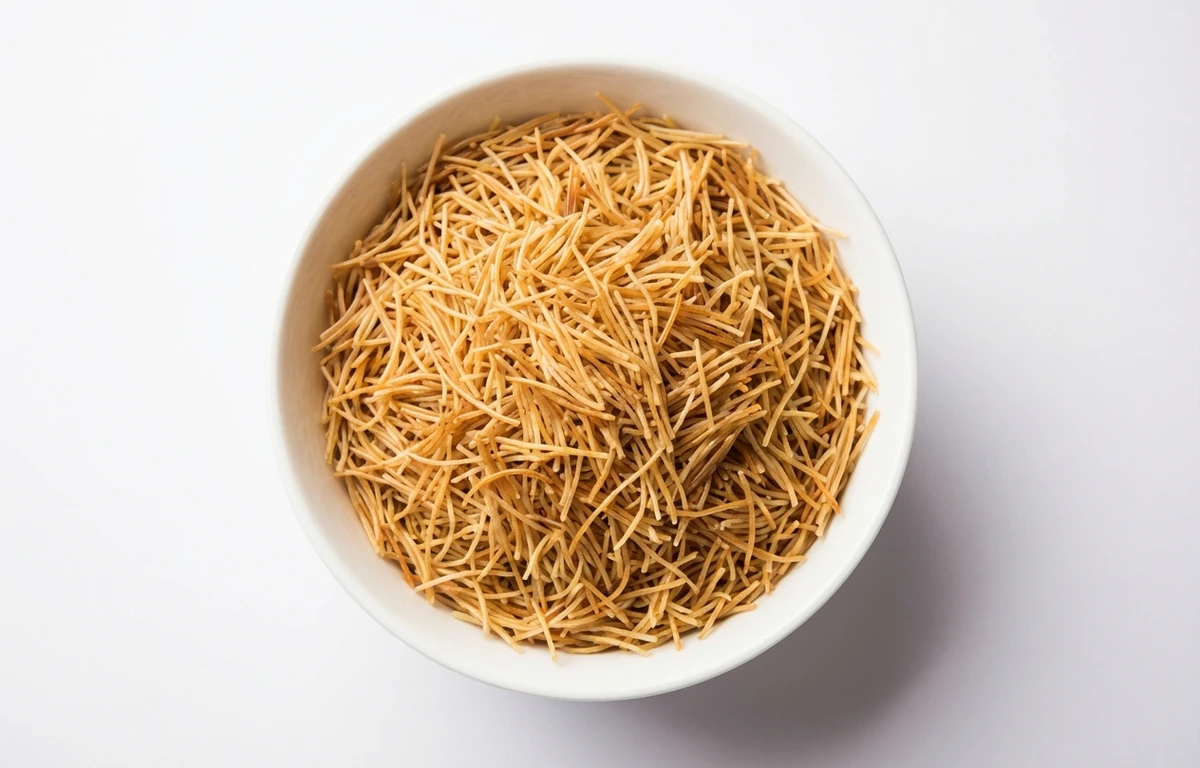
Roasted Semiya.
VegetarianVeganGluten-freeDairy-freeNut-freePeanut-freeSoy-freeEgg-freeShellfish-freeHoney-freeAlcohol-free
ALSO KNOWN AS
roasted vermicelliroasted sevairoasted shavigebhuna semiyaroasted seviyanroasted vermicelli noodlesRoasted SemiyaRoasted BambinoRoasted Wheat Vermicelliroasted semolina vermicelli
SERVING
CALORIES
358
PROTEIN
11.5g
CARBS
76g
FAT
1.2g
FIBER
2.5g
NUTRITION PROFILE · per 100 g
Everything in this ingredient.
MACRONUTRIENTS
Calories358kcal—
Protein11.5g23%
Carbohydrates76g28%
Fiber2.5g9%
Sugar0.40g1%
Total fat1.2g2%
Saturated fat0.20g1%
Trans fat0g—
Cholesterol0mg0%
Water10g—
MINERALS
Sodium5.0mg0%
Potassium120mg3%
Calcium18mg1%
Iron1.4mg8%
Magnesium25mg6%
Phosphorus115mg9%
Zinc0.80mg7%
Copper0.10mg11%
Manganese0.40mg17%
Selenium25µg45%
VITAMINS
Vitamin A0µg0%
Vitamin C0mg0%
Vitamin D0µg0%
Vitamin E0.10mg1%
Vitamin K0µg0%
Thiamin (B1)0.15mg13%
Riboflavin (B2)0.05mg4%
Niacin (B3)1.2mg8%
Pantothenic acid (B5)0.30mg6%
Vitamin B60.10mg6%
Folate (B9)15µg4%
Vitamin B120µg0%
%DV based on a 2,000 cal diet. Source: USDA FoodData Central. A dash in the %DV column means there’s no established Daily Value for that nutrient.
MEASUREMENT CONVERSIONS
How much is what.
1 cup100g
1 tablespoon6g
1 teaspoon2g
1 oz28.4g
1 lb453.6g
HEALTH BENEFITS
Why eat it.
- ✓Provides a quick source of energy through complex carbohydrates
- ✓Low in fat and cholesterol-free
- ✓Easy to digest, making it suitable for children and elderly
- ✓Low sodium content helps in maintaining blood pressure
- ✓Contains essential B-vitamins for metabolic health
COOKING TIPS
In the kitchen.
- 1Since it is pre-roasted, you can skip the roasting step and add it directly to boiling water or milk
- 2Use a 1:2 ratio of semiya to water for a non-sticky texture in savory dishes
- 3Do not overcook; it only takes 3-5 minutes to soften and can become mushy quickly
STORAGE
Keep it fresh.
- Store in an airtight container to prevent moisture absorption
- Keep in a cool, dry, and dark place to maintain freshness
- Can be stored for up to 6-9 months if kept away from humidity
FAQ
Frequently asked questions.
How long does roasted semiya last?
When stored in an airtight container in a cool, dry place, it can last for 6 to 9 months.
Does roasted semiya contain gluten?
Yes, roasted semiya is typically made from wheat semolina (suji) or refined wheat flour (maida), both of which contain gluten.
What is the difference between roasted and unroasted semiya?
Roasted semiya has been pre-heated until golden brown, which prevents it from becoming sticky when cooked and adds a nutty flavor. Unroasted semiya is pale and requires roasting in ghee or oil before use.
Can I freeze cooked roasted semiya?
Yes, you can freeze cooked semiya dishes like upma for up to a month, though the texture may become slightly softer upon reheating.
What can I use as a substitute for roasted semiya?
Rice vermicelli (for a gluten-free option), thin spaghetti broken into small pieces, or even couscous can work depending on the recipe.
How do I know if the semiya is of good quality?
Look for uniform golden-brown color, no signs of moisture or insects, and a dry, brittle texture.
Is roasted semiya healthy for weight loss?
It is high in carbohydrates and refined. While low in fat, it should be consumed in moderation and paired with plenty of vegetables to increase fiber content for weight management.
Do I need to wash roasted semiya before cooking?
No, you should not wash or soak roasted semiya as it will become soggy. Add it directly to the cooking liquid.
What are common dishes made with roasted semiya?
Common dishes include Semiya Upma (savory breakfast), Semiya Payasam/Kheer (sweet pudding), and Biryani-style semiya.



















