
Nut Seed
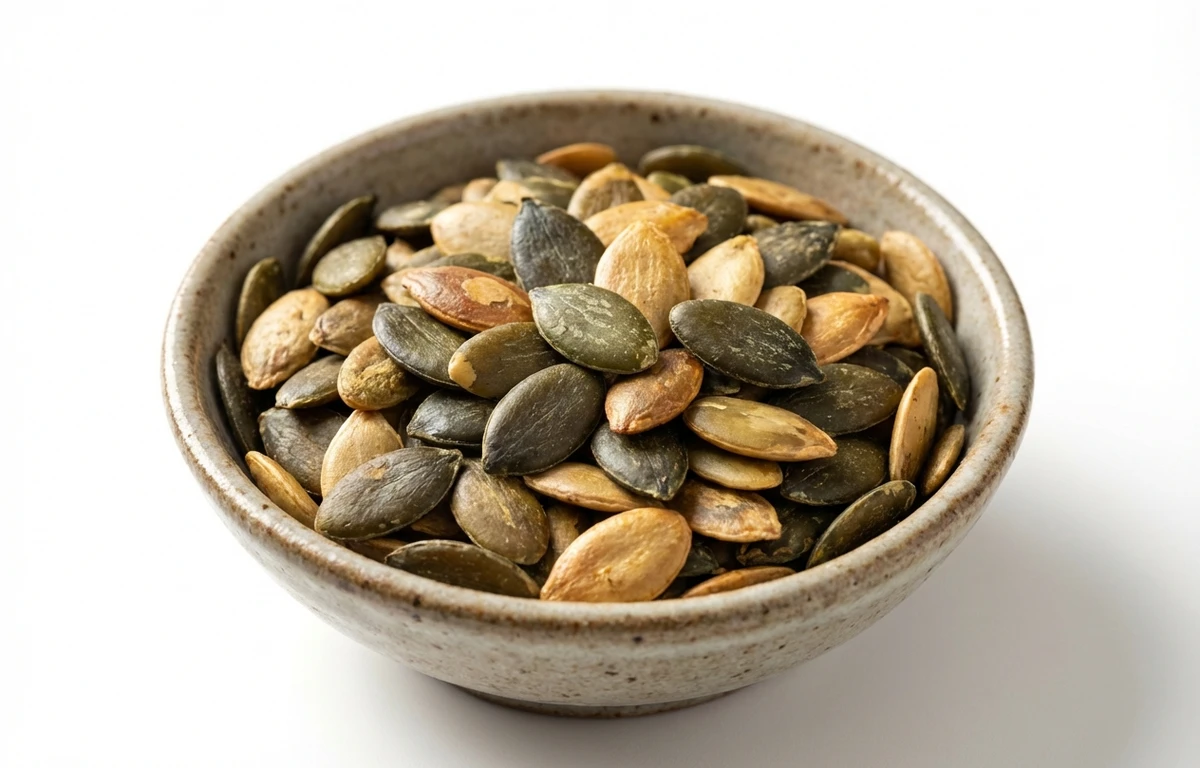
roasted unsalted pumpkin and squash seed kernels.
VegetarianVeganGluten-freeDairy-freeNut-freePeanut-freeSoy-freeEgg-freeShellfish-freeHoney-freeAlcohol-free
SERVING
CALORIES
574
PROTEIN
29.8g
CARBS
14.7g
FAT
49.1g
FIBER
6.5g
NUTRITION PROFILE · per 100 g
Everything in this ingredient.
MACRONUTRIENTS
Calories574kcal—
Protein29.8g60%
Carbohydrates14.7g5%
Fiber6.5g23%
Sugar1.3g3%
Total fat49.1g63%
Saturated fat8.7g43%
Trans fat0g—
Cholesterol0mg0%
Water2.0g—
MINERALS
Sodium7.0mg0%
Potassium809mg17%
Calcium46mg4%
Iron8.8mg49%
Magnesium592mg141%
Phosphorus1174mg94%
Zinc7.6mg69%
Copper1.3mg144%
Manganese4.5mg196%
Selenium9.4µg17%
VITAMINS
Vitamin A1.0µg0%
Vitamin C1.9mg2%
Vitamin D0µg0%
Vitamin E2.2mg15%
Vitamin K51.4µg43%
Thiamin (B1)0.07mg6%
Riboflavin (B2)0.15mg12%
Niacin (B3)4.4mg28%
Pantothenic acid (B5)0.75mg15%
Vitamin B60.14mg8%
Folate (B9)58µg14%
Vitamin B120µg0%
%DV based on a 2,000 cal diet. Source: USDA FoodData Central. A dash in the %DV column means there’s no established Daily Value for that nutrient.
MEASUREMENT CONVERSIONS
How much is what.
1 cup130g
1 tablespoon9g
1 teaspoon3g
1 oz28.4g
1 lb453.6g
HEALTH BENEFITS
Why eat it.
- ✓Excellent source of magnesium for heart and bone health
- ✓High in zinc which supports immune function
- ✓Rich in antioxidants like vitamin E and carotenoids
- ✓Contains tryptophan which may help promote better sleep
- ✓High plant-based protein content for muscle repair
COOKING TIPS
In the kitchen.
- 1Add to salads or soups at the last minute to maintain crunch
- 2Pulse in a food processor to create a nutritious crust for fish or chicken
- 3Mix into granola or oatmeal for a boost of healthy fats and protein
STORAGE
Keep it fresh.
- Store in an airtight container in a cool, dark place for up to 3 months
- Refrigerate to extend shelf life up to 6-12 months and prevent rancidity
- Can be frozen in a sealed bag for long-term storage without losing texture
FAQ
Frequently asked questions.
How long do roasted pumpkin and squash seeds last?
When stored in an airtight container in a cool, dry pantry, they last about 2-3 months. In the refrigerator, they can stay fresh for up to 6 months.
Can I freeze these seed kernels?
Yes, freezing is an excellent way to prevent the natural oils from going rancid. They can last up to a year in the freezer.
What is the difference between pumpkin seeds and pepitas?
Pepitas are a specific type of pumpkin seed that grows without a hull (shell). This mix contains kernels, which are the inner parts of the seeds.
Are these seeds safe for people with nut allergies?
While seeds are botanically different from tree nuts, cross-contamination often occurs in processing facilities. Check the packaging for 'processed in a facility with nuts' warnings.
What can I use as a substitute for this seed mix?
Sunflower seed kernels or melon seeds are the best substitutes in terms of texture and nutritional profile.
Do I need to wash these before eating?
No, since these are already roasted and unsalted kernels, they are ready to eat straight from the package.
Are roasted seeds less healthy than raw seeds?
Roasting can slightly reduce the levels of some heat-sensitive vitamins, but it enhances flavor and makes certain minerals easier to absorb.
How can I tell if the seeds have gone bad?
Rancid seeds will have a sharp, sour, or paint-like smell and a bitter, unpleasant taste. If they smell off, discard them.
Are these seeds suitable for a Keto diet?
Yes, they are high in healthy fats and relatively low in net carbs, making them an excellent snack for ketogenic diets.



















