vegetable
roshun.
VegetarianVeganGluten-freeDairy-freeNut-freePeanut-freeSoy-freeEgg-freeShellfish-freeHoney-freeAlcohol-free
SERVING
CALORIES
149
PROTEIN
6.4g
CARBS
33.1g
FAT
0.50g
FIBER
2.1g
NUTRITION PROFILE · per 100 g
Everything in this ingredient.
MACRONUTRIENTS
Calories149kcal—
Protein6.4g13%
Carbohydrates33.1g12%
Fiber2.1g8%
Sugar1.0g2%
Total fat0.50g1%
Saturated fat0.09g0%
Trans fat0g—
Cholesterol0mg0%
Water58.6g—
MINERALS
Sodium17mg1%
Potassium401mg9%
Calcium181mg14%
Iron1.7mg9%
Magnesium25mg6%
Phosphorus153mg12%
Zinc1.2mg11%
Copper0.30mg33%
Manganese1.7mg73%
Selenium14.2µg26%
VITAMINS
Vitamin A0µg0%
Vitamin C31.2mg35%
Vitamin D0µg0%
Vitamin E0.08mg1%
Vitamin K1.7µg1%
Thiamin (B1)0.20mg17%
Riboflavin (B2)0.11mg8%
Niacin (B3)0.70mg4%
Pantothenic acid (B5)0.60mg12%
Vitamin B61.2mg73%
Folate (B9)3.0µg1%
Vitamin B120µg0%
%DV based on a 2,000 cal diet. Source: USDA FoodData Central. A dash in the %DV column means there’s no established Daily Value for that nutrient.
MEASUREMENT CONVERSIONS
How much is what.
1 tablespoon15g
1 teaspoon5g
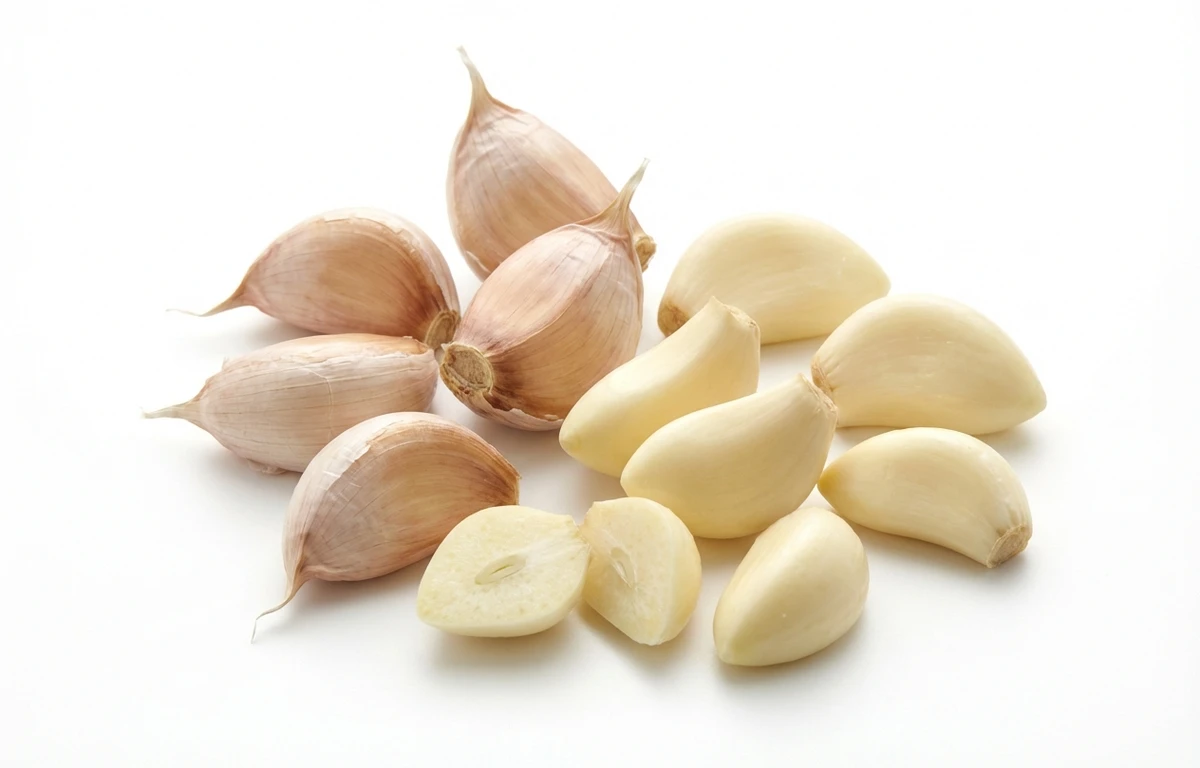
1 piece4g
HEALTH BENEFITS
Why eat it.
- ✓May help lower blood pressure and cholesterol levels, supporting cardiovascular health.
- ✓Contains compounds like allicin, which have potent antimicrobial and immune-boosting properties.
- ✓Rich in antioxidants that can help protect cells against oxidative damage.
- ✓Possesses anti-inflammatory properties that may help reduce inflammation in the body.
COOKING TIPS
In the kitchen.
- 1The finer garlic is minced or crushed, the more pungent its flavor will be. For a milder taste, use whole or sliced cloves.
- 2To avoid bitterness, do not overcook or burn garlic. When sautéing, add it in the last minute or two of cooking.
- 3Roast whole heads of garlic drizzled with olive oil until soft and caramelized for a sweet, mellow flavor perfect for spreads or sauces.
- 4Let crushed or chopped garlic sit for 10-15 minutes before cooking to maximize the formation of the beneficial compound allicin.
STORAGE
Keep it fresh.
- Store whole, unpeeled garlic bulbs in a cool, dark, dry place with good air circulation, such as a mesh bag or wire basket, for up to 6 months.
- Once a bulb is broken, individual cloves will last for about 1-2 weeks.
- Peeled or chopped garlic should be stored in an airtight container in the refrigerator and used within a few days.
FAQ
Frequently asked questions.
Is roshun healthy?
Yes, roshun is highly nutritious and known for its medicinal properties. It contains allicin, which supports heart health by lowering blood pressure and cholesterol, and provides potent antimicrobial and anti-inflammatory benefits.
What are the main health benefits of roshun?
Roshun is rich in antioxidants that protect cells from oxidative damage and contains compounds that boost the immune system. It is particularly valued for its ability to support cardiovascular health and reduce systemic inflammation.
How many calories and carbs are in roshun?
Per 100g, roshun contains approximately 149 calories, 33.06g of carbohydrates, and 6.36g of protein. Because it is typically consumed in small amounts, its contribution to daily caloric intake is usually very low.
Is roshun keto-friendly?
Yes, roshun is keto-friendly when used as a seasoning. While it has 33g of carbs per 100g, a single clove contains only about 1 gram of net carbs, making it easy to fit into a low-carb or ketogenic diet.
Can I eat roshun raw?
Yes, roshun can be eaten raw and is often used in pestos, dressings, or as a garnish. Eating it raw preserves the maximum amount of allicin, though the flavor is much sharper and more pungent than when cooked.
What does roshun taste like?
Raw roshun has a sharp, spicy, and pungent flavor. When cooked, the flavor mellows significantly, becoming savory, nutty, and slightly sweet, especially when roasted or sautéed slowly.
How do I prepare roshun for cooking?
Peel the papery skin and then mince, slice, or crush the cloves. For maximum health benefits, let the crushed roshun sit for about 10 minutes before heating to allow the beneficial allicin compound to fully activate.
How should I store roshun?
Store whole bulbs in a cool, dry, and dark place with plenty of air circulation. Avoid refrigerating whole bulbs as the moisture can cause them to mold or sprout; they can last several months when stored properly at room temperature.
How can I tell if roshun has gone bad?
Fresh roshun should be firm with tight, dry skin. If the cloves feel soft or mushy, have dark spots, or show signs of mold, the roshun has spoiled and should be discarded. Green sprouts indicate aging but are still safe to eat, though they may taste bitter.
Is roshun vegan and gluten-free?
Yes, roshun is a natural vegetable and is inherently both vegan and gluten-free. It is an excellent way to add deep flavor to plant-based and gluten-restricted diets without adding processed additives.