
Grain2 recipes
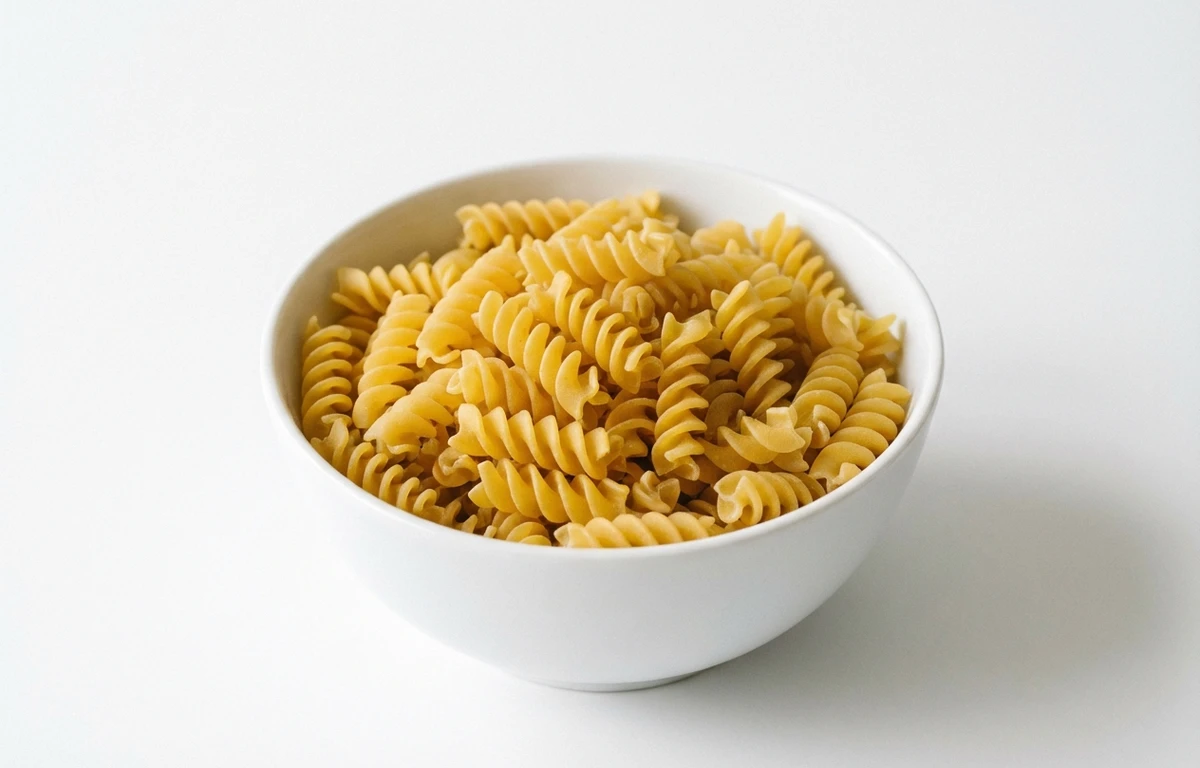
rotini pasta.
VegetarianVeganGluten-freeDairy-freeNut-freePeanut-freeSoy-freeEgg-freeShellfish-freeHoney-freeAlcohol-free
ALSO KNOWN AS
fusillicorkscrew pastaspiral pastadry rotinidried fusilli
SERVING
CALORIES
371
PROTEIN
13g
CARBS
74.7g
FAT
1.5g
FIBER
3.2g
NUTRITION PROFILE · per 100 g
Everything in this ingredient.
MACRONUTRIENTS
Calories371kcal—
Protein13g26%
Carbohydrates74.7g27%
Fiber3.2g11%
Sugar2.7g5%
Total fat1.5g2%
Saturated fat0.30g2%
Trans fat0g—
Cholesterol0mg0%
Water10g—
MINERALS
Sodium6.0mg0%
Potassium223mg5%
Calcium21mg2%
Iron1.3mg7%
Magnesium53mg13%
Phosphorus189mg15%
Zinc1.4mg13%
Copper0.30mg33%
Manganese0.90mg39%
Selenium63.2µg115%
VITAMINS
Vitamin A0µg0%
Vitamin C0mg0%
Vitamin D0µg0%
Vitamin E0.10mg1%
Vitamin K0.10µg0%
Thiamin (B1)0.50mg42%
Riboflavin (B2)0.20mg15%
Niacin (B3)3.4mg21%
Pantothenic acid (B5)0.40mg8%
Vitamin B60.10mg6%
Folate (B9)18µg5%
Vitamin B120µg0%
%DV based on a 2,000 cal diet. Source: USDA FoodData Central. A dash in the %DV column means there’s no established Daily Value for that nutrient.
MEASUREMENT CONVERSIONS
How much is what.
1 cup140g
1 tablespoon9g
1 teaspoon3g
1 oz28.4g
1 lb453.6g
1 ml1.7g
1 liter590g
HEALTH BENEFITS
Why eat it.
- ✓Excellent source of complex carbohydrates for sustained energy
- ✓Low in fat and sodium when prepared without heavy sauces
- ✓Provides essential B-vitamins for metabolism
- ✓Contains selenium which acts as an antioxidant
- ✓Good source of iron for oxygen transport in the blood
COOKING TIPS
In the kitchen.
- 1Cook in a large pot of boiling salted water for best flavor
- 2Boil for 8-10 minutes or until 'al dente' (firm to the bite)
- 3Do not rinse after cooking if using with hot sauces to help the sauce stick
STORAGE
Keep it fresh.
- Store in a cool, dry place in an airtight container
- Keep away from moisture to prevent mold growth
- Can be stored for up to 2 years if kept dry and sealed
FAQ
Frequently asked questions.
How long does dry rotini pasta last?
Dry rotini pasta can last for 1 to 2 years in a pantry if stored in an airtight container in a cool, dry environment.
What is the best substitute for rotini?
Fusilli is the closest substitute. Other good alternatives include penne, gemelli, or radiatori, as they also hold sauces well.
Is rotini pasta vegan?
Most standard dry rotini is vegan as it is made from semolina flour and water. However, always check the label for egg ingredients.
How do I know when rotini is cooked?
The best way is to taste it. It should be 'al dente,' meaning it is tender but still has a slight firmness or 'bite' in the center.
Can I freeze cooked rotini?
Yes, you can freeze cooked rotini. Toss it with a little oil first to prevent sticking and store in a freezer-safe bag for up to 3 months.
Why is rotini good for pasta salad?
The spiral shape (twists) has a large surface area and crevices that are excellent for trapping vinaigrettes, herbs, and small vegetable bits.
Does rotini contain gluten?
Yes, traditional rotini is made from durum wheat semolina and contains gluten. Gluten-free versions made from corn or rice are available.
How much dry rotini makes one serving?
Generally, 2 ounces (about 56g) of dry pasta is considered one serving, which yields about 1 cup of cooked pasta.
What sauces pair best with rotini?
Rotini pairs well with almost any sauce, but it excels with pesto, thick meat sauces, and chunky vegetable sauces that get caught in the spirals.
RECIPES
Cook with rotini pasta.
2 recipes · sorted by what’s quick



















