
Other1 recipes
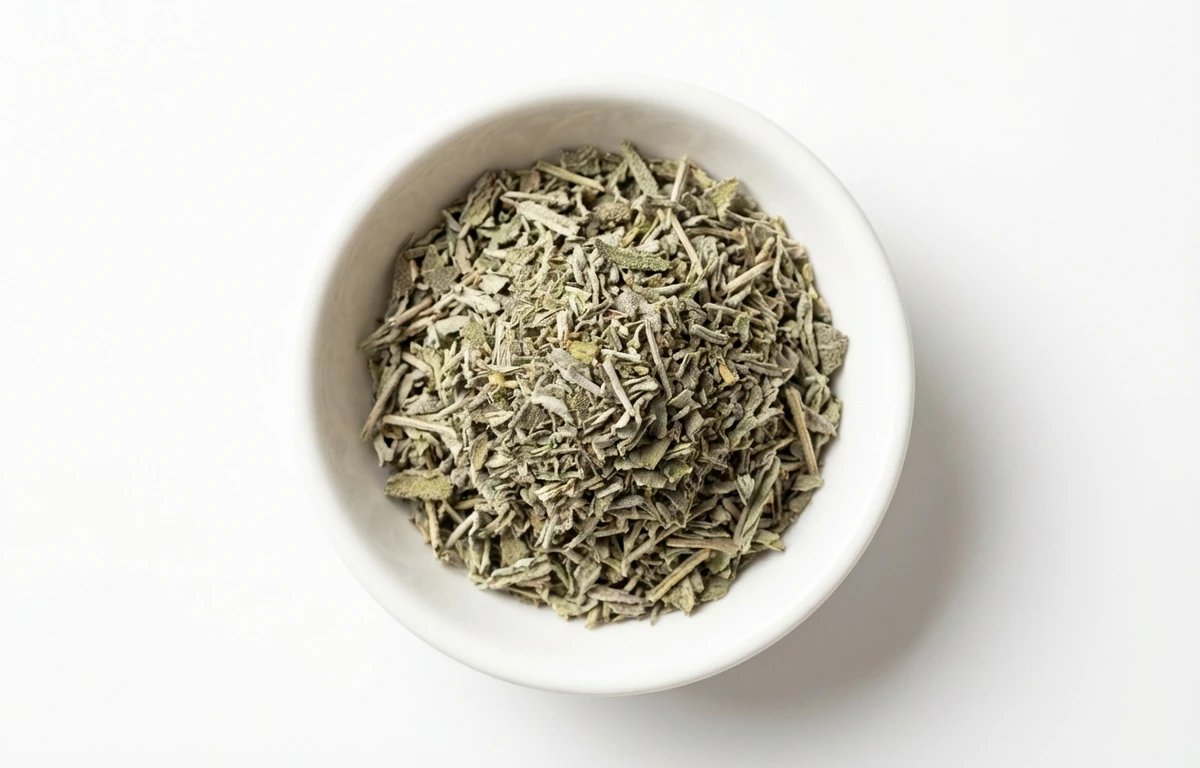
rubbed sage.
VegetarianVeganGluten-freeDairy-freeNut-freePeanut-freeSoy-freeEgg-freeShellfish-freeHoney-freeAlcohol-free
ALSO KNOWN AS
dried rubbed sagecrumbled sagerubbed dalmatian sagerubbed garden sage
SERVING
CALORIES
400
PROTEIN
10.6g
CARBS
60.7g
FAT
12.7g
FIBER
40.3g
This ingredient is flagged as naturally gluten-free. Per 100 g, it provides 1715 µg of vitamin K.
NUTRITION PROFILE · per 100 g
Everything in this ingredient.
MACRONUTRIENTS
Calories400kcal—
Protein10.6g21%
Carbohydrates60.7g22%
Fiber40.3g144%
Sugar1.7g3%
Total fat12.7g16%
Saturated fat7.0g35%
Trans fat0g—
Cholesterol0mg0%
Water8.0g—
MINERALS
Sodium11mg0%
Potassium1070mg23%
Calcium1652mg127%
Iron28.1mg156%
Magnesium428mg102%
Phosphorus91mg7%
Zinc4.7mg43%
Copper0.76mg84%
Manganese3.1mg136%
Selenium3.7µg7%
VITAMINS
Vitamin A295µg33%
Vitamin C32.4mg36%
Vitamin D0µg0%
Vitamin E7.5mg50%
Vitamin K1715µg1429%
Thiamin (B1)0.75mg63%
Riboflavin (B2)0.34mg26%
Niacin (B3)5.7mg36%
Pantothenic acid (B5)0.34mg7%
Vitamin B62.7mg158%
Folate (B9)274µg69%
Vitamin B120µg0%
%DV based on a 2,000 cal diet. Source: USDA FoodData Central. A dash in the %DV column means there’s no established Daily Value for that nutrient.
MEASUREMENT CONVERSIONS
How much is what.
1 cup96g
1 tablespoon6g
1 teaspoon2g
1 oz28.4g
1 lb453.6g
1 ml0.4g
1 liter400g
HEALTH BENEFITS
Why eat it.
- ✓May support cognitive function and memory
- ✓Supports oral health due to antimicrobial properties
COOKING TIPS
In the kitchen.
- 1Rub between your palms before adding to release aromatic oils
- 2Add early in the cooking process for stews and roasts
- 3Pairs exceptionally well with fatty meats like pork and duck
STORAGE
Keep it fresh.
- Store in a cool, dark place away from direct sunlight
- Keep in an airtight glass container to preserve volatile oils
- Use within 6 to 12 months for maximum flavor potency
FAQ
Frequently asked questions.
What is the difference between rubbed sage and ground sage?
Rubbed sage is made by rubbing dried leaves together, resulting in a light, fluffy, and woolly texture. Ground sage is a fine, dense powder that is much more concentrated in flavor.
How long does rubbed sage last?
When stored in an airtight container in a cool, dark place, it maintains its best quality for about 6 to 12 months.
Can I substitute ground sage for rubbed sage?
Yes, but use less. Generally, use 1/2 teaspoon of ground sage for every 1 teaspoon of rubbed sage called for in a recipe.
How can I tell if my rubbed sage is still good?
Rub a small amount between your fingers and sniff. If the aroma is weak or smells like hay rather than piney and earthy, it should be replaced.
Is rubbed sage the same as fresh sage?
No, rubbed sage is dried. Dried herbs have a more concentrated flavor than fresh. Use 1 teaspoon of rubbed sage for every 1 tablespoon of fresh chopped sage.
What are the best food pairings for rubbed sage?
It is a classic pairing for poultry, holiday stuffing, sausages, beans, and root vegetables like butternut squash.
Does rubbed sage contain any common allergens?
No, pure rubbed sage is naturally free from gluten, nuts, soy, and dairy.
Can rubbed sage be frozen?
Freezing is not recommended for dried herbs like rubbed sage as it can introduce moisture; room temperature storage in an airtight container is best.
Is rubbed sage considered a root vegetable?
No, sage is an herb derived from the leaves of the Salvia officinalis plant.
Is rubbed sage suitable for a Jain diet?
Yes, as it is a leaf-based herb and not a root vegetable, it is generally acceptable in Jain and Sattvic diets.
RECIPES
Cook with rubbed sage.
1 recipes · sorted by what’s quick



















