
Grain
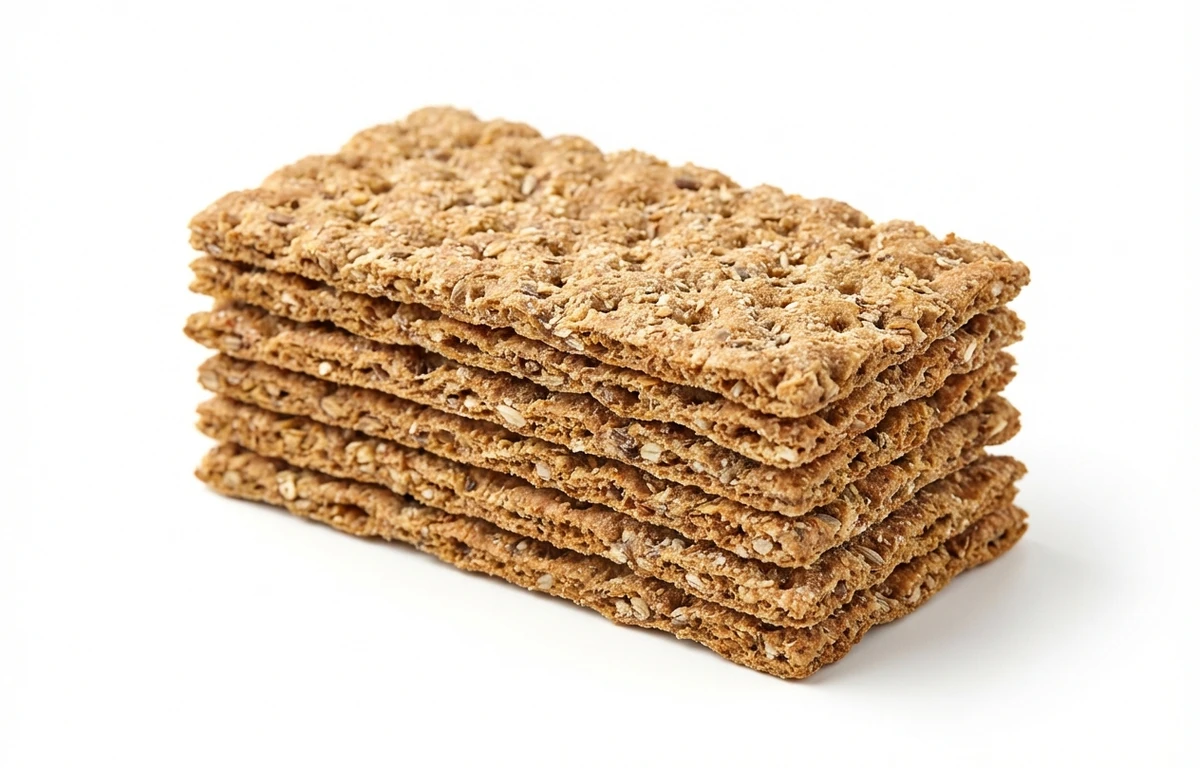
rye crispbread crackers.
VegetarianVeganGluten-freeDairy-freeNut-freePeanut-freeSoy-freeEgg-freeShellfish-freeHoney-freeAlcohol-freeWhole grain
SERVING
CALORIES
366
PROTEIN
7.9g
CARBS
82.2g
FAT
1.3g
FIBER
16.5g
NUTRITION PROFILE · per 100 g
Everything in this ingredient.
MACRONUTRIENTS
Calories366kcal—
Protein7.9g16%
Carbohydrates82.2g30%
Fiber16.5g59%
Sugar1.1g2%
Total fat1.3g2%
Saturated fat0.15g1%
Cholesterol0mg0%
Water6.1g—
MINERALS
Sodium410mg18%
Potassium319mg7%
Calcium31mg2%
Iron2.4mg14%
Magnesium78mg19%
Phosphorus269mg22%
Zinc2.4mg22%
Copper0.26mg29%
Manganese2.5mg108%
Selenium36.6µg67%
VITAMINS
Vitamin A0µg0%
Vitamin C0mg0%
Vitamin D0µg0%
Vitamin E0.81mg5%
Vitamin K6.0µg5%
Thiamin (B1)0.24mg20%
Riboflavin (B2)0.15mg12%
Niacin (B3)1.0mg7%
Pantothenic acid (B5)0.68mg14%
Vitamin B60.21mg12%
Folate (B9)47µg12%
Vitamin B120µg0%
%DV based on a 2,000 cal diet. Source: USDA FoodData Central. A dash in the %DV column means there’s no established Daily Value for that nutrient.
MEASUREMENT CONVERSIONS
How much is what.
1 cup55g
1 tablespoon3.4g
1 teaspoon1.1g
1 ml0.2g
1 liter229.2g
HEALTH BENEFITS
Why eat it.
- ✓High in dietary fiber, which supports digestive health and promotes satiety.
- ✓Made from whole grain rye, providing essential minerals like manganese, magnesium, and phosphorus.
- ✓Typically has a low glycemic index, helping to regulate blood sugar levels more effectively than refined grain products.
- ✓The soluble fiber content can contribute to lowering LDL (bad) cholesterol levels, supporting heart health.
COOKING TIPS
In the kitchen.
- 1Serve as a sturdy base for various toppings like smoked fish, cream cheese, avocado, hard-boiled eggs, or hummus.
- 2Apply moist toppings just before serving to prevent the crackers from becoming soggy.
- 3Crush them to use as a crunchy, whole-grain topping for soups, salads, or baked casseroles.
- 4Pair with strong cheeses and fruit preserves for a classic Scandinavian-style snack or appetizer.
STORAGE
Keep it fresh.
- Store in an airtight container at room temperature to protect from moisture and maintain crispness.
- Keep in a cool, dry place like a pantry, away from direct sunlight and heat sources, to prolong shelf life for several months.
FAQ
Frequently asked questions.
Are rye crispbread crackers healthy?
Yes, rye crispbread crackers are highly nutritious as they are typically made from whole grain rye. They are rich in dietary fiber, which aids digestion, and contain essential minerals like manganese and magnesium while being very low in fat.
Are rye crispbread crackers good for weight loss?
Rye crispbread can be an excellent tool for weight management because its high fiber content promotes satiety, helping you feel full for longer. Additionally, they are low in fat and provide a crunchy alternative to higher-calorie snacks.
Are rye crispbread crackers gluten-free?
No, rye crispbread crackers are not gluten-free. Rye is a grain that naturally contains gluten, making these crackers unsuitable for individuals with celiac disease or gluten sensitivities.
Are rye crispbread crackers vegan?
Most traditional rye crispbreads are vegan, as they are primarily made from rye flour, water, and salt. However, you should always check the label for flavored varieties which might contain honey, milk powder, or cheese.
What do rye crispbread crackers taste like?
They have a distinct, earthy, and slightly nutty flavor characteristic of rye grain. The texture is very dry, hard, and brittle, providing a satisfying crunch that holds up well under heavy toppings.
How do rye crispbread crackers affect blood sugar?
Rye crispbread typically has a low glycemic index (GI) due to its high whole grain and fiber content. This helps regulate blood sugar levels more effectively than crackers made from refined white flour, preventing sharp insulin spikes.
How should I store rye crispbread crackers?
Store them in a cool, dry place in an airtight container or a tightly sealed bag to prevent them from absorbing moisture. If they lose their crunch due to humidity, you can briefly toast them in a low oven to restore their crispness.
Can rye crispbread crackers help lower cholesterol?
Yes, the soluble fiber found in whole grain rye can contribute to lowering LDL (bad) cholesterol levels. This fiber binds to cholesterol in the digestive system and helps remove it from the body, supporting heart health.
What are some common ways to eat rye crispbread?
They are commonly used for open-faced sandwiches topped with ingredients like avocado, smoked salmon, cream cheese, or sliced cucumbers. They can also be served alongside soups or crumbled into salads as a healthy alternative to croutons.
What is the nutritional breakdown of rye crispbread?
Per 100g, these crackers contain approximately 366 calories, 7.9g of protein, and 82.2g of carbohydrates. They are notably low in fat, containing only about 1.3g per 100g, and are a significant source of dietary fiber.



















