
Other7 recipes
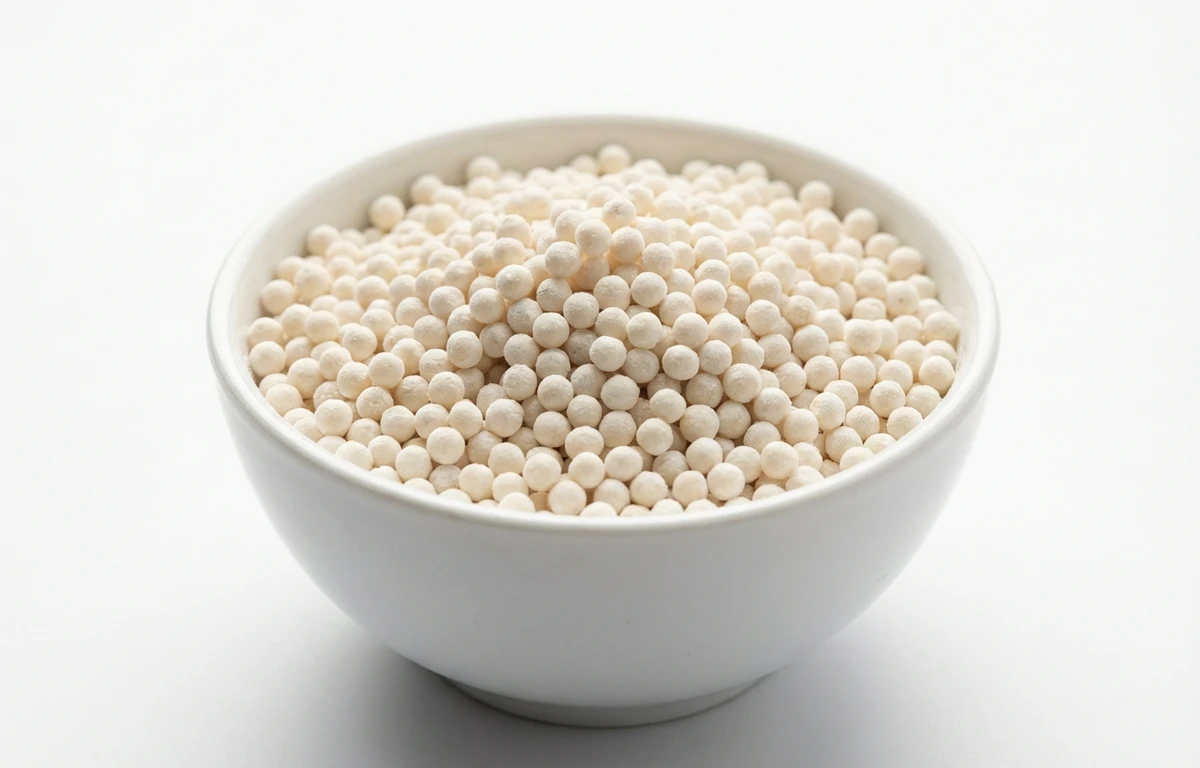
sago pearls.
VegetarianVeganGluten-freeDairy-freeNut-freePeanut-freeSoy-freeEgg-freeShellfish-freeHoney-freeAlcohol-free
ALSO KNOWN AS
sagosabudana
SERVING
CALORIES
358
PROTEIN
0.19g
CARBS
88.7g
FAT
0.02g
FIBER
0.90g
This ingredient is flagged as naturally gluten-free. Per 100 g, it provides 0 µg of vitamin K.
NUTRITION PROFILE · per 100 g
Everything in this ingredient.
MACRONUTRIENTS
Calories358kcal—
Protein0.19g0%
Carbohydrates88.7g32%
Fiber0.90g3%
Sugar3.4g7%
Total fat0.02g0%
Saturated fat0.01g0%
Cholesterol0mg0%
Water11g—
MINERALS
Sodium1.0mg0%
Potassium11mg0%
Calcium20mg2%
Iron1.6mg9%
Magnesium1.0mg0%
Phosphorus7.0mg1%
Zinc0.12mg1%
Copper0.02mg2%
Manganese0.11mg5%
Selenium0.80µg1%
VITAMINS
Vitamin A0µg0%
Vitamin C0mg0%
Vitamin D0µg0%
Vitamin E0mg0%
Vitamin K0µg0%
Thiamin (B1)0mg0%
Riboflavin (B2)0mg0%
Niacin (B3)0mg0%
Pantothenic acid (B5)0.14mg3%
Vitamin B60.01mg1%
Folate (B9)4.0µg1%
Vitamin B120µg0%
%DV based on a 2,000 cal diet. Source: USDA FoodData Central. A dash in the %DV column means there’s no established Daily Value for that nutrient.
MEASUREMENT CONVERSIONS
How much is what.
1 cup152g
1 tablespoon12g
1 teaspoon4g
1 ml0.8g
1 liter800g
HEALTH BENEFITS
Why eat it.
- ✓Provides a quick source of energy due0 to its high carbohydrate content.
- ✓Easy to digest, often used in foods for infants, the elderly, or during convalescence.
- ✓Can be used to create hydrating foods and drinks, helping with fluid intake.
COOKING TIPS
In the kitchen.
- 1Do not soak small sago pearls as they may dissolve; add them directly to boiling water.
- 2Cook in a large volume of boiling water (at least 10 parts water to 1 part sago) and stir frequently to prevent the pearls from clumping and sticking to the pot.
- 3The pearls are fully cooked when they become completely translucent. If a white dot remains in the center, turn off the heat and let them sit in the hot water, covered, for 10-15 minutes.
- 4Rinse cooked sago pearls under cold running water to remove excess starch and stop the cooking process, which helps them remain separate.
STORAGE
Keep it fresh.
- Store uncooked sago pearls in an airtight container in a cool, dark, and dry pantry for up to a year.
- Once cooked, refrigerate in a sealed container with a little liquid (like syrup or coconut milk) to prevent drying out, and consume within 2-3 days.
FAQ
Frequently asked questions.
Is sago healthy?
Sago is a high-energy food primarily composed of carbohydrates, making it an excellent source of quick fuel. While it is easy to digest and gluten-free, it is low in protein, fiber, and essential vitamins, so it should be consumed as part of a balanced diet.
How many calories and carbs are in sago pearls?
Sago is calorie-dense, containing approximately 358 calories and 88.69 grams of carbohydrates per 100g. It contains negligible amounts of protein (0.19g) and fat (0.02g), making it almost pure starch.
What is the difference between sago and tapioca pearls?
True sago is derived from the pith of sago palm trees, while tapioca pearls are made from cassava root starch. Although they are often used interchangeably in recipes like puddings and bubble tea, sago pearls are traditionally considered slightly more cooling and easier to digest.
How should sago pearls be stored?
Uncooked sago pearls should be kept in an airtight container in a cool, dry, and dark place. When protected from moisture and pests, they can remain shelf-stable for up to two years.
Is sago keto-friendly?
No, sago is not keto-friendly. Its extremely high carbohydrate content (nearly 89g per 100g) makes it unsuitable for low-carb or ketogenic diets, as even a small serving would likely exceed daily carb limits.
RECIPES
Cook with sago pearls.
7 recipes · sorted by what’s quick



















