
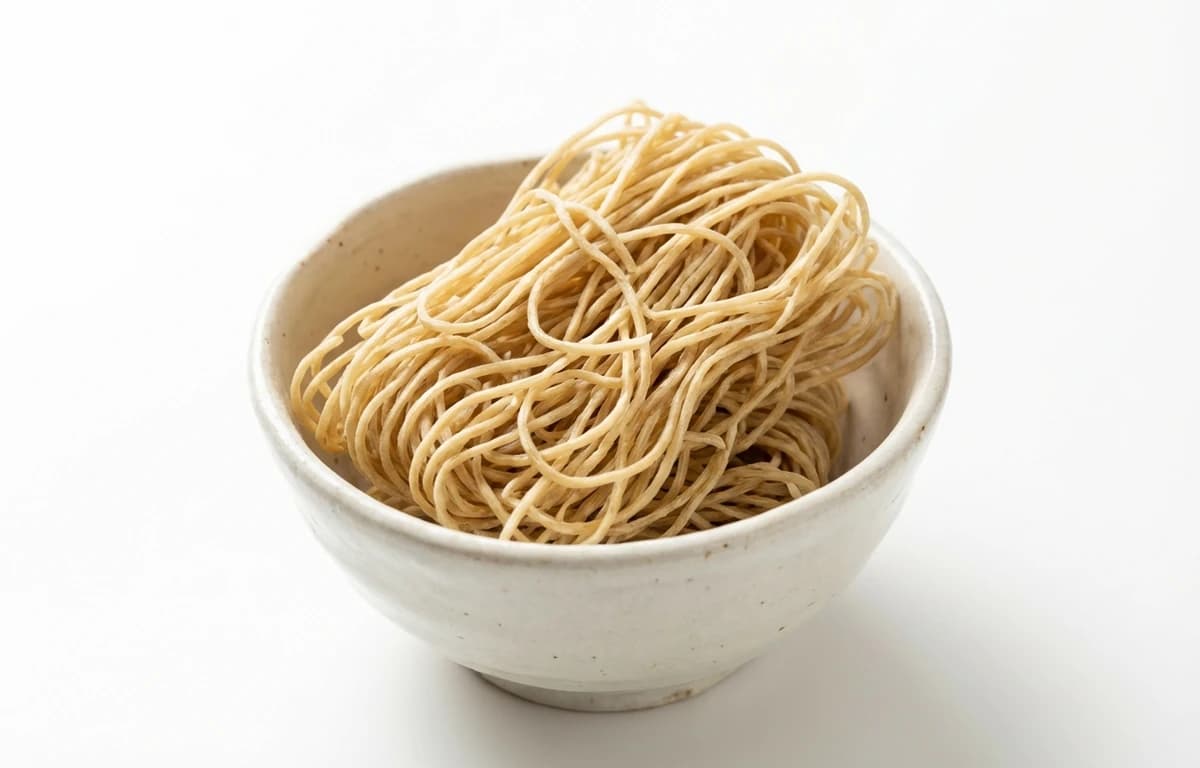
saimin noodles
Also known as: egg noodles, wheat egg noodles, Hawaiian noodles
Loading...
Also known as: egg noodles, wheat egg noodles, Hawaiian noodles
Per 100g
Nutrition data source: USDA FoodData Central
Common measurement equivalents in grams
Saimin noodles are a good source of energy-providing carbohydrates and contain essential B vitamins like niacin and folate. While they are relatively low in fat, they are best enjoyed as part of a balanced meal with plenty of vegetables and lean proteins to increase fiber and nutrient density.
A 100g serving of saimin noodles contains approximately 138 calories and 25 grams of carbohydrates. They also provide about 4.5 grams of protein and 2.5 grams of fat, making them a moderate-calorie base for soups and stir-fries.
No, traditional saimin noodles are typically not vegan because they are made with eggs in addition to wheat flour. Vegans should check the ingredient label for egg-free alternatives or use rice-based noodles instead.
No, saimin noodles are made from wheat flour and contain gluten. They are not suitable for individuals with celiac disease or gluten sensitivities.
Fresh saimin noodles should be boiled in water for about 2 to 3 minutes until they reach an 'al dente' texture. After boiling, they are typically drained and added to a hot dashi or shrimp-based broth with various toppings like char siu, green onions, and kamaboko.
While both are wheat-based, saimin is a unique Hawaiian dish influenced by Chinese, Japanese, and Filipino cuisines. Saimin noodles often contain more egg than standard ramen and are traditionally served in a lighter, clear broth made from shrimp or dashi rather than heavy pork or miso broths.
Fresh saimin noodles should be kept in the refrigerator in an airtight container or their original packaging. They are highly perishable and should ideally be consumed within 3 to 5 days of purchase for the best texture and flavor.
saimin noodles is a versatile ingredient found in cuisines around the world. With 138 calories per 100g and 4.5 grams of protein, it's a nutritious addition to many dishes.
Explore more ingredients in the grain category with complete nutrition information.
View all grain →Discover 0 recipes featuring saimin noodles with step-by-step instructions.
Browse recipes →Yes, you can freeze fresh saimin noodles to extend their shelf life for up to 2 to 3 months. To prevent sticking, ensure they are well-sealed in a freezer-safe bag; they can be cooked directly from frozen by adding an extra minute to the boiling time.
Saimin can be part of a weight loss diet if portion sizes are controlled and it is served with low-calorie ingredients. Because the noodles are primarily carbohydrates, it is important to balance the meal with high-fiber vegetables and lean protein to improve satiety.
Saimin noodles have a mild, slightly savory wheat flavor with a soft yet chewy texture. Because they contain egg, they have a richer taste and more yellow hue compared to plain white flour noodles, allowing them to absorb the flavors of the broth they are served in.