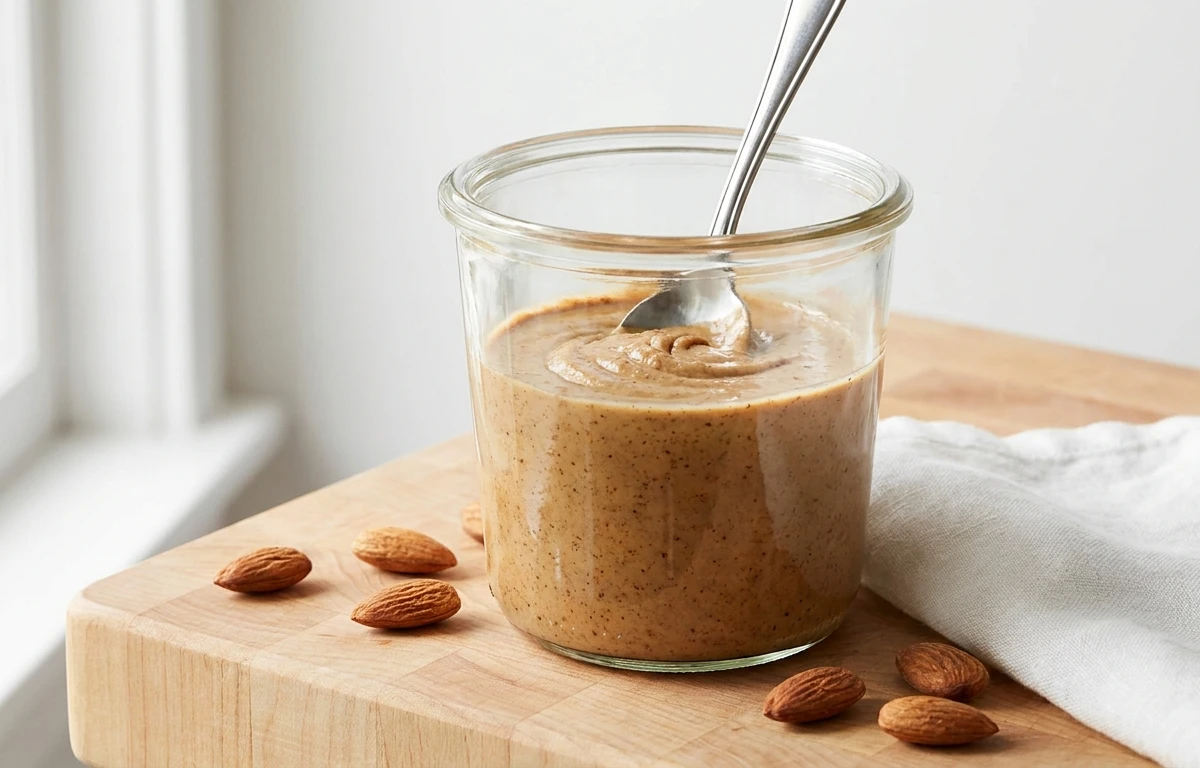
Nut Seed
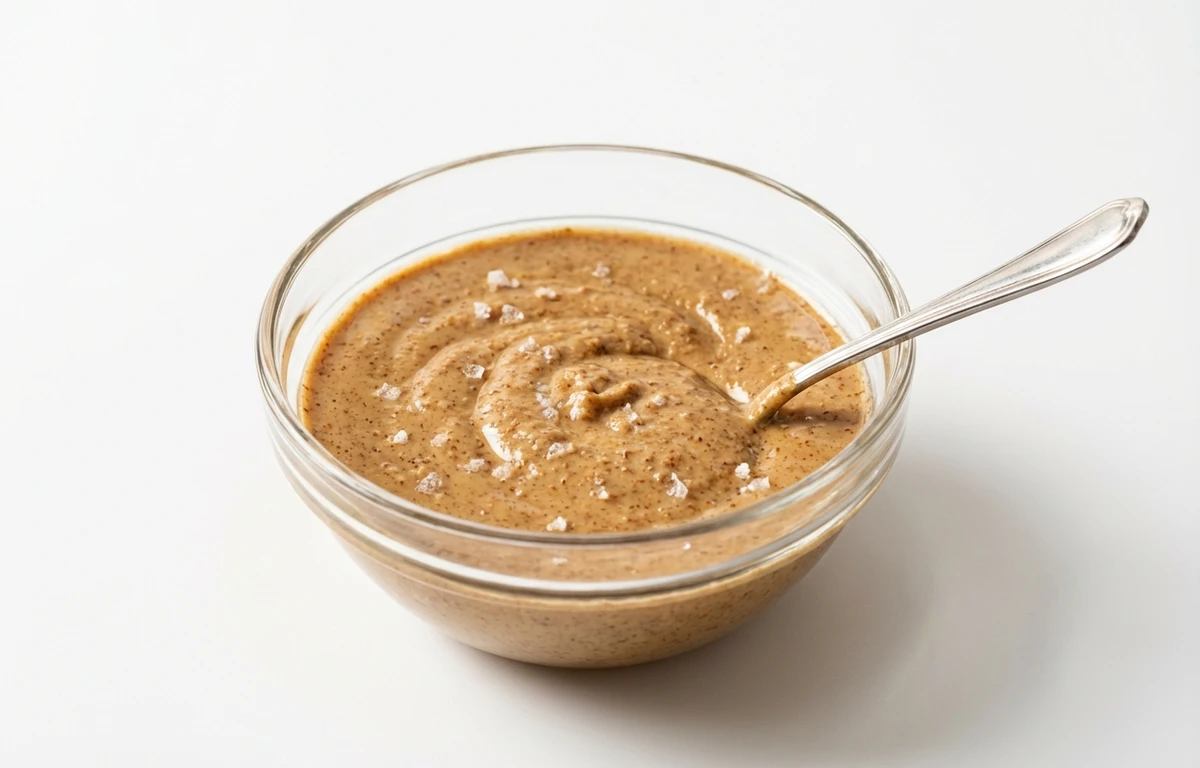
salted almond butter.
VegetarianVeganGluten-freeDairy-freeNut-freePeanut-freeSoy-freeEgg-freeShellfish-freeHoney-freeAlcohol-free
SERVING
CALORIES
614
PROTEIN
21g
CARBS
18.8g
FAT
55.5g
FIBER
10.3g
NUTRITION PROFILE · per 100 g
Everything in this ingredient.
MACRONUTRIENTS
Calories614kcal—
Protein21g42%
Carbohydrates18.8g7%
Fiber10.3g37%
Sugar6.3g13%
Total fat55.5g71%
Saturated fat6.5g33%
Trans fat0g—
Cholesterol0mg0%
Water1.6g—
MINERALS
Sodium227mg10%
Potassium748mg16%
Calcium347mg27%
Iron3.5mg19%
Magnesium279mg66%
Phosphorus508mg41%
Zinc3.3mg30%
Copper0.93mg103%
Manganese2.1mg93%
Selenium2.4µg4%
VITAMINS
Vitamin A0µg0%
Vitamin C0mg0%
Vitamin D0µg0%
Vitamin E24.2mg161%
Vitamin K0µg0%
Thiamin (B1)0.04mg3%
Riboflavin (B2)0.94mg72%
Niacin (B3)3.2mg20%
Pantothenic acid (B5)0.32mg6%
Vitamin B60.10mg6%
Folate (B9)53µg13%
Vitamin B120µg0%
%DV based on a 2,000 cal diet. Source: USDA FoodData Central. A dash in the %DV column means there’s no established Daily Value for that nutrient.
MEASUREMENT CONVERSIONS
How much is what.
1 cup250g
1 tablespoon16g
1 teaspoon5.3g
1 ml1.1g
1 liter1066.7g
HEALTH BENEFITS
Why eat it.
- ✓Rich in heart-healthy monounsaturated fats, which can help lower bad cholesterol levels (LDL).
- ✓Excellent source of Vitamin E, a powerful antioxidant that protects cells from oxidative damage.
- ✓Good source of magnesium, which is crucial for bone health, blood pressure regulation, and nerve function.
- ✓Provides plant-based protein and dietary fiber, promoting satiety and aiding in weight management.
COOKING TIPS
In the kitchen.
- 1Use as a base for savory sauces, such as a Thai-style almond sauce, by whisking it with soy sauce, lime juice, ginger, and water.
- 2Add a tablespoon to smoothies or oatmeal for a boost of healthy fats, protein, and a creamy texture.
- 3In baking, it can be used as a fat substitute or a primary flavor in cookies, energy balls, and brownies.
- 4Allow cold almond butter to come to room temperature before mixing into batters or sauces for easier incorporation.
STORAGE
Keep it fresh.
- Store unopened jars in a cool, dark pantry. Once opened, refrigerate to prevent the natural oils from becoming rancid, extending its shelf life to 2-3 months.
- If oil separation occurs, which is natural for varieties without stabilizers, stir the butter thoroughly before each use to recombine for a consistent texture.
FAQ
Frequently asked questions.
Is salted almond butter healthy?
Yes, salted almond butter is highly nutritious, offering heart-healthy monounsaturated fats, Vitamin E, and magnesium. While it contains added sodium, it remains a great source of antioxidants and minerals that support heart and bone health when eaten in moderation.
How much protein is in salted almond butter?
Salted almond butter contains approximately 21g of protein per 100g. This high protein content, combined with its healthy fats, makes it an excellent plant-based option for muscle repair and long-lasting energy.
Is salted almond butter good for weight loss?
It can be beneficial for weight management because its high fiber and protein content promote satiety, helping you feel full longer. However, it is calorie-dense at 614 calories per 100g, so it is best enjoyed in controlled portions.
Is salted almond butter keto-friendly?
Yes, it is very keto-friendly. With 55.5g of fat and relatively low net carbohydrates per 100g, it serves as an ideal high-fat, low-carb snack for those following a ketogenic lifestyle.
Is salted almond butter vegan and gluten-free?
Naturally, salted almond butter is both vegan and gluten-free as it consists primarily of almonds and salt. Always check the manufacturer's label to ensure there is no cross-contamination if you have a severe gluten allergy.
How do you store salted almond butter and how long does it last?
Store it in a cool, dry place or refrigerate it to prevent the natural oils from going rancid. In the refrigerator, an opened jar typically stays fresh for 3 to 6 months.
Why does the oil separate in my salted almond butter?
Oil separation is a natural sign that the almond butter does not contain emulsifiers or stabilizers. Simply stir the oil back in before use, or store the jar upside down to help the oils redistribute naturally.
What does salted almond butter taste like?
It has a deep, toasted nut flavor with a hint of natural sweetness, balanced by a savory saltiness. The texture is often slightly more granular or 'earthy' compared to the perfectly smooth consistency of commercial peanut butter.
Can I substitute salted almond butter for peanut butter in recipes?
Yes, you can generally substitute it in a 1:1 ratio. Note that almond butter is slightly more liquid and less sweet than peanut butter, so you may need to adjust the salt or sweeteners in your recipe accordingly.
What are the best ways to use salted almond butter?
It is excellent spread on toast, swirled into oatmeal, or added to smoothies for a protein boost. It also works well in savory applications, such as in a satay-style dipping sauce or as a base for salad dressings.
RECIPES
Cook with salted almond butter.
0 recipes · sorted by what’s quick