
Seafood
salted mackerel.
VegetarianVeganGluten-freeDairy-freeNut-freePeanut-freeSoy-freeEgg-freeShellfish-freeHoney-freeAlcohol-free
ALSO KNOWN AS
salt-cured mackerelshio sabasalted bangda
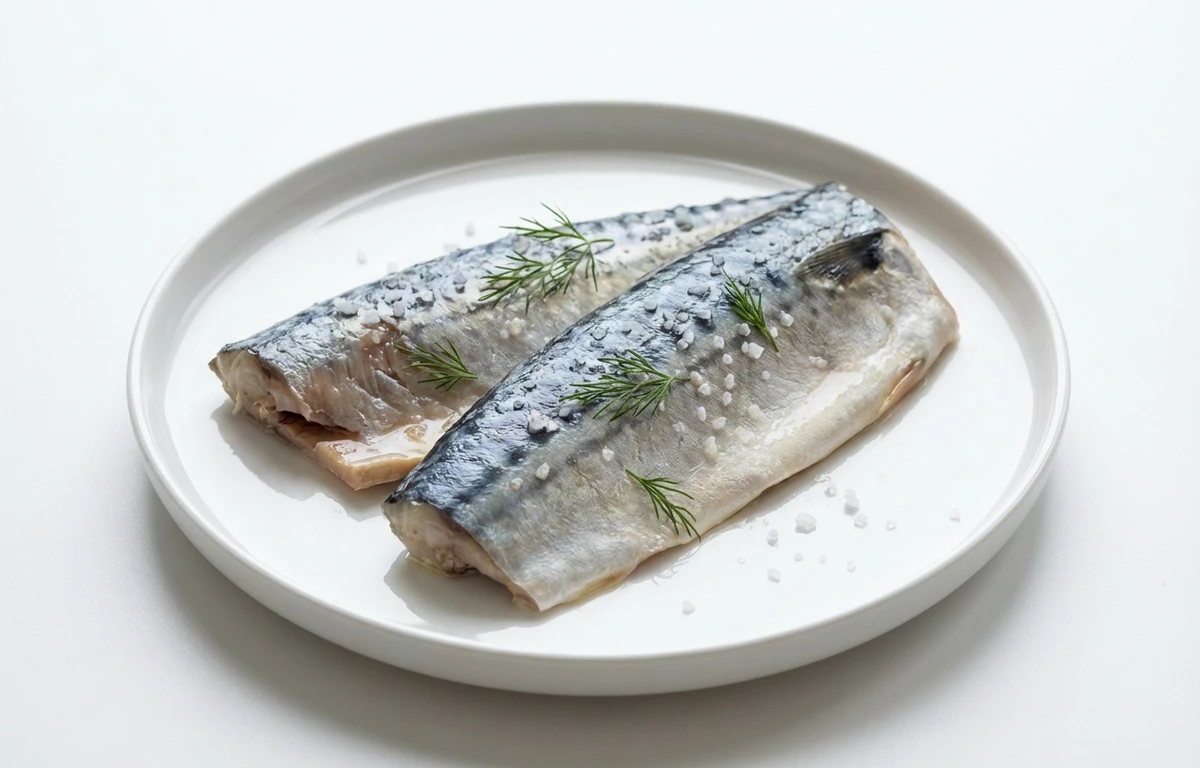
SERVING
CALORIES
262
PROTEIN
23.5g
CARBS
0g
FAT
18.2g
FIBER
0g
NUTRITION PROFILE · per 100 g
Everything in this ingredient.
MACRONUTRIENTS
Calories262kcal—
Protein23.5g47%
Carbohydrates0g0%
Fiber0g0%
Sugar0g0%
Total fat18.2g23%
Saturated fat4.5g23%
Trans fat0g—
Cholesterol75mg25%
Water45g—
MINERALS
Sodium4450mg193%
Potassium314mg7%
Calcium15mg1%
Iron1.6mg9%
Magnesium60mg14%
Phosphorus220mg18%
Zinc0.80mg7%
Copper0.10mg11%
Manganese0.02mg1%
Selenium44.1µg80%
VITAMINS
Vitamin A50µg6%
Vitamin C0mg0%
Vitamin D13.8µg69%
Vitamin E1.5mg10%
Vitamin K0.10µg0%
Thiamin (B1)0.15mg13%
Riboflavin (B2)0.35mg27%
Niacin (B3)8.5mg53%
Pantothenic acid (B5)0.80mg16%
Vitamin B60.40mg24%
Folate (B9)2.0µg1%
Vitamin B1212µg500%
%DV based on a 2,000 cal diet. Source: USDA FoodData Central. A dash in the %DV column means there’s no established Daily Value for that nutrient.
MEASUREMENT CONVERSIONS
How much is what.
1 oz28.4g
1 lb453.6g
1 piece120g
HEALTH BENEFITS
Why eat it.
- ✓Excellent source of Omega-3 fatty acids for heart health
- ✓High in Vitamin D for bone strength and immune support
- ✓Rich in Vitamin B12 for nerve function and energy
- ✓High protein content for muscle repair
- ✓Contains selenium which acts as a powerful antioxidant
COOKING TIPS
In the kitchen.
- 1Soak in cold water for 20-30 minutes before cooking to remove excess salt
- 2Grill or pan-fry skin-side down first to achieve a crispy texture
- 3Avoid adding extra salt to the dish as the fish itself is highly seasoned
STORAGE
Keep it fresh.
- Store in an airtight container in the refrigerator for up to 2 weeks
- Can be frozen for up to 3 months if wrapped tightly in plastic and foil
- Keep away from other foods as the strong aroma can transfer easily
FAQ
Frequently asked questions.
How long does salted mackerel last?
In the refrigerator, it typically lasts 1-2 weeks. If vacuum-sealed or frozen, it can last up to 3 months.
Do I need to wash salted mackerel before cooking?
Yes, it is highly recommended to rinse it under cold water and soak it for at least 20 minutes to reduce the intense saltiness.
What is a good substitute for salted mackerel?
Salted cod (bacalao) or fresh mackerel seasoned heavily with salt are the best alternatives.
Is salted mackerel healthy?
It is very high in Omega-3s and vitamins, but also extremely high in sodium. It should be consumed in moderation, especially by those with hypertension.
How can I tell if salted mackerel has gone bad?
Look for a slimy texture, an ammonia-like smell, or visible mold. The flesh should be firm, not mushy.
Can I eat salted mackerel raw?
While it is cured, it is generally intended to be cooked (grilled, fried, or steamed) before consumption to ensure safety and better texture.
What dishes use salted mackerel?
It is popular in Japanese cuisine (Shio Saba), Korean cuisine (Godeungeo-gui), and various Caribbean and Southeast Asian stews.
Does salted mackerel contain mercury?
Mackerel generally has lower mercury levels than larger fish like tuna, but it should still be eaten in moderation.



















