
Vegetable
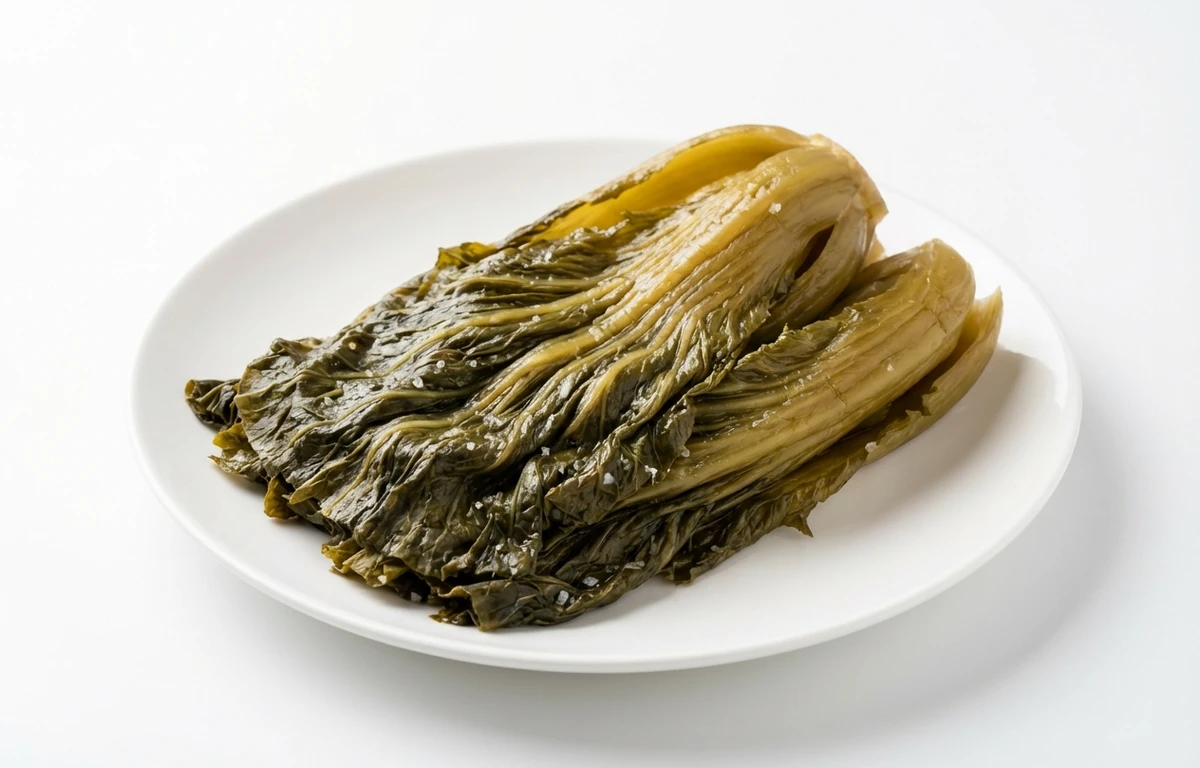
salted mustard cabbage.
VegetarianVeganGluten-freeDairy-freeNut-freePeanut-freeSoy-freeEgg-freeShellfish-freeHoney-freeAlcohol-freeFermented
SERVING
CALORIES
28
PROTEIN
1.1g
CARBS
5.6g
FAT
0.10g
FIBER
3.1g
This ingredient is flagged as naturally gluten-free. Per 100 g, it provides 116 µg of vitamin K.
NUTRITION PROFILE · per 100 g
Everything in this ingredient.
MACRONUTRIENTS
Calories28kcal—
Protein1.1g2%
Carbohydrates5.6g2%
Fiber3.1g11%
Sugar1.4g3%
Total fat0.10g0%
Saturated fat0.01g0%
Trans fat0g—
Cholesterol0mg0%
Water92.1g—
MINERALS
Sodium717mg31%
Potassium246mg5%
Calcium67mg5%
Iron0.70mg4%
Magnesium15mg4%
Phosphorus27mg2%
Zinc0.30mg3%
Copper0.03mg3%
Manganese0.22mg10%
Selenium0.90µg2%
VITAMINS
Vitamin A49µg5%
Vitamin C0mg0%
Vitamin D0µg0%
Vitamin E0.02mg0%
Vitamin K116µg96%
Thiamin (B1)0.04mg3%
Riboflavin (B2)0.09mg7%
Niacin (B3)0.72mg5%
Pantothenic acid (B5)0.19mg4%
Vitamin B60.30mg18%
Folate (B9)72µg18%
Vitamin B120µg0%
%DV based on a 2,000 cal diet. Source: USDA FoodData Central. A dash in the %DV column means there’s no established Daily Value for that nutrient.
MEASUREMENT CONVERSIONS
How much is what.
1 cup128g
1 tablespoon8g
1 teaspoon2.7g
1 ml0.5g
1 liter533.3g
HEALTH BENEFITS
Why eat it.
- ✓Rich in probiotics from fermentation, which supports gut health and digestion.
- ✓Good source of dietary fiber, aiding in bowel regularity and overall digestive wellness.
COOKING TIPS
In the kitchen.
- 1Rinse thoroughly under cold water before use to remove excess salt and any grit. For a less salty flavor, soak in water for 15-30 minutes, changing the water once.
- 2Finely chop and use as a key flavoring agent in stir-fries with pork, chicken, or firm tofu.
- 3Add to soups, broths, and stews to impart a complex savory, sour, and umami flavor.
- 4Use as a condiment or topping for noodle soups, congee, or steamed fish to add a crunchy texture and tangy taste.
STORAGE
Keep it fresh.
- Store unopened packages in a cool, dark pantry. Once opened, transfer to an airtight container and keep refrigerated.
- When refrigerated properly, opened salted mustard cabbage can last for several weeks to a couple of months. Discard if there are signs of mold or an off-odor.
FAQ
Frequently asked questions.
Is salted mustard cabbage healthy?
Yes, salted mustard cabbage is low in calories and a good source of fiber and Vitamin K. It is particularly beneficial for gut health due to the probiotics created during fermentation, though its high sodium content means it should be consumed in moderation.
How much sodium is in salted mustard cabbage?
Salted mustard cabbage is very high in sodium because salt is the primary preservative used in the curing process. To reduce the salt intake, it is highly recommended to rinse the vegetable thoroughly or soak it in water for 15-30 minutes before cooking.
Is salted mustard cabbage keto-friendly?
Yes, it is keto-friendly. With only 5.63g of carbohydrates and 28 calories per 100g, it is a low-carb vegetable that adds significant flavor to meals without adding many calories or sugars.
Is salted mustard cabbage vegan?
In its traditional form, salted mustard cabbage is vegan as it is made from mustard greens, salt, and water. However, some commercial brands may use flavor enhancers or processing agents, so it is always best to check the ingredient label.
What does salted mustard cabbage taste like?
It has a complex, pungent flavor profile that is simultaneously salty, sour, and slightly bitter. The fermentation process gives it a deep umami quality and a crisp, crunchy texture that remains even after cooking.
Do I need to cook salted mustard cabbage or can I eat it raw?
It can be eaten raw as a cold appetizer or condiment, which helps preserve its probiotic benefits. However, it is most commonly cooked in soups, stews, and stir-fries to mellow its intense saltiness and acidity.
How do you prepare salted mustard cabbage for cooking?
First, remove the cabbage from its packaging and discard the excess brine. Rinse the leaves thoroughly under cold running water, and if you prefer a milder flavor, soak the chopped pieces in fresh water for about 20 minutes before squeezing them dry.
How should I store salted mustard cabbage and how long does it last?
Unopened packages can be stored in a cool, dry place. Once opened, transfer the cabbage and its liquid to an airtight glass jar and refrigerate; it will typically stay fresh for 2 to 4 weeks.
How can I tell if salted mustard cabbage has gone bad?
While it has a naturally strong fermented aroma, it has spoiled if you notice a foul, putrid smell, visible mold growth, or if the leaves become excessively mushy or slimy. If the brine becomes thick or develops an off-color, it should be discarded.



















