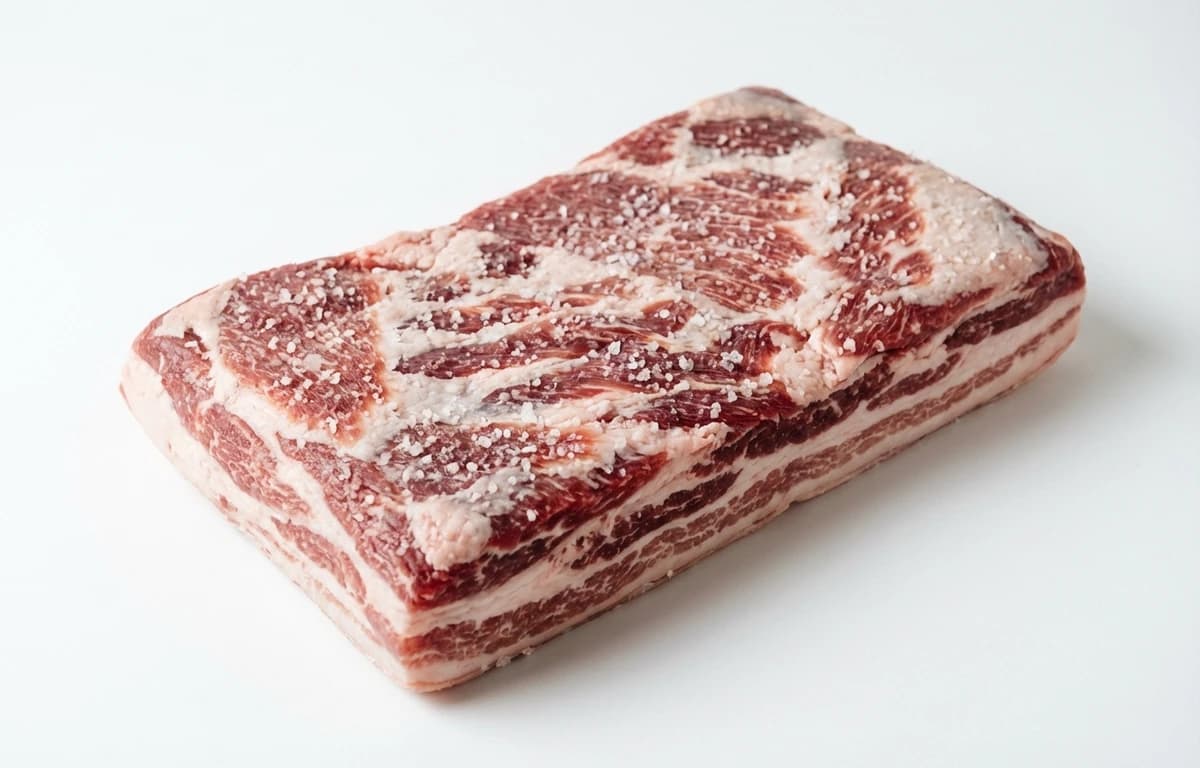
salted pork
Also known as:
Loading...
Also known as:
Per 100g
Nutrition data source: USDA FoodData Central
Common measurement equivalents in grams
Salted pork is very high in saturated fat and sodium, so it should be consumed in moderation. While it provides a concentrated energy source and some B vitamins, it is best used as a flavoring agent rather than a primary protein source to avoid excessive calorie and salt intake.
Salted pork is extremely calorie-dense, containing approximately 893 calories and 96.4 grams of fat per 100g. It contains virtually no carbohydrates and a very low protein content of about 2.2g, as it consists primarily of cured fat.
Yes, salted pork is highly keto-friendly because it is composed almost entirely of fat and contains zero carbohydrates. It is frequently used in ketogenic cooking to add flavor and healthy fats to low-carb vegetable dishes.
In its pure form, salted pork is naturally gluten-free as it only contains pork and salt. However, always check the packaging of commercially processed brands to ensure no gluten-containing additives or cross-contamination occurred during production.
To prevent your dish from becoming too salty, it is recommended to rinse the pork under cold water or blanch it in boiling water for 2-3 minutes before use. This removes the excess surface salt while retaining the rich pork flavor.
Salted pork is most commonly used as a flavor base for slow-cooked dishes like collard greens, baked beans, and clam chowder. It is typically diced and rendered down to provide a savory, salty fat that seasons the entire pot.
No, salted pork should not be eaten raw. While the salt curing process helps preserve the meat, it is not a 'ready-to-eat' product like prosciutto and must be cooked thoroughly to ensure food safety.
salted pork is a versatile ingredient found in cuisines around the world. With 893 calories per 100g and 2.2 grams of protein, it's a nutritious addition to many dishes.
Explore more ingredients in the meat category with complete nutrition information.
View all meat →Discover 1 recipes featuring salted pork with step-by-step instructions.
Browse recipes →Salted pork should be kept refrigerated in an airtight container or tightly wrapped in its original packaging. Because of the high salt content, it can last for several weeks in the fridge, or it can be frozen for up to 6 months.
While both are often made from pork belly, salted pork is salt-cured and unsmoked, whereas bacon is cured and then smoked. Salted pork is much fattier and saltier than bacon, making it more of a seasoning ingredient than a standalone meat.
Salted pork is generally not ideal for weight loss due to its extremely high calorie density and high sodium content, which can lead to water retention. If used, it should be limited to small amounts for flavoring purposes only.