
Nut Seed
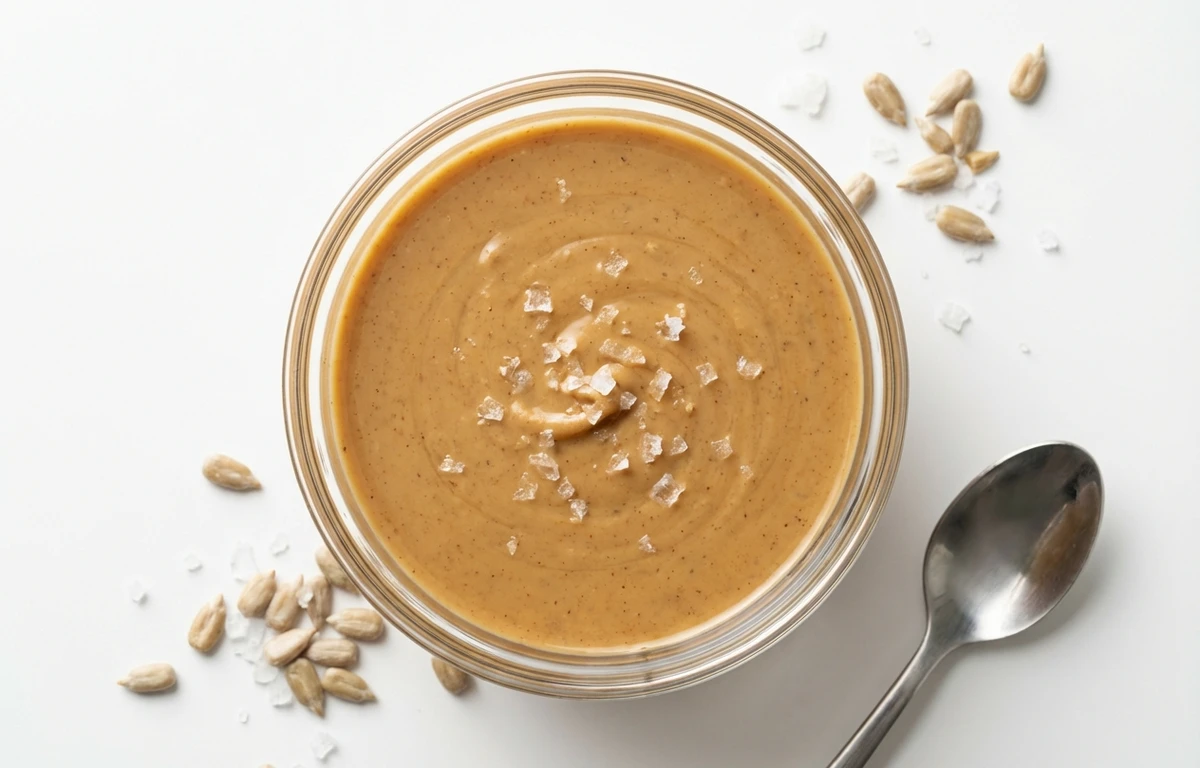
salted sunflower seed butter.
VegetarianVeganGluten-freeDairy-freeNut-freePeanut-freeSoy-freeEgg-freeShellfish-freeHoney-freeAlcohol-free
ALSO KNOWN AS
salted sunbuttersalted sunflower seed spreadsalted sunflower pastesalted sunflower cream
SERVING
CALORIES
617
PROTEIN
18.1g
CARBS
21.8g
FAT
53.4g
FIBER
5.4g
NUTRITION PROFILE · per 100 g
Everything in this ingredient.
MACRONUTRIENTS
Calories617kcal—
Protein18.1g36%
Carbohydrates21.8g8%
Fiber5.4g19%
Sugar4.5g9%
Total fat53.4g68%
Saturated fat5.8g29%
Trans fat0g—
Cholesterol0mg0%
Water1.2g—
MINERALS
Sodium420mg18%
Potassium645mg14%
Calcium70mg5%
Iron4.8mg27%
Magnesium320mg76%
Phosphorus610mg49%
Zinc5.1mg46%
Copper1.8mg200%
Manganese2.1mg91%
Selenium59.5µg108%
VITAMINS
Vitamin A0µg0%
Vitamin C0mg0%
Vitamin D0µg0%
Vitamin E24mg160%
Vitamin K0µg0%
Thiamin (B1)0.10mg8%
Riboflavin (B2)0.20mg15%
Niacin (B3)4.5mg28%
Pantothenic acid (B5)1.1mg22%
Vitamin B60.80mg47%
Folate (B9)227µg57%
Vitamin B120µg0%
%DV based on a 2,000 cal diet. Source: USDA FoodData Central. A dash in the %DV column means there’s no established Daily Value for that nutrient.
MEASUREMENT CONVERSIONS
How much is what.
1 cup256g
1 tablespoon16g
1 teaspoon5g
1 oz28.4g
1 lb453.6g
1 ml1.1g
1 liter1100g
HEALTH BENEFITS
Why eat it.
- ✓Excellent source of Vitamin E, a powerful antioxidant for skin health
- ✓High in magnesium which supports muscle and nerve function
- ✓Rich in healthy unsaturated fats for heart health
- ✓Good source of plant-based protein for muscle maintenance
- ✓Contains selenium which supports thyroid function and DNA repair
COOKING TIPS
In the kitchen.
- 1Stir thoroughly before use as natural oils will separate over time
- 2Use as a 1:1 nut-free substitute for peanut butter in baking recipes
- 3Add a splash of water or oil if the butter becomes too stiff for drizzling
STORAGE
Keep it fresh.
- Store in a cool, dark pantry for up to 3 months after opening
- Refrigerate to prevent oil rancidity and extend shelf life to 6 months
- Store upside down before opening to make stirring separated oil easier
FAQ
Frequently asked questions.
How long does salted sunflower seed butter last?
Unopened, it lasts about a year. Once opened, it is best consumed within 3 months if kept in the pantry or 6 months if refrigerated.
Does it need to be refrigerated?
While not strictly required, refrigeration prevents the natural oils from going rancid and keeps the butter from separating as quickly.
What is a good substitute for sunflower seed butter?
Tahini (sesame paste) is the closest nut-free substitute. If nuts are not an issue, almond butter or peanut butter work perfectly.
Why is there oil on top of my sunflower seed butter?
Natural sunflower seed butter lacks emulsifiers, so the oil naturally separates. Simply stir it back in until smooth.
Is sunflower seed butter safe for those with nut allergies?
Yes, sunflower seeds are seeds, not nuts. However, always check the label for cross-contamination warnings if processed in a facility with nuts.
Can I use it in baking?
Yes, it works well in cookies and breads. Note: it may react with baking soda/powder and turn green; this is harmless and caused by chlorogenic acid.
How can I prevent the 'green' reaction in baking?
To prevent baked goods from turning green, reduce the baking soda by half or add a teaspoon of lemon juice or vinegar to the batter.
Is salted sunflower seed butter healthy?
Yes, it is nutrient-dense and high in Vitamin E and healthy fats, though the salted version should be consumed in moderation due to sodium content.
How do I pick a high-quality sunflower seed butter?
Look for brands with minimal ingredients—ideally just roasted sunflower seeds and salt, without added hydrogenated oils or excessive sugars.



















