
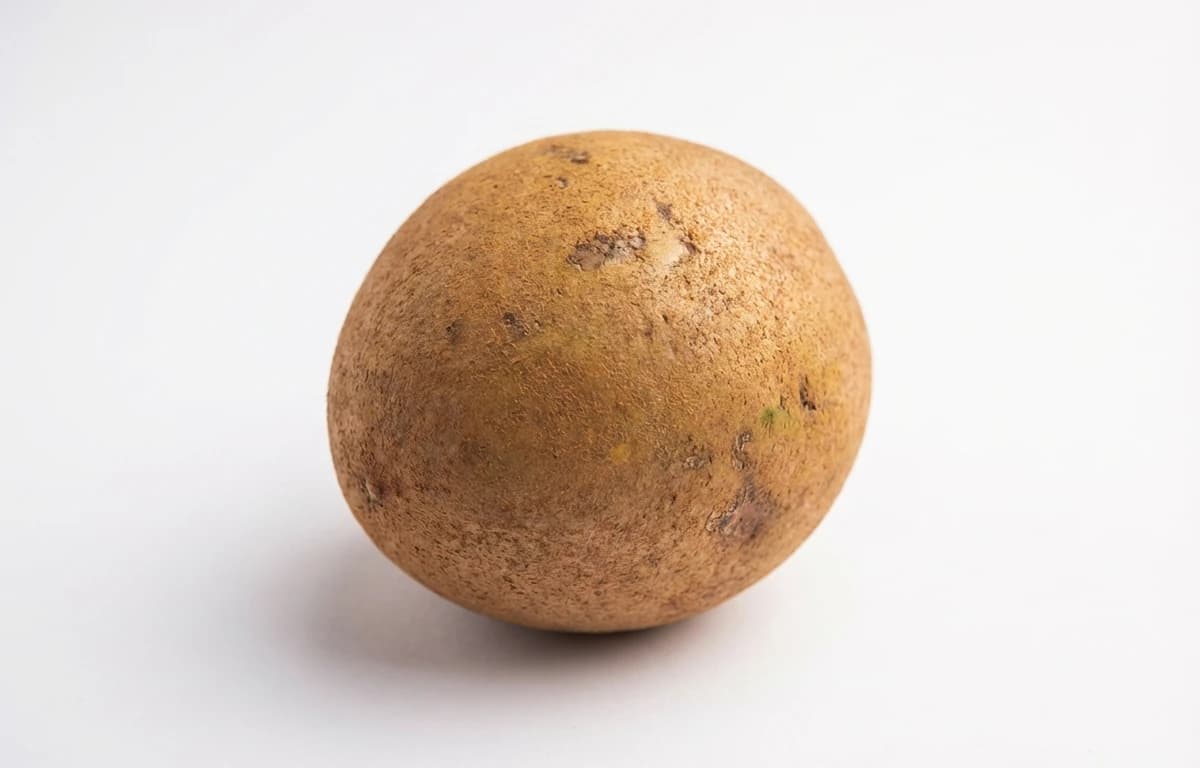
sapota
Also known as:
Loading...
Also known as:
Per 100g
Nutrition data source: USDA FoodData Central
Common measurement equivalents in grams
Yes, sapota is a highly nutritious fruit. It is an excellent source of dietary fiber for digestion, provides a quick energy boost through natural sugars, and contains essential vitamins like A and C for immune and vision health.
Sapota can be part of a weight loss diet due to its high fiber content, which promotes satiety. However, it is relatively high in calories (73.37 per 100g) and natural sugars compared to other fruits, so it should be consumed in moderation.
Diabetics should consume sapota with caution. Because it is high in natural sugars like sucrose and fructose, it can cause a rapid spike in blood glucose levels; it is best to consult a doctor regarding portion sizes.
No, sapota is not considered keto-friendly. It contains approximately 13.9g of carbohydrates per 100g, which is high enough to potentially disrupt ketosis if eaten in standard servings.
Sapota has a exceptionally sweet, malty flavor often compared to brown sugar, caramel, or a pear soaked in syrup. Its texture is slightly grainy or sandy, similar to a well-ripened pear.
While the skin is technically edible, most people prefer to peel it or scoop the flesh out because the skin can be slightly leathery or fuzzy. Always ensure you remove the hard, black seeds in the center before consuming.
A ripe sapota will feel soft to the touch when gentle pressure is applied, similar to a ripe peach. If you scratch the skin and see green underneath instead of brown, the fruit is still unripe and will taste bitter.
sapota is a versatile ingredient found in cuisines around the world. With 73.37 calories per 100g and 0.92 grams of protein, it's a nutritious addition to many dishes.
Explore more ingredients in the fruit category with complete nutrition information.
View all fruit →Unripe sapotas should be kept at room temperature until they soften. Once ripe, they should be stored in the refrigerator, where they will stay fresh for about 2 to 3 days.
Sapota is rich in tannins and polyphenolic compounds which act as antioxidants to fight inflammation. Its high fiber content aids in preventing constipation, while its Vitamin A content supports healthy skin and eyes.
Yes, you can freeze sapota. It is best to peel the fruit, remove the seeds, and mash or slice the flesh before freezing in an airtight container; frozen sapota is excellent for making smoothies or ice cream.