
Other
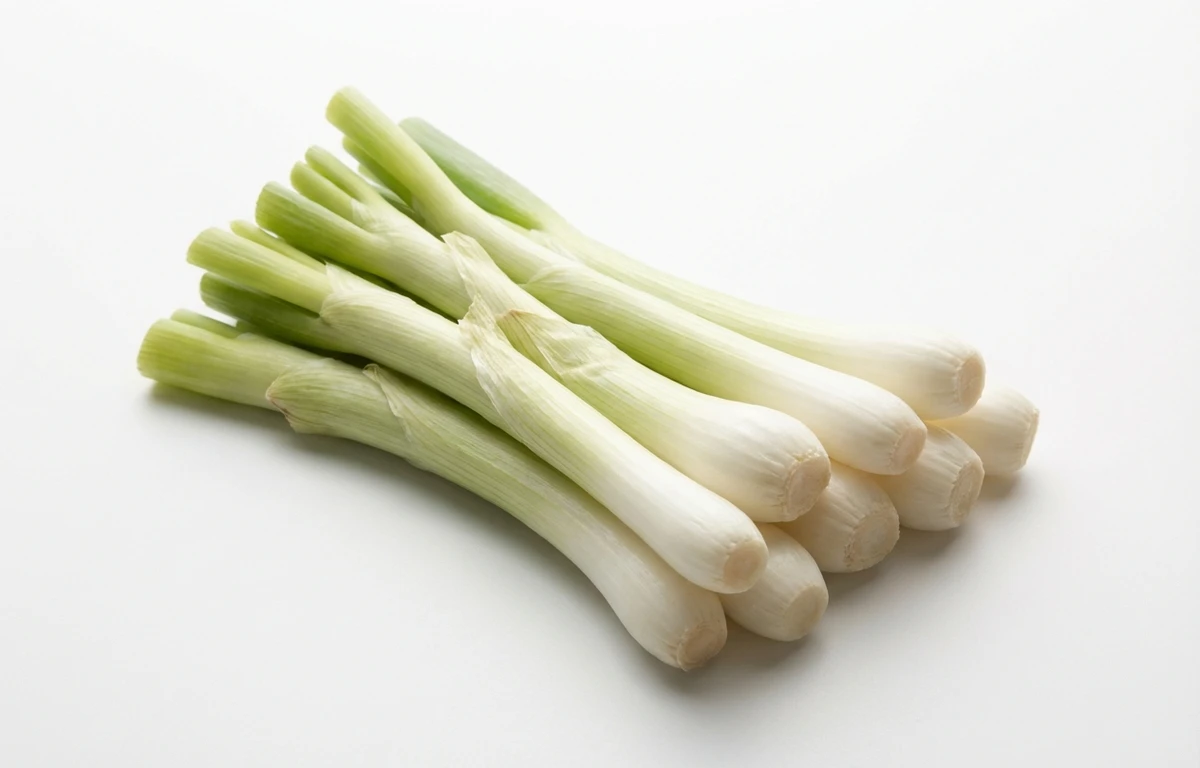
scallion whites.
VegetarianVeganGluten-freeDairy-freeNut-freePeanut-freeSoy-freeEgg-freeShellfish-freeHoney-freeAlcohol-free
ALSO KNOWN AS
green onion whitesspring onion whiteshara pyaz ka safed hissascallion bulbsgreen onion bulbs
SERVING
CALORIES
32
PROTEIN
1.8g
CARBS
7.3g
FAT
0.20g
FIBER
2.6g
NUTRITION PROFILE · per 100 g
Everything in this ingredient.
MACRONUTRIENTS
Calories32kcal—
Protein1.8g4%
Carbohydrates7.3g3%
Fiber2.6g9%
Sugar2.3g5%
Total fat0.20g0%
Saturated fat0.04g0%
Trans fat0g—
Cholesterol0mg0%
Water89.8g—
MINERALS
Sodium16mg1%
Potassium276mg6%
Calcium72mg6%
Iron1.5mg8%
Magnesium20mg5%
Phosphorus37mg3%
Zinc0.40mg4%
Copper0.08mg9%
Manganese0.16mg7%
Selenium0.60µg1%
VITAMINS
Vitamin A50µg6%
Vitamin C18.8mg21%
Vitamin D0µg0%
Vitamin E0.55mg4%
Vitamin K160µg133%
Thiamin (B1)0.05mg4%
Riboflavin (B2)0.08mg6%
Niacin (B3)0.50mg3%
Pantothenic acid (B5)0.08mg2%
Vitamin B60.06mg4%
Folate (B9)64µg16%
Vitamin B120µg0%
%DV based on a 2,000 cal diet. Source: USDA FoodData Central. A dash in the %DV column means there’s no established Daily Value for that nutrient.
MEASUREMENT CONVERSIONS
How much is what.
1 cup120g
1 tablespoon9g
1 teaspoon3g
1 oz28.4g
1 lb453.6g
1 piece12g
HEALTH BENEFITS
Why eat it.
- ✓Rich in antioxidants like quercetin that fight inflammation
- ✓Contains Vitamin K which is essential for bone health and blood clotting
- ✓Good source of dietary fiber aiding in digestive health
- ✓Contains organosulfur compounds that may support heart health
- ✓Low in calories making it an excellent flavor enhancer for weight management
COOKING TIPS
In the kitchen.
- 1Sauté scallion whites at the beginning of cooking like onions to build a flavor base
- 2Use them as a milder alternative to white or yellow onions in stir-fries
- 3Finely mince them for use in vinaigrettes or dipping sauces for a subtle bite
STORAGE
Keep it fresh.
- Store in the refrigerator crisper drawer wrapped in a damp paper towel
- Keep the whites attached to the greens until ready to use to maintain moisture
- Can be stored upright in a jar with an inch of water on the counter for a few days
FAQ
Frequently asked questions.
How long do scallion whites last in the fridge?
When stored properly in a plastic bag or wrapped in damp paper towels, they typically last 1 to 2 weeks.
Can you freeze scallion whites?
Yes, you can chop them and freeze them in an airtight bag. They will lose their crunch but retain flavor for cooked dishes.
What is the best substitute for scallion whites?
Shallots are the best substitute due to their mild flavor. Alternatively, use the white part of a leek or a small amount of white onion.
How do I pick the best scallions?
Look for firm, bright white bulbs without any slime, soft spots, or browning.
Are scallion whites more pungent than the greens?
Yes, the white parts have a more concentrated, sharp onion flavor compared to the mild, grassy greens.
Do I need to peel scallion whites?
You should remove the very outer layer if it is wilted, slimy, or tough, and always trim off the root end.
Are scallion whites low FODMAP?
No, the white parts of scallions are high in fructans and are generally avoided on a low FODMAP diet, unlike the green tops.
What is the difference between scallion whites and spring onions?
Scallions are harvested younger and have straight sides, while spring onions are older and have a more defined, round bulb at the bottom.
How should I clean scallion whites?
Trim the roots, peel the outermost layer if necessary, and rinse thoroughly under cold water to remove any trapped dirt near the base.



















