
Seafood
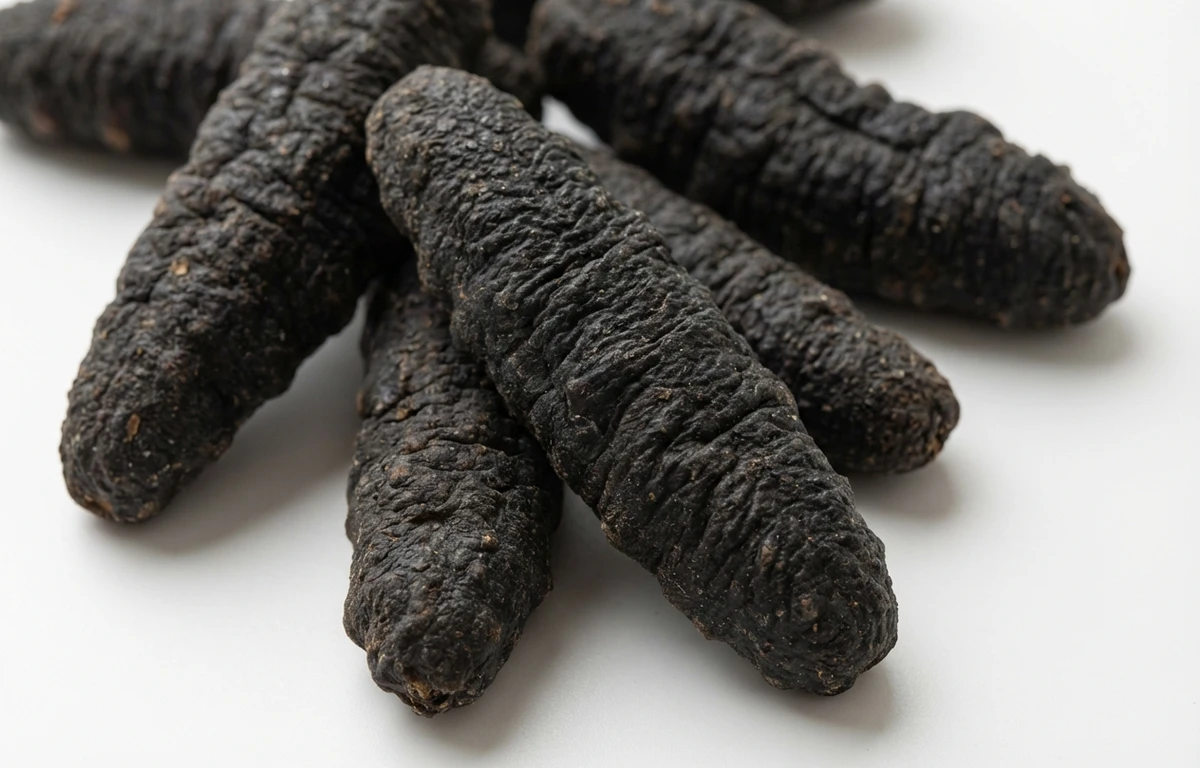
sea cucumber.
VegetarianVeganGluten-freeDairy-freeNut-freePeanut-freeSoy-freeEgg-freeShellfish-freeHoney-freeAlcohol-freeKosher
SERVING
CALORIES
56
PROTEIN
13g
CARBS
0g
FAT
0.40g
FIBER
0g
This ingredient is flagged as naturally gluten-free. Per 100 g, it provides 0.10 µg of vitamin K.
NUTRITION PROFILE · per 100 g
Everything in this ingredient.
MACRONUTRIENTS
Calories56kcal—
Protein13g26%
Carbohydrates0g0%
Fiber0g0%
Sugar0g0%
Total fat0.40g1%
Saturated fat0.10g1%
Trans fat0g—
Cholesterol0mg0%
Water83g—
MINERALS
Sodium160mg7%
Potassium100mg2%
Calcium30mg2%
Iron0.60mg3%
Magnesium15mg4%
Phosphorus120mg10%
Zinc0.50mg5%
Copper0.10mg11%
Manganese0.05mg2%
Selenium25µg45%
VITAMINS
Vitamin A0µg0%
Vitamin C0mg0%
Vitamin D0µg0%
Vitamin E0.50mg3%
Vitamin K0.10µg0%
Thiamin (B1)0.02mg2%
Riboflavin (B2)0.05mg4%
Niacin (B3)0.30mg2%
Pantothenic acid (B5)0.10mg2%
Vitamin B60.05mg3%
Folate (B9)2.0µg1%
Vitamin B120.50µg21%
%DV based on a 2,000 cal diet. Source: USDA FoodData Central. A dash in the %DV column means there’s no established Daily Value for that nutrient.
MEASUREMENT CONVERSIONS
How much is what.
1 cup140g
1 tablespoon8.8g
1 teaspoon2.9g
1 ml0.6g
1 liter583.3g
1 piece180g
HEALTH BENEFITS
Why eat it.
- ✓Rich source of collagen and protein, which supports skin health and tissue repair.
- ✓Contains chondroitin sulfate, a compound that may help alleviate joint pain and arthritis symptoms.
COOKING TIPS
In the kitchen.
- 1Dried sea cucumbers require a multi-day rehydration process of soaking and boiling before they can be cooked.
- 2Due to their mild taste and gelatinous texture, they excel at absorbing flavors from broths, sauces, and other ingredients in braises and stews.
- 3Clean the rehydrated sea cucumber thoroughly by slitting it open and removing any internal organs or sediment.
- 4Simmer gently when cooking; avoid vigorous boiling which can make the texture tough or cause it to disintegrate.
STORAGE
Keep it fresh.
- Store dried sea cucumbers in a cool, dark, and dry place in an airtight container for several years.
- Keep rehydrated or cooked sea cucumbers in the refrigerator, submerged in water (changed daily), for up to 3 days.
FAQ
Frequently asked questions.
How much protein and calories are in sea cucumber?
A 100g serving of sea cucumber contains approximately 56 calories and 13g of protein. With 0g of carbohydrates and only 0.4g of fat, it is an exceptionally lean source of animal protein.
What does sea cucumber taste like?
Sea cucumber has a very mild, almost neutral flavor and is primarily prized for its unique texture, which can range from gelatinous to slightly crunchy. Because it is bland on its own, it readily absorbs the flavors of the sauces, broths, and seasonings it is cooked with.
How do you prepare dried sea cucumber?
Dried sea cucumber requires a lengthy rehydration process that can take 3 to 7 days. It must be soaked in water (changed daily), boiled until softened, and cleaned thoroughly to remove internal membranes and sand before it is ready for cooking.
Is sea cucumber good for your skin?
Yes, sea cucumber is a rich source of collagen, which is essential for maintaining skin elasticity and supporting tissue repair. It is often consumed in various cultures as a functional food for promoting a youthful complexion and aiding in wound healing.
How do you store sea cucumber?
Dried sea cucumber should be stored in a cool, dry place in an airtight container, where it can last for several years. Fresh or rehydrated sea cucumber should be kept in the refrigerator and consumed within 2-3 days, or frozen for up to several months.
Is sea cucumber considered halal?
In most Islamic dietary interpretations, all seafood from the ocean is considered halal. However, specific rulings can vary between different schools of thought, so it is recommended to check with your local religious authority if you follow specific guidelines.



















