
Loading...
Also known as:
Per 100g
Nutrition data source: USDA FoodData Central
Common measurement equivalents in grams
Self-rising flour provides essential carbohydrates for energy and is typically enriched with B vitamins and iron. However, because it is a refined grain and contains added sodium from leavening agents, it should be consumed in moderation as part of a balanced diet.
A 100g serving of self-rising flour contains approximately 364 calories and 76.3g of carbohydrates. It also provides about 10.2g of protein and a small amount of fat (1.3g).
No, self-rising flour is made from wheat and contains gluten. It is not suitable for individuals with celiac disease or those following a gluten-free diet.
Yes, self-rising flour is vegan. It consists of wheat flour, salt, and chemical leavening agents (like baking powder), none of which are derived from animals.
Self-rising flour is all-purpose flour that has already been mixed with baking powder and salt. This makes it a 'shortcut' ingredient for recipes that need to rise without the use of yeast.
Yes, you can create a substitute by adding 1.5 teaspoons of baking powder and 1/4 teaspoon of salt to every 1 cup (approx. 125g) of all-purpose flour. Mix them thoroughly before adding to your recipe.
It is best used for 'quick' baked goods such as biscuits, pancakes, scones, muffins, and some cakes. It is not recommended for yeast-based breads, as the chemical leaveners can interfere with the yeast's performance.
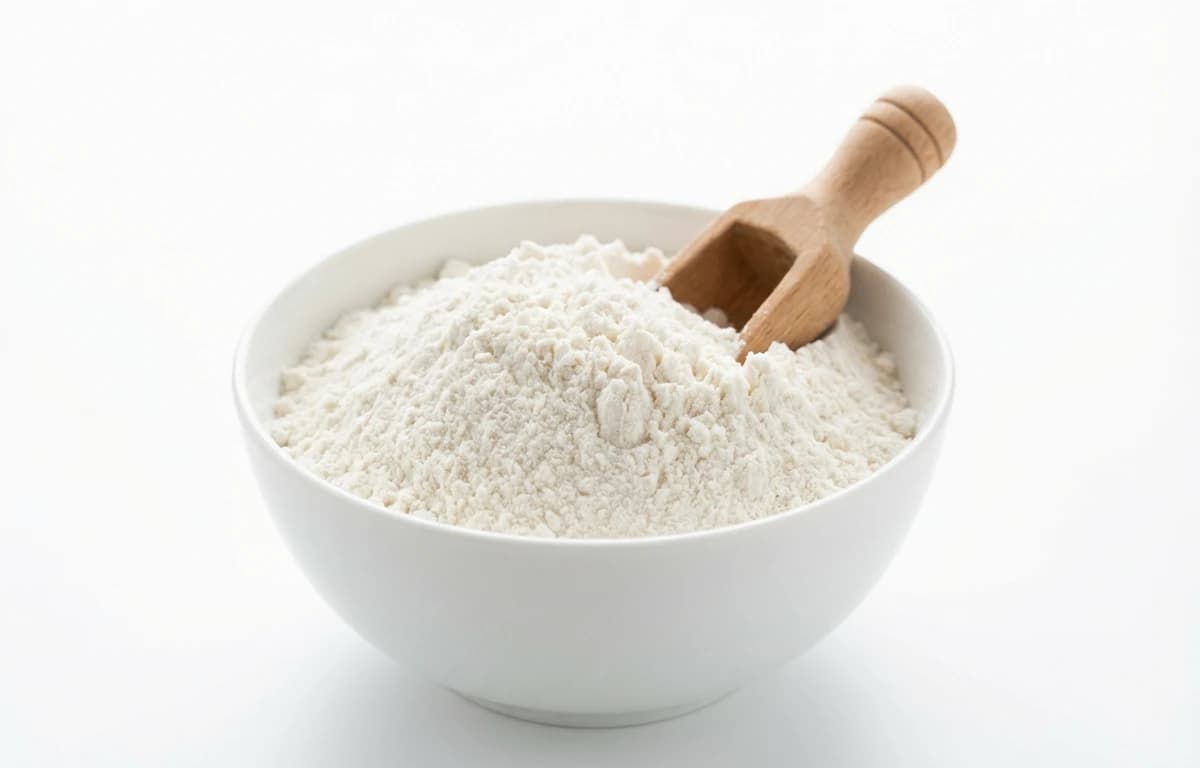
self-rising all-purpose flour is a versatile ingredient found in cuisines around the world. With 364 calories per 100g and 10.2 grams of protein, it's a nutritious addition to many dishes.
Explore more ingredients in the grain category with complete nutrition information.
View all grain →Discover 1 recipes featuring self-rising all-purpose flour with step-by-step instructions.
Browse recipes →Store it in a cool, dry place in an airtight container to protect it from moisture and pests. Because the leavening agents lose their potency over time, it is best to use it within 6 to 12 months.
Check the 'best by' date, as the baking powder inside can expire, causing your baked goods to stay flat. You can test it by adding a pinch of flour to a small amount of hot water; if it bubbles, the leavening agent is still active.
Self-rising flour contains added salt as part of its leavening formula. If you are on a low-sodium diet, be aware that using this flour adds significant sodium to your recipes compared to using plain all-purpose flour.