
Loading...
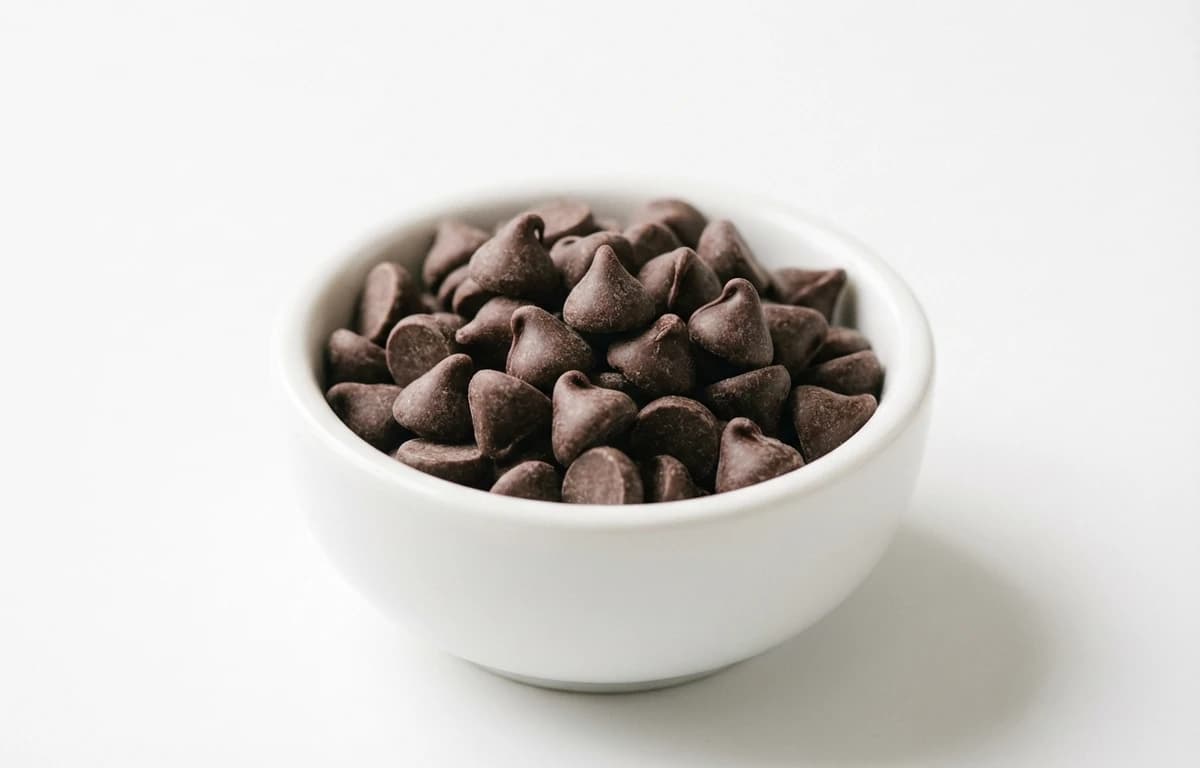
Also known as: semi-sweet chocolate, Semisweet Chocolate
Per 100g
Nutrition data source: USDA FoodData Central
Common measurement equivalents in grams
Semi-sweet chocolate offers health benefits when consumed in moderation, as it is rich in antioxidants like flavonoids which support heart health. It also provides essential minerals such as iron and magnesium. However, because it contains significant sugar and fat, it should be treated as an occasional treat rather than a health food.
Per 100g, semi-sweet chocolate contains approximately 530 calories and 60g of carbohydrates. Most of these carbs come from added sugars, making it a high-energy food that can impact blood sugar levels.
Not necessarily. While the base ingredients of cocoa and sugar can be vegan, many commercial semi-sweet chocolates contain milk solids, milk fat, or are processed on equipment that handles dairy. Always check the ingredient label for dairy-derived components.
No, semi-sweet chocolate is generally not keto-friendly due to its high sugar content, providing about 60g of carbs per 100g. Those on a ketogenic diet should opt for unsweetened baking chocolate or dark chocolate with at least 85% cocoa solids.
The main difference is the sugar content; semi-sweet chocolate typically contains more sugar and is slightly sweeter. While both usually contain at least 35% cocoa solids, bittersweet often has a higher cocoa percentage (60% or more), resulting in a deeper, less sweet flavor.
The safest method is using a double boiler over low heat, ensuring no water touches the chocolate. Alternatively, microwave it in a heat-safe bowl in 20-second intervals, stirring thoroughly between each session until the mixture is smooth and glossy.
Semi-Sweet Chocolate is a versatile ingredient found in cuisines around the world. With 530 calories per 100g and 5 grams of protein, it's a nutritious addition to many dishes.
Explore more ingredients in the processed category with complete nutrition information.
View all processed →Discover 3 recipes featuring semi-sweet chocolate with step-by-step instructions.
Browse recipes →Explore more ingredients similar to Semi-Sweet Chocolate.
The most-searched ingredients on CraftMyMeals.
Store chocolate in a cool, dry, and dark place, ideally between 60-70°F (15-21°C). Keep it in an airtight container to prevent it from absorbing odors from other foods or developing 'bloom' from moisture.
The white, powdery coating is called 'bloom,' caused by fat or sugar crystals rising to the surface due to temperature fluctuations. It is perfectly safe to eat and will disappear once the chocolate is melted down for baking.
Pure chocolate is naturally gluten-free; however, some brands may add flavorings or thickeners that contain gluten. Additionally, cross-contamination can occur during processing, so individuals with Celiac disease should look for a certified gluten-free label.
You can, but it will significantly change the flavor and texture of the dish. Milk chocolate is much sweeter and has a lower melting point due to higher milk and sugar content, which may make baked goods softer or overly sweet.