
Grain
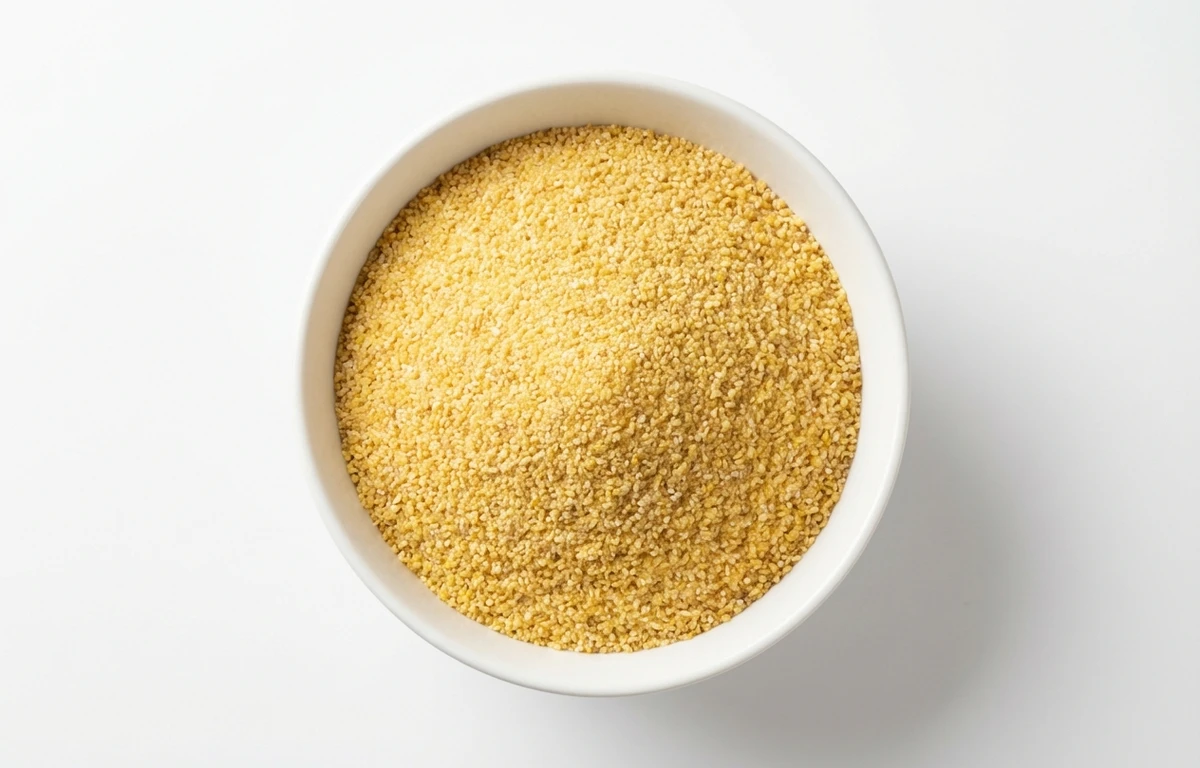
semolina wheat.
VegetarianVeganGluten-freeDairy-freeNut-freePeanut-freeSoy-freeEgg-freeShellfish-freeHoney-freeAlcohol-free
SERVING
CALORIES
334
PROTEIN
11.4g
CARBS
68.4g
FAT
0.74g
FIBER
9.7g
NUTRITION PROFILE · per 100 g
Everything in this ingredient.
MACRONUTRIENTS
Calories334kcal—
Protein11.4g23%
Carbohydrates68.4g25%
Fiber9.7g35%
Sugar1.6g3%
Total fat0.74g1%
Saturated fat0.09g0%
Trans fat0g—
Cholesterol0mg0%
Water8.9g—
MINERALS
Sodium2.3mg0%
Potassium284mg6%
Calcium29.4mg2%
Iron3.0mg17%
Magnesium37.9mg9%
Phosphorus119mg10%
Zinc2.1mg19%
Copper0.46mg51%
Manganese2.0mg86%
Selenium10.9µg20%
VITAMINS
Vitamin A1.6µg0%
Vitamin C0mg0%
Vitamin D8.2µg41%
Vitamin E0.20mg1%
Vitamin K1.2µg1%
Thiamin (B1)0.29mg24%
Riboflavin (B2)0.04mg3%
Niacin (B3)1.1mg7%
Pantothenic acid (B5)0.75mg15%
Vitamin B60.11mg6%
Biotin (B7)0.44µg1%
Folate (B9)25.7µg6%
%DV based on a 2,000 cal diet. Source: USDA FoodData Central. A dash in the %DV column means there’s no established Daily Value for that nutrient.
MEASUREMENT CONVERSIONS
How much is what.
1 cup175g
1 tablespoon10.9g
1 teaspoon3.7g
1 oz28.4g
1 lb453.6g
1 ml0.7g
1 liter740g
HEALTH BENEFITS
Why eat it.
- ✓High in protein, which promotes satiety and supports muscle maintenance.
- ✓Good source of iron and magnesium, essential for red blood cell production and nerve function.
- ✓Rich in B vitamins like folate and thiamine, which are crucial for converting food into energy.
- ✓Contains selenium, a powerful antioxidant that helps protect cells from damage.
COOKING TIPS
In the kitchen.
- 1Ideal for making fresh pasta, as its high gluten content creates a firm, 'al dente' texture.
- 2To prevent lumps when making porridge or pudding, slowly whisk semolina into simmering liquid.
- 3Toast semolina in a dry pan over medium heat before cooking to enhance its nutty flavor.
- 4Use as a coating for fried or baked foods like fish or potatoes to create an extra-crispy crust.
STORAGE
Keep it fresh.
- Store in an airtight container in a cool, dark, and dry place like a pantry for up to one year.
- For longer-term storage, place the airtight container in the refrigerator or freezer to prevent rancidity and insect infestation.
FAQ
Frequently asked questions.
Is semolina wheat healthy?
Yes, semolina is a nutrient-dense grain that provides a good source of energy. It is rich in B vitamins for energy metabolism, iron for blood health, and selenium, which acts as a powerful antioxidant to protect cells from damage.
How much protein and calories are in semolina?
A 100g serving of semolina wheat contains approximately 333.65 calories and 11.38g of protein. It is also very low in fat, containing only about 0.74g per 100g.
Is semolina wheat gluten-free?
No, semolina is not gluten-free. It is made from durum wheat, which is a hard variety of wheat specifically known for its high gluten content, making it unsuitable for those with celiac disease or gluten intolerance.
Is semolina wheat vegan?
Yes, semolina wheat is 100% plant-based and vegan. It is a flour produced by milling durum wheat and contains no animal-derived ingredients.
Is semolina good for weight loss?
Semolina can support weight loss because its high protein content (over 11g per 100g) promotes satiety and helps you feel full for longer. However, it is high in carbohydrates, so it should be consumed in moderation as part of a balanced diet.
What is semolina wheat used for in cooking?
Semolina is the primary ingredient for making traditional pasta, couscous, and gnocchi because its coarse texture holds shape well. It is also used to make porridges, puddings, and is often dusted on pizza stones to prevent dough from sticking.
What does semolina taste like?
Semolina has a mild, slightly nutty, and earthy flavor. Its most distinct characteristic is its coarse, sandy texture, which provides a pleasant 'bite' or structure to pasta and baked goods.
Is semolina keto-friendly?
No, semolina is not keto-friendly. It contains approximately 68.43g of carbohydrates per 100g, which is too high for the strict carbohydrate limits of a ketogenic diet.
How should I store semolina wheat?
Semolina should be stored in an airtight container in a cool, dark, and dry place like a pantry. For extended shelf life, you can store it in the refrigerator or freezer to keep it fresh and prevent it from becoming rancid.
Can diabetics eat semolina wheat?
Diabetics can eat semolina, but they should do so with caution. While it has a lower glycemic index than highly refined white flour, it is still high in carbohydrates (68.43g per 100g) and can impact blood sugar levels.



















