
Loading...
Per 100g
Nutrition data source: USDA FoodData Central
Common measurement equivalents in grams
Yes, tahini is highly nutritious, offering heart-healthy monounsaturated and polyunsaturated fats. It is rich in essential minerals like calcium, magnesium, and iron, along with antioxidants called lignans that help reduce inflammation.
Tahini is calorie-dense, providing approximately 595 calories per 100g. It is a good plant-based protein source, containing about 17g of protein and 21g of carbohydrates per 100g serving.
Yes, tahini is generally considered keto-friendly because it is high in healthy fats and relatively low in net carbs. A typical one-tablespoon serving contains only about 3 grams of carbohydrates, making it suitable for low-carb diets.
Pure tahini is naturally both vegan and gluten-free, as it is made solely from ground sesame seeds. Always check the label for additives or potential cross-contamination if you have severe allergies.
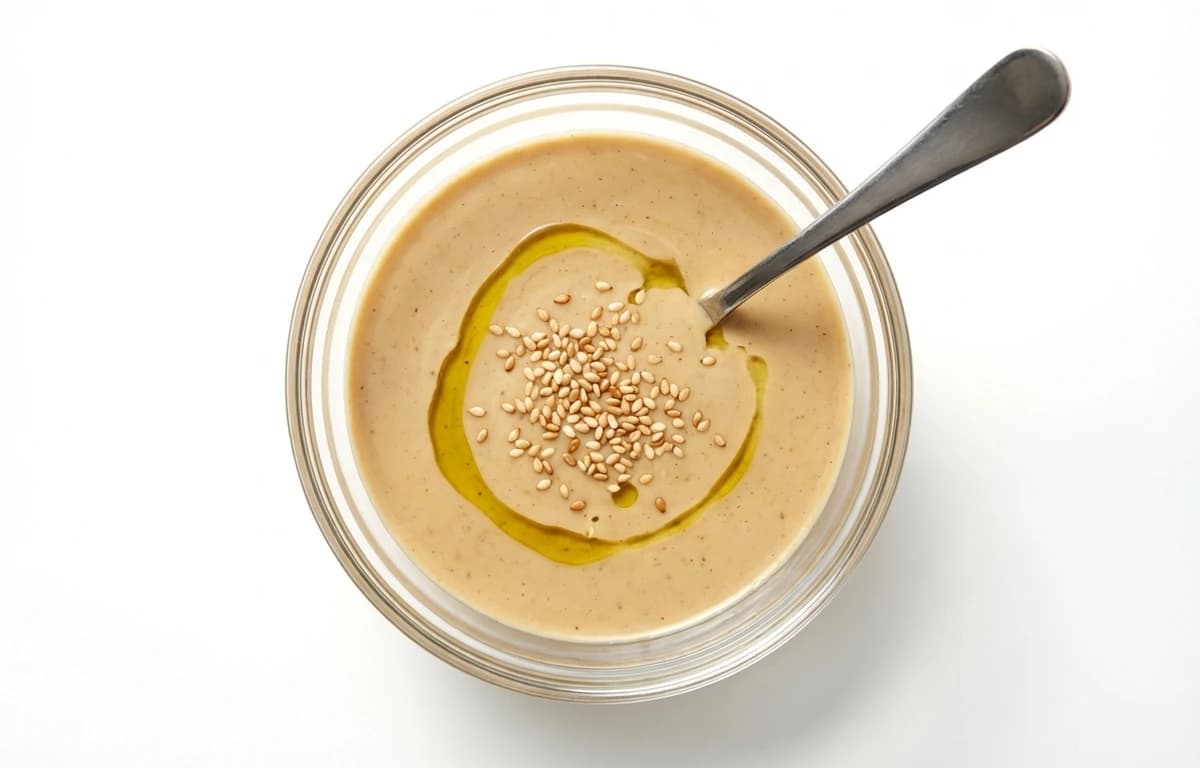
Tahini has a rich, earthy, and nutty flavor with a slightly bitter finish. Its texture is creamy and smooth, similar to other nut butters but with a more savory and toasted profile.
Tahini is a staple in Middle Eastern cuisine, used to make hummus, baba ganoush, and halva. It also makes an excellent base for creamy salad dressings, sauces for roasted vegetables, or a nutritious addition to smoothies.
Yes, peanut butter or almond butter can be used as a substitute in some recipes, though the flavor will change significantly. For a closer match in savory dishes, sunflower seed butter is often the best nut-free alternative.
sesame tahini is a versatile ingredient found in cuisines around the world. With 595 calories per 100g and 17 grams of protein, it's a nutritious addition to many dishes.
Explore more ingredients in the nut seed category with complete nutrition information.
View all nut seed →Discover 0 recipes featuring sesame tahini with step-by-step instructions.
Browse recipes →Store unopened tahini in a cool, dark pantry. Once opened, it can be kept in the pantry for 3-6 months or refrigerated to prevent the natural oils from going rancid, though refrigeration will make it thicker and harder to stir.
Oil separation is a natural process in high-quality tahini because it lacks chemical emulsifiers. Simply stir the oil back into the paste before using; storing the jar upside down can also help make re-mixing easier.
Yes, tahini is an excellent plant-based source of calcium, which is vital for maintaining strong bones. It also contains magnesium and phosphorus, both of which play key roles in bone mineralization and density.