Dairy1 recipes
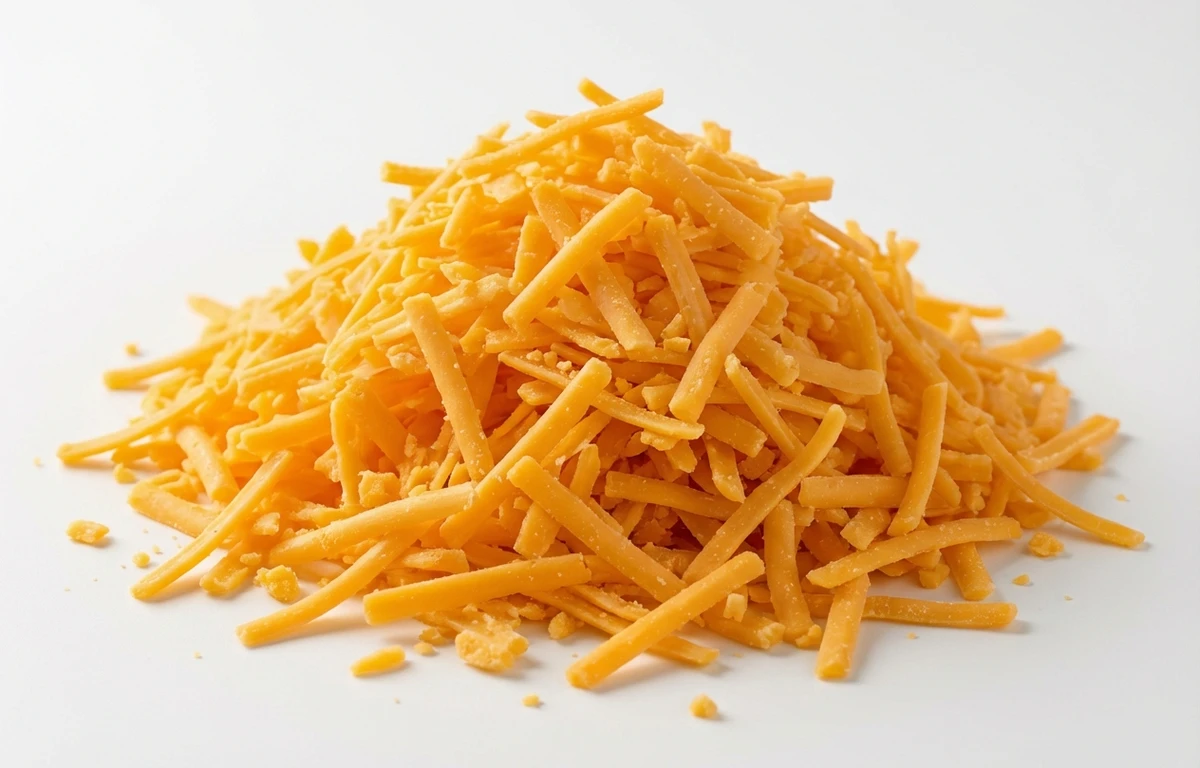
shredded cheddar cheese.
VegetarianVeganGluten-freeDairy-freeNut-freePeanut-freeSoy-freeEgg-freeShellfish-freeHoney-freeAlcohol-freeFermented
ALSO KNOWN AS
cheddar cheese, shreddedgrated cheddar
SERVING
CALORIES
404
PROTEIN
24.9g
CARBS
1.3g
FAT
33.1g
FIBER
0g
NUTRITION PROFILE · per 100 g
Everything in this ingredient.
MACRONUTRIENTS
Calories404kcal—
Protein24.9g50%
Carbohydrates1.3g0%
Fiber0g0%
Sugar0.50g1%
Total fat33.1g42%
Saturated fat20.9g105%
Trans fat0g—
Cholesterol105mg35%
Water37.4g—
MINERALS
Sodium653mg28%
Potassium79mg2%
Calcium721mg55%
Iron0.20mg1%
Magnesium27mg6%
Phosphorus455mg36%
Zinc3.6mg33%
VITAMINS
Vitamin A330µg37%
Vitamin C0mg0%
Vitamin D0.60µg3%
Vitamin K1.0µg1%
Thiamin (B1)2.0mg167%
Riboflavin (B2)0.43mg33%
Niacin (B3)0.04mg0%
Vitamin B60.05mg3%
%DV based on a 2,000 cal diet. Source: USDA FoodData Central. A dash in the %DV column means there’s no established Daily Value for that nutrient.
MEASUREMENT CONVERSIONS
How much is what.
1 cup113g
1 tablespoon8g
1 teaspoon2.7g
1 ml0.5g
1 liter533.3g
HEALTH BENEFITS
Why eat it.
- ✓Rich source of calcium and phosphorus, essential for maintaining strong bones and teeth.
- ✓Provides high-quality complete protein, which is crucial for muscle repair, growth, and overall body function.
- ✓Contains Vitamin K2, which plays a role in directing calcium to the bones and may support cardiovascular health.
- ✓A good source of Vitamin B12, important for red blood cell formation and neurological function.
COOKING TIPS
In the kitchen.
- 1For the smoothest melt in sauces or soups, bring cheese to room temperature before use and add it off the heat or over very low heat, stirring until just combined.
- 2Pre-shredded cheese contains anti-caking agents; for recipes requiring a very smooth melt (like fondue), it's often better to shred a block of cheese yourself.
- 3When using as a topping for baked dishes like casseroles or pizza, add the cheese during the last 5-10 minutes of baking to prevent it from becoming overly browned or greasy.
STORAGE
Keep it fresh.
- Refrigerate in an airtight container or its original resealable bag at 35-40°F (2-4°C). Use within 5-7 days after opening for best quality.
- For longer storage, freeze in an airtight bag for up to 3 months. Thaw in the refrigerator; the texture may become crumbly, making it best for cooked dishes rather than fresh use.
FAQ
Frequently asked questions.
Is shredded cheddar cheese healthy?
Shredded cheddar is a nutrient-dense food that provides high-quality protein, calcium, and Vitamin B12. While it supports bone health and muscle repair, it is high in calories and saturated fat (33.1g per 100g), so it should be consumed in moderation as part of a balanced diet.
How much protein is in shredded cheddar cheese?
Shredded cheddar is an excellent protein source, containing approximately 24.9g of protein per 100g. This is a complete protein, meaning it provides all the essential amino acids necessary for muscle growth and overall body function.
Is shredded cheddar cheese keto-friendly?
Yes, shredded cheddar is highly keto-friendly as it is high in fat and very low in carbohydrates, containing only about 1.3g of carbs per 100g. It is a popular choice for those on low-carb diets, though you should check labels for added starches used as anti-caking agents.
Is shredded cheddar cheese lactose-free?
While not strictly lactose-free, cheddar is an aged cheese that contains very low amounts of lactose. Most people with mild lactose intolerance can tolerate cheddar well, though those with severe sensitivities should look for specifically labeled lactose-free varieties.
Why does store-bought shredded cheddar melt differently than block cheese?
Pre-shredded cheese often contains anti-caking agents like potato starch or cellulose to prevent the strands from sticking together. These additives can sometimes result in a grainier texture or prevent the cheese from melting as smoothly as a freshly grated block.
Can I freeze shredded cheddar cheese?
Yes, shredded cheddar freezes very well for up to 6 months. To prevent clumping, freeze it in its original sealed bag or a heavy-duty freezer bag, and thaw it in the refrigerator before using it for the best texture.
How long does shredded cheddar cheese last in the refrigerator?
Once opened, a bag of shredded cheddar typically stays fresh for about 5 to 7 days. Because the increased surface area of the shreds exposes more of the cheese to air and moisture, it spoils faster than a solid block of cheese.
Is shredded cheddar cheese gluten-free?
Pure cheddar cheese is naturally gluten-free. While most anti-caking agents used in shredded cheese are made from corn or potato starch, individuals with Celiac disease should always check the label to ensure no wheat-based starches were used.
How can I tell if shredded cheddar has gone bad?
Signs of spoilage include a sour or ammonia-like odor, a slimy texture, or the presence of mold. Because mold can spread easily through the loose shreds, if you see any fuzzy white, green, or blue spots, the entire bag should be discarded.
What are the primary vitamins found in shredded cheddar?
Cheddar is a good source of Vitamin B12, which is essential for red blood cell formation, and Vitamin K2. Vitamin K2 is particularly important because it helps direct calcium to the bones and teeth rather than the arteries, supporting cardiovascular health.
RECIPES
Cook with shredded cheddar cheese.
1 recipes · sorted by what’s quick