
Meat
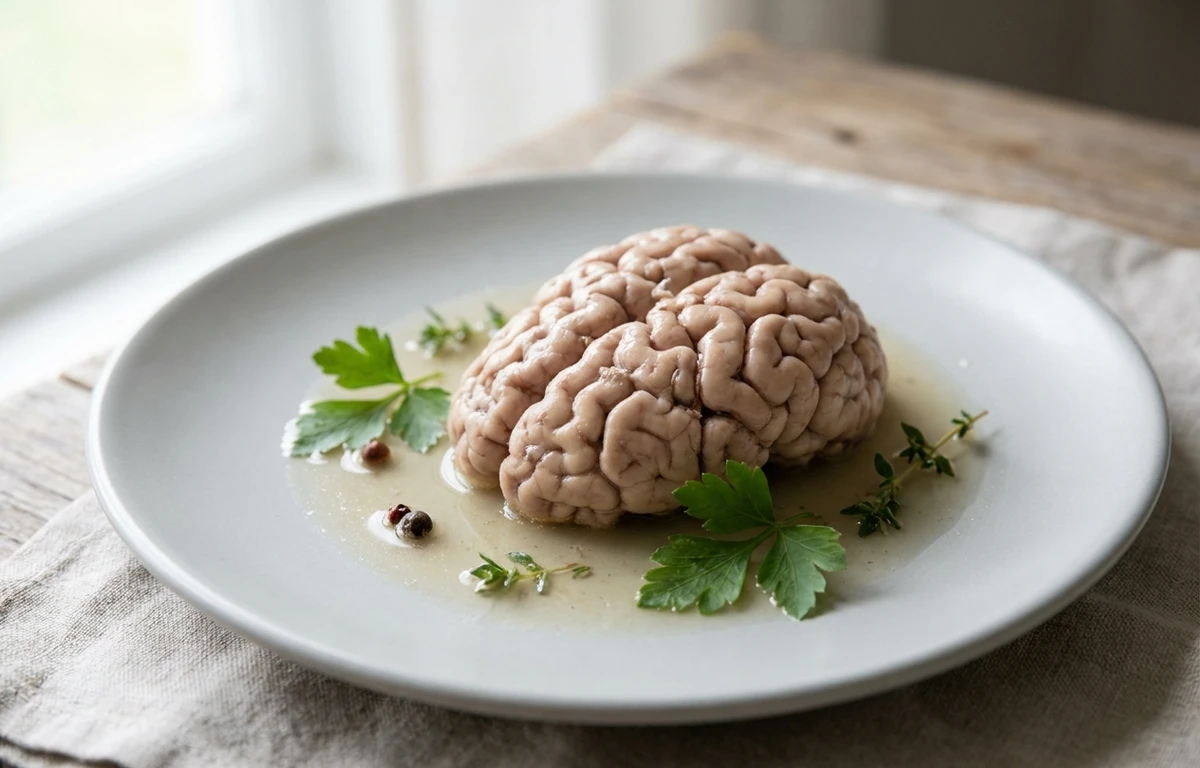
simmered beef brain.
VegetarianVeganGluten-freeDairy-freeNut-freePeanut-freeSoy-freeEgg-freeShellfish-freeHoney-freeAlcohol-free
ALSO KNOWN AS
beef brainbhejamaghazsesoscervelle de boeufcow brainox brain
SERVING
CALORIES
151
PROTEIN
11.7g
CARBS
1.5g
FAT
10.5g
FIBER
0g
This ingredient is flagged as naturally gluten-free. Per 100 g, it provides 0.10 µg of vitamin K.
NUTRITION PROFILE · per 100 g
Everything in this ingredient.
MACRONUTRIENTS
Calories151kcal—
Protein11.7g23%
Carbohydrates1.5g1%
Fiber0g0%
Sugar0g0%
Total fat10.5g13%
Saturated fat2.4g12%
Trans fat0.51g—
Cholesterol3100mg1033%
Water74.9g—
MINERALS
Sodium108mg5%
Potassium244mg5%
Calcium9.0mg1%
Iron2.3mg13%
Magnesium12mg3%
Phosphorus335mg27%
Zinc1.1mg10%
Copper0.23mg26%
Manganese0.03mg1%
Selenium21.8µg40%
VITAMINS
Vitamin A6.0µg1%
Vitamin C10.5mg12%
Vitamin D0µg0%
Vitamin E1.7mg11%
Vitamin K0.10µg0%
Thiamin (B1)0.07mg6%
Riboflavin (B2)0.22mg17%
Niacin (B3)3.6mg23%
Pantothenic acid (B5)1.2mg24%
Vitamin B60.14mg8%
Folate (B9)5.0µg1%
Vitamin B1210.1µg421%
%DV based on a 2,000 cal diet. Source: USDA FoodData Central. A dash in the %DV column means there’s no established Daily Value for that nutrient.
MEASUREMENT CONVERSIONS
How much is what.
1 piece391g
HEALTH BENEFITS
Why eat it.
- ✓Extremely rich in omega-3 fatty acids, particularly DHA, which is vital for brain health and cognitive function.
- ✓Excellent source of B vitamins, especially Vitamin B12, essential for nerve function and red blood cell formation.
- ✓Provides phospholipids and cholesterol, which are crucial components of cell membranes and precursors for hormone production.
COOKING TIPS
In the kitchen.
- 1Before simmering, soak the raw brain in cold, salted water for 1-2 hours to help remove impurities and firm its texture.
- 2Simmer gently in a flavorful liquid like a court bouillon with herbs and vinegar; do not boil, as this can cause it to disintegrate.
- 3After simmering and cooling, the brain can be sliced and pan-fried in butter until golden, scrambled with eggs, or used as a rich filling for tacos or pastries.
- 4The texture is very soft and creamy, similar to custard, so it pairs well with acidic or spicy flavors to cut through the richness.
STORAGE
Keep it fresh.
- Store cooked beef brain in an airtight container in the refrigerator at or below 40°F (4°C) and consume within 2 days.
- For longer storage, freeze the simmered brain in a freezer-safe container for up to 2 months. Thaw in the refrigerator before use.
FAQ
Frequently asked questions.
Is simmered beef brain healthy?
Yes, simmered beef brain is highly nutritious, offering 11.67g of protein per 100g and high levels of Vitamin B12 and Omega-3 fatty acids. These nutrients are vital for nerve function and cognitive health. However, it is very high in cholesterol, so it should be consumed in moderation as part of a balanced diet.
Is beef brain high in cholesterol?
Yes, beef brain is one of the highest dietary sources of cholesterol. While cholesterol is a crucial component for cell membranes and hormone production, individuals with heart health concerns or those monitoring their cholesterol levels should limit their intake.
Is simmered beef brain keto-friendly?
Yes, beef brain is very keto-friendly and suitable for low-carb diets. It contains only 1.48g of carbohydrates per 100g and provides 10.53g of fat, making it an excellent choice for those following a ketogenic lifestyle.
What does simmered beef brain taste like?
Simmered beef brain has a very mild, delicate, and slightly nutty flavor. Its texture is its most defining characteristic, being soft, creamy, and custard-like, often compared to the consistency of firm tofu or soft scrambled eggs.
How do you prepare and simmer beef brain?
Before simmering, the brain is typically soaked in cold salted water to remove excess blood, and the thin outer membrane is gently peeled away. It is then poached in a flavorful liquid, such as a broth with vinegar or lemon, for 10-15 minutes until it is opaque and firm.
How long does simmered beef brain last in the refrigerator?
Simmered beef brain is highly perishable and should be stored in an airtight container in the fridge for no more than 1 to 2 days. For longer storage, it can be frozen, though the delicate texture may change slightly upon thawing.
Is beef brain halal or kosher?
Beef brain is considered halal if the animal was slaughtered according to Islamic dietary laws. It is also potentially kosher if the animal was slaughtered by a certified shochet and the organ was prepared according to Jewish law, though it is not a common staple in all kosher traditions.
Can I eat beef brain raw?
No, it is not recommended to eat beef brain raw due to the risk of bacterial contamination and foodborne illnesses. Simmering or cooking the brain thoroughly ensures that any potential pathogens are destroyed, making it safe for consumption.
How can you tell if simmered beef brain has gone bad?
Spoiled beef brain will develop a strong, unpleasant, or ammonia-like odor and may become excessively slimy to the touch. If you notice any off-smells or significant discoloration, the ingredient should be discarded immediately.



















